

Poker has long been about strategy, instinct, and calculated risk, yet the Internet also turns it into an unassailable domain of A.I. However, deep inside its core, the unlikely math breakthrough that played into its creation is: Counterfactual Regret Minimization – how AI makes unbeatable strategies in incomplete information games like poker.
As the developer of advanced poker software, I’ve seen firsthand how CFR has transformed the landscape of online poker. With CFR, poker bots don’t just play – they learn, adapt, and consistently outperform even the savviest human opponents. If you’ve ever wondered how poker hacks evolve from simple tricks to sophisticated algorithms, CFR is the answer.
What is Counterfactual Regret Minimization?
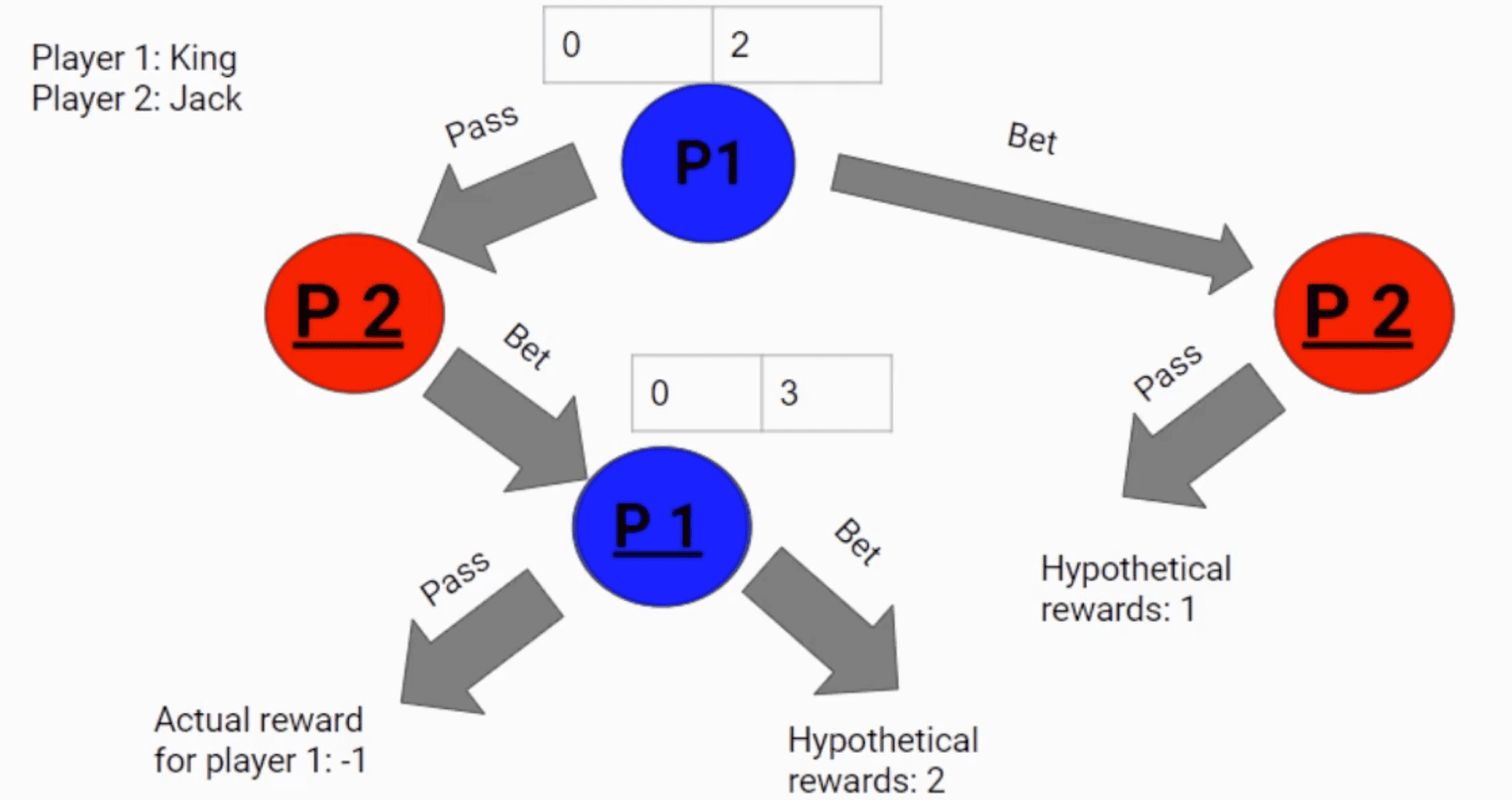
The CFR is an iterative algorithm that converges to a Nash equilibrium through iterative strategy enhancements with the use of “regret” minimization – the loss resulting from not taking hindsight’s best action. In poker terms, this happens through folding on better hands or not bluffing when one could have done so. Runs millions of poker hand simulations, analyzing the possible decisions at every stage and updating a strategy to minimize the regret:.
Now consider an online poker bot. The previously considered outcomes and probability models will have the CFR that has the bot evaluate every possible move of calling, raising, and folding. It will converge on a strategy which would balance aggression with caution. Thus, it comes closer to Nash Equilibrium, since that would make it unreadable and just about impossible to exploit.
Whereas, for example, anyone who has worked with poker cheat sheets, CFR introduces another whole level of depth. It is instead adaptive to the opponent strategy and keeps readjusting in view to make the best decision whatever the situation.
Real – world success: CFR in practice
But it’s not just theoretically effective – it’s also been battle – tested in the highest stakes games. Probably the most famous use case is Pluribus Poker, an AI created by Facebook and Carnegie Mellon University. Using this very strategy, namely CFR, it bested some elite players of No – Limit Texas Hold’em, and this was something considered impossible up until then.
Other successes came when the DeepMind poker bot applied the principles of CFR to become very good at heads – up poker. It was with this counterfactual reasoning capability that it kept outplaying its human adversaries to cinch the strength of the algorithm in the real world.
For the average player, the concept of CFR might be some kind of fiction novel. Their theory is also part of most online poker bots. They put them into practice to inflate their profit margins. Normally, they do much better than a human that tries to operate on gut feeling or with ill – conceived notions of poker machine hacks.

Why the CFR is so important in online poker’s AI
For a developer like myself, CFR is a game – changer: finally, the green light will be given to building the best poker bots able to compete at any level. That is to say:
- Versatility: The CFR – driven bot is sure to create waves in dynamic environments – whether it is aggressive opponents or cautious grinders, the bot self – corrects in real time to reap the weaknesses.
- Scalability: Whereas most of the previously mentioned algorithms were at best barely able to handle large game trees, here comes CFR doing so with ease for multi – player games with complex betting structures.
- Precision: Reducing regret allows CFR to make the best decision every time and smooth out those random wild swings so common in less mature systems.
That would then be the level of granular differentiation to really set it apart from an average bot to the best bot for poker. That is also why CFR lies at the heart of most advanced AI training and analytics applications.
The Moral Question: CFR and Chess Sharers
Fairness in online poker has grown to be one of those highly debated issues, especially with the appearance of CFR – powered bots. While for some people, such tools are nothing but poker hacks, for others, they tend to undermine the integrity of the game. Nowadays, many places deploy AI detectors to identify suspicious patterns of play and further ban online poker bots.
It is very good as a developer that it supplements and doesn’t replace an entire poker experience. Great tools for training and analytics, but it is just one of those things – playing live – that no version of DeepStack AI or Poker Alfie will replace. The only tricky part for the players, however, is knowing when one is actually playing against a bot.
Signs may include things such as unchanging bet sizing, quick decisions, and being unable to adjust to unusual plays. If you feel you’re playing against a bot, then try some unexpected moves. It may just push the AI outside his comfort zone.
Bringing CFR to Your Game
So, how might one exploit the power of CFR without downloading a full – fledged poker AI bot?
- Research Counterfactual Thinking: If you were in that session now and were sorry for folding, you would raise instead of call. You can also perfect such techniques using online resources, maybe downloading some bot software or searching out poker cheat sheets.
- Play Against CFR Bots: Many online AI training websites allow one to go up against the bots driven by CFR. The experience thus derived is really invaluable in understanding optimal play and recognizing patterns that poker bots online make.
- Know Your Enemy: Even though you do not have access to AI, this will help you know the thought process behind a CFR bot. Those tendencies you can manipulate against an opponent. Most bots don’t fudge well against mixed strategies, so start there.
The Future of CFR in Online Poker
While the technology in CFR keeps getting better, so does most of its other applications outside poker. Anything that involves making a decision under partial information – be it financial modeling or cybersecurity – can be transformed on the principles of counterfactual regret minimization.
The future of poker now will probably be a mixture of CFR and real – world data combined in real time. Think of a poker AI online tool that changes its strategy mid – game with the help of live data feeds. Alternatively, a training application uses CFR to simulate thousands of situations fitted just right for your leaks.
The possibilities are endless, but so are the challenges. Thus, this leaves the poker community to find a fine line it needs to strike between innovation and fairness in times to come as the bots get ever more intelligent. For now, the way to be ahead is by riding the tide of technology, learning its strength, and adapting your game to the changing times.
In a world in which poker against bots is increasingly the new norm, grasping CFR has ceased being optional but became one of the keys to not just mere survival but also making one thrive in the future of online poker.