
The emergence of ai in online poker
From an instinctive art, online poker grew into a complete electronic combat sphere commanded by AI. Advanced algorithms comprising opponent modeling and decision trees gave all powers to AI to defeat the very best human. Days of poker hacks are gone, and technological AI has arrived to make every step important in strategy.
At the heart of this transformation is the remarkable modeling of opponents made possible by the AI. Analyzing betting patterns, tendencies, and past results, these systems predict opponents’ strategies in real time. Against professional human veterans or similarly advanced poker bots, this evolving AI rises to any challenge.
How opponent modeling works
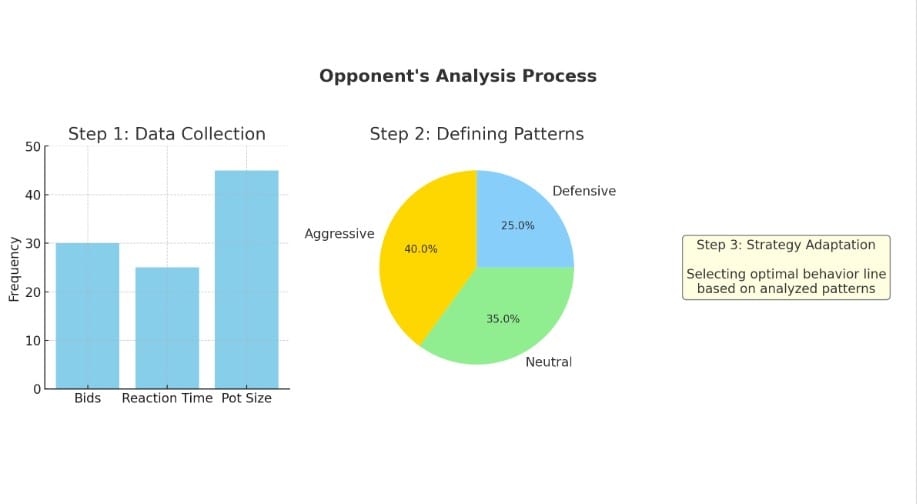
Opponent modeling includes the process through which AI predicts, and then manipulates, the strategy of opponents. Unlike the rudimentary tool of a poker cheat sheet that gives a little static advice, opponent modeling is dynamic and context-informed.
Here’s how it works:
- Data collection: AI collects data regarding opponents’ actions, such as bet size, fold frequency, and bluff pattern.
- Pattern recognition: It finds the pattern in players’ game strategies-how one player bluffs in a certain situation.
- Strategy adjustment: AI adjusts its strategy to take advantage of these tendencies without compromising on strong defensive play.
It’s this capability that lends superpower to the DeepMind poker bot and to Pluribus poker. That is, while playing against a loose-aggressive player, AI calls against bluffs more frequently, while against a tight opponent, its focus would be on extracting value with strong hands.
A whole different kettle of fish for the casual player, no more poker hacks, but how artificial intelligence poker is going to change the game.
Decision trees: the backbone of ai strategy
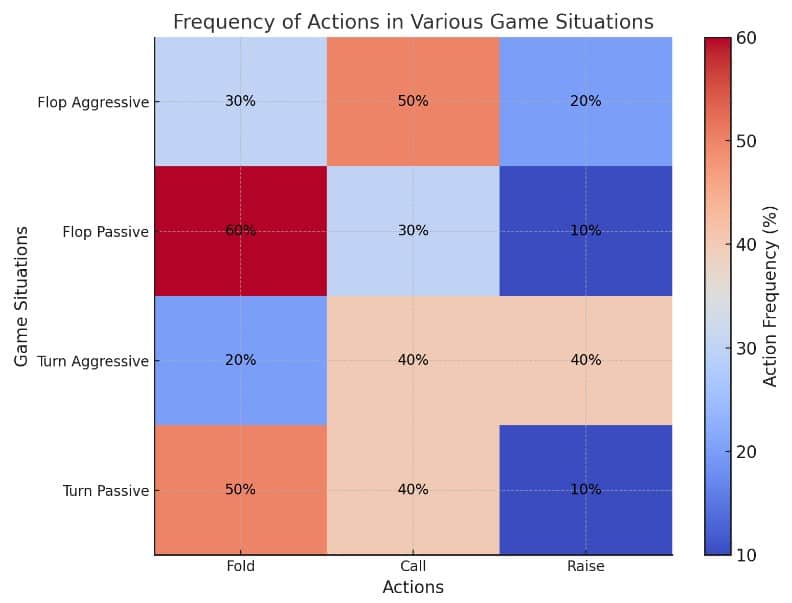
Decision-making in AI majorly involves decision trees, where each and every probable action is mapped out such that AI considers the risk associated with it over the reward for every given move.
Now, let’s consider a case in which AI needs to make a raise-call-fold decision; let’s see how a decision tree will weigh it:
- The likelihood of winning if the AI calls.
- The potential gain from raising.
- The expected loss from folding.
This analysis goes beyond human opponents. Decision trees also power AI to defeat many poker online bots and recognize it as the supreme bot in competitive settings.
Unlike older methodologies, decision trees change in real time, the AI will not have to reuse any old information and become predictable in any way, unlike poker machine hack strategies.
Regret minimization: learning from mistakes
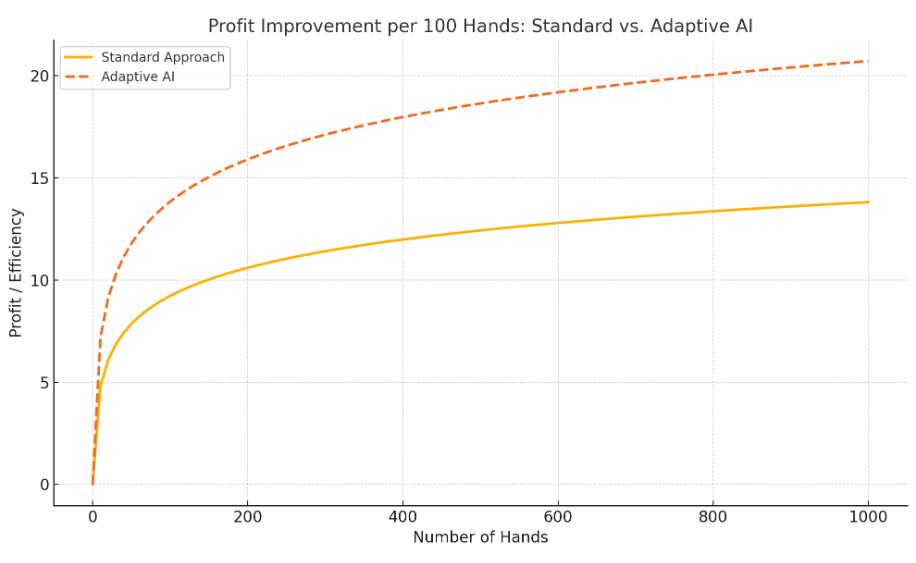
Another important foundation in poker strategy using AI: minimizing regret. The idea here is that it minimizes any past mistakes by continually updating the decisions.
For instance, when AI recognizes it lost value by folding certain hands, it readjusts its strategy to avoid similar mistakes in the future. This is an ongoing process by which AI inches closer to game-theoretic equilibrium, where their actions are as unexploitable as possible.
Unlike poker now hack tricks, this is not about shortcuts but long-term, meant for consistent improvement mixed with opponent modeling in such a way that the system becomes effective against unpredictable humans and poker bots online.
Applications in online poker
It replaced almost everything that could be attributed to online poker-from the casual game to high roller tournaments. Examples include:
- Training tools: Now, platforms are developing AI-driven training simulations for games where players go up against advanced poker AI bots to stay tuned with the pattern and strategize.
- Real-time analysis: AI systems provide real-time insights during games, identifying optimal moves based on current conditions.
- Tournament play: AI proved its strengths in events such as the WSOP when analyzing opponents in ways no human can.
Tools like poker AI online or bot software download make all the difference for players wanting an edge. These give that needed precision and adaptability that will enable them to play at the top.
Challenges and ethical considerations
As is often the case with poker, AI is not without its controversies. Most online outlets ban poker bots to keep the game integrity intact. With increased regularity, AI detectors will find out which players are using unauthorized tools.
Not all uses of AI are contentious, however. Training tools and analytical programs like DeepStack AI and PokerAlfie augment one’s learning process without compromising the spirit of fair play. As a matter of fact, the task will really be to balance novelty with ethics.
The Future of AI in Poker
The AI technology keeps improving, and its use in poker is no exception. Its future generations might include:
- Emotional analysis in real time: AI will interpret opponents’ emotional states by observing facial expressions or voice patterns.
- Multiplayer optimization: Advanced systems would always be better in multi-table tournaments because the variables are further complicated.
- AR/VR integration: Imagine playing virtual poker with AI coaches that guide in real-time, making the training seamlessly fit within the fun.
For now, one needs to train with all the available tools-be it programs of poker AI bot or download global poker apps. One needs to understand everything about AI and Poker for competitiveness during this new era.
Conclusion
Artificial Intelligence brought online poker to a completely new level of competitiveness and dynamics. With such weaponry as the decision tree, opponent modeling, and regret minimization, AI will not just be playing poker but mastering it. Be it an amateur player or an experienced one; this information doesn’t matter.
The next time one goes against a computer opponent, he should remember that this isn’t just a machine but the culmination of years of research and innovations that have been so skillfully engineered as to test all aspects of the game.