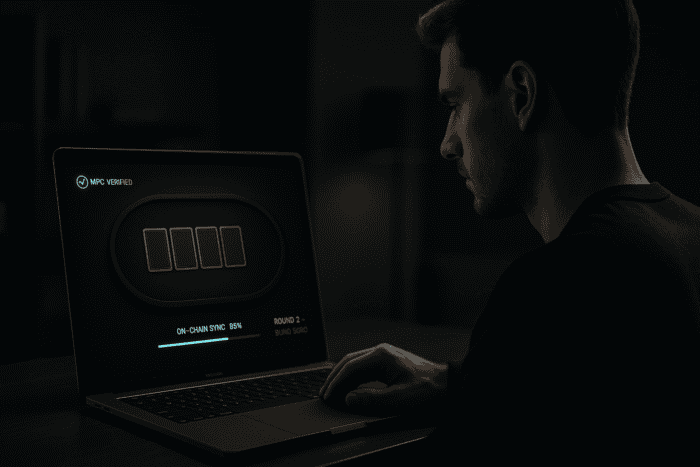
Real-Time Poker on Blockchain? Meet Insta-Pok3r

Online poker is a beautiful game – with a trust problem.

Every hand you play online depends on someone else’s server, someone else’s code, someone else’s honesty. Whether it’s cards being dealt, chips being moved, or folds being registered, you’re trusting that the platform isn’t cheating, colluding, or just glitching out.

So, what if we eliminated the element of trust from it?

It is exactly what Insta-Pok3r is designed to accomplish: reimagine online poker with cryptographic assurances, block-chain tech, and logical smart contract. The goal? Equitable, fast, and verifiable real-time poker – without a middleperson.

Let us take a closer examination of the process, why it matters, and what it means for the future of online poker and beyond.

Trustless Poker: How We Need

In regular online poker, the entire game – cards, wagers, timing, hand histories – are handled by an intermediary operator. The intermediary operator may:

  • Manipulate the RNG (random number generator)
  • Peek at your hole cards
  • Delay or withhold payments
  • Store your data insecurely

While most big poker sites play fair, you have no proof. That’s especially dangerous in high-stakes environments or emerging markets.

What’s the alternative?

Enter blockchain poker – a fully decentralized version where the rules live on-chain, the cards are encrypted, and nobody (not even the game host) can cheat.

But… there’s a catch. Blockchain is slow. It’s great for finality, bad for action. And poker is a game of rapid decision.

Insta-Pok3r: A Behind the Scenes Sneak Peek
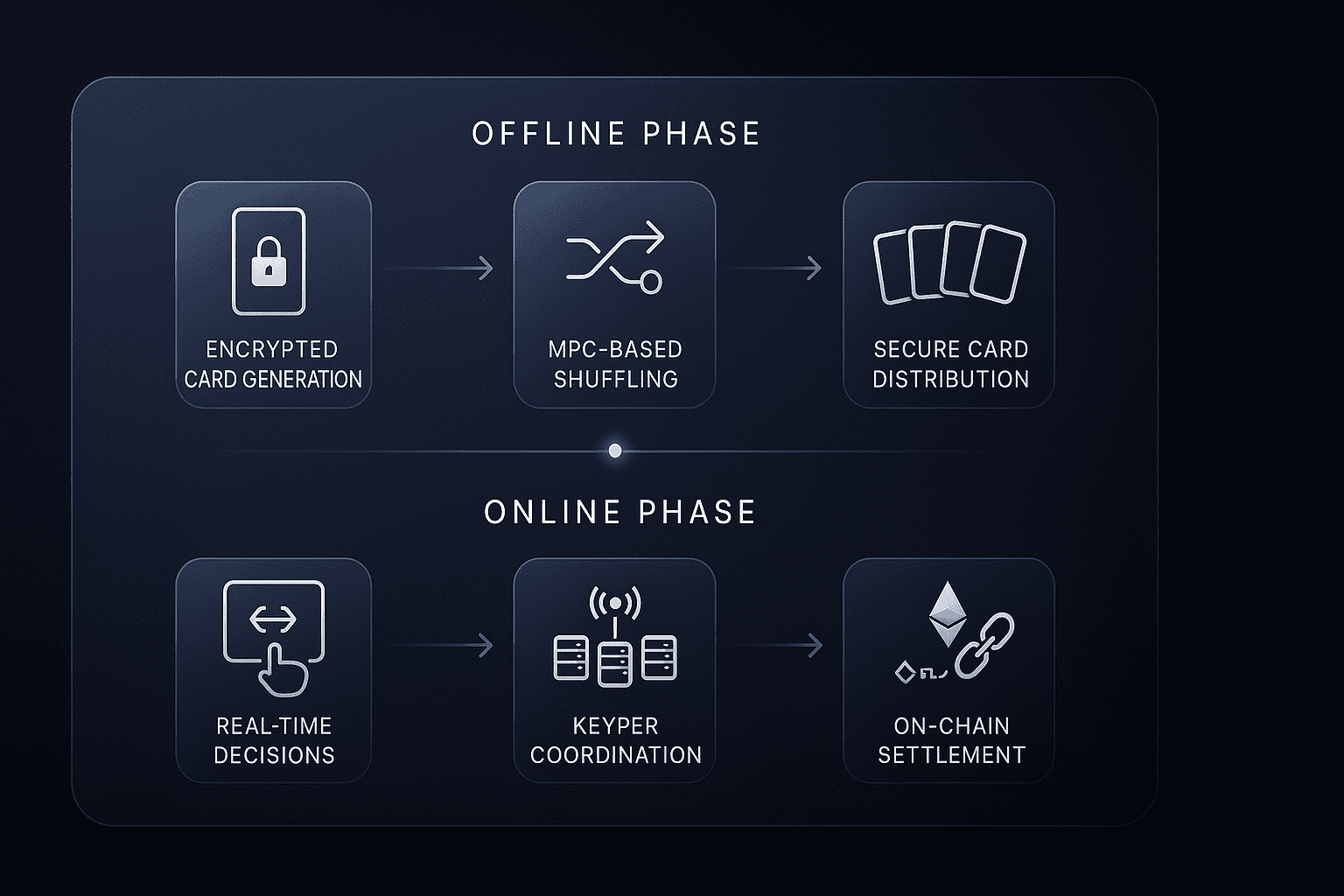
Insta-Pok3r circumvents the speed vs trust trade-off by employing a hybrid strategy that divides gameplay into two levels:

  1. Offline Phase (Pre-Game Configuration)

And here the wonder begins:

  • The players establish secret card encryptations with public-key encryption
  • These cards are shuffled as a batch with a Multi-Party Computation (MPC) protocol
  • Everyone doesn’t see the cards – never – until the reveal

By the end of this step, each of the players has his/her hand of ciphertext, but no one (including the players) can decrypt it individually.

  1. Online Phase (Real-Time Gameplay)

Once cards are distributed:

  • Players decide on their bets, raises, and folds off-chain for efficiency
  • Synchronise the game state with the light-clients and MPC servers referred to as “keypers”
  • Only the end outcome (i.e. showdown, pot split) is recorded on the blockchain

This generates play that is nearly as fast as regular poker, but with provably fair and no relied-on operator.

Who Are These “Keypers”?
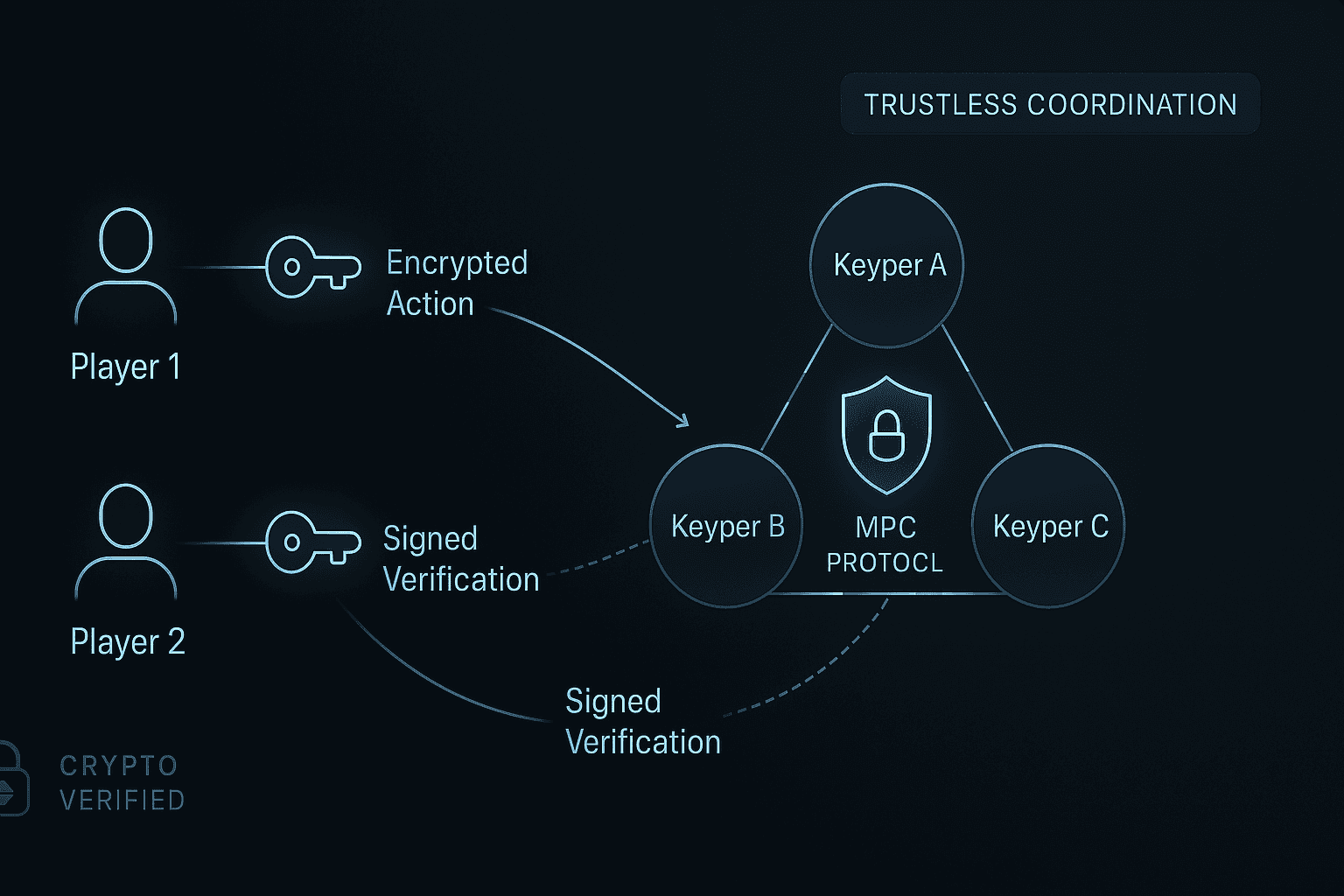
Insta-Pok3r introduces a clever concept: keypers – independent servers running secure MPC protocols.

Their job:

  • Coordinate the game’s encrypted logic
  • Validate card reveals
  • Sign and verify the correct state transitions
  • Act as decentralized “referees” with no control over funds or outcomes

Think of them as a poker bot anti-cheat network: they know just enough to keep things honest, but never enough to cheat.

And the best part? These keypers can be chosen dynamically, rotated, or even incentivized – creating a fully decentralized infrastructure.

What Makes This Different from Other “Blockchain Poker” Projects?
Good question.

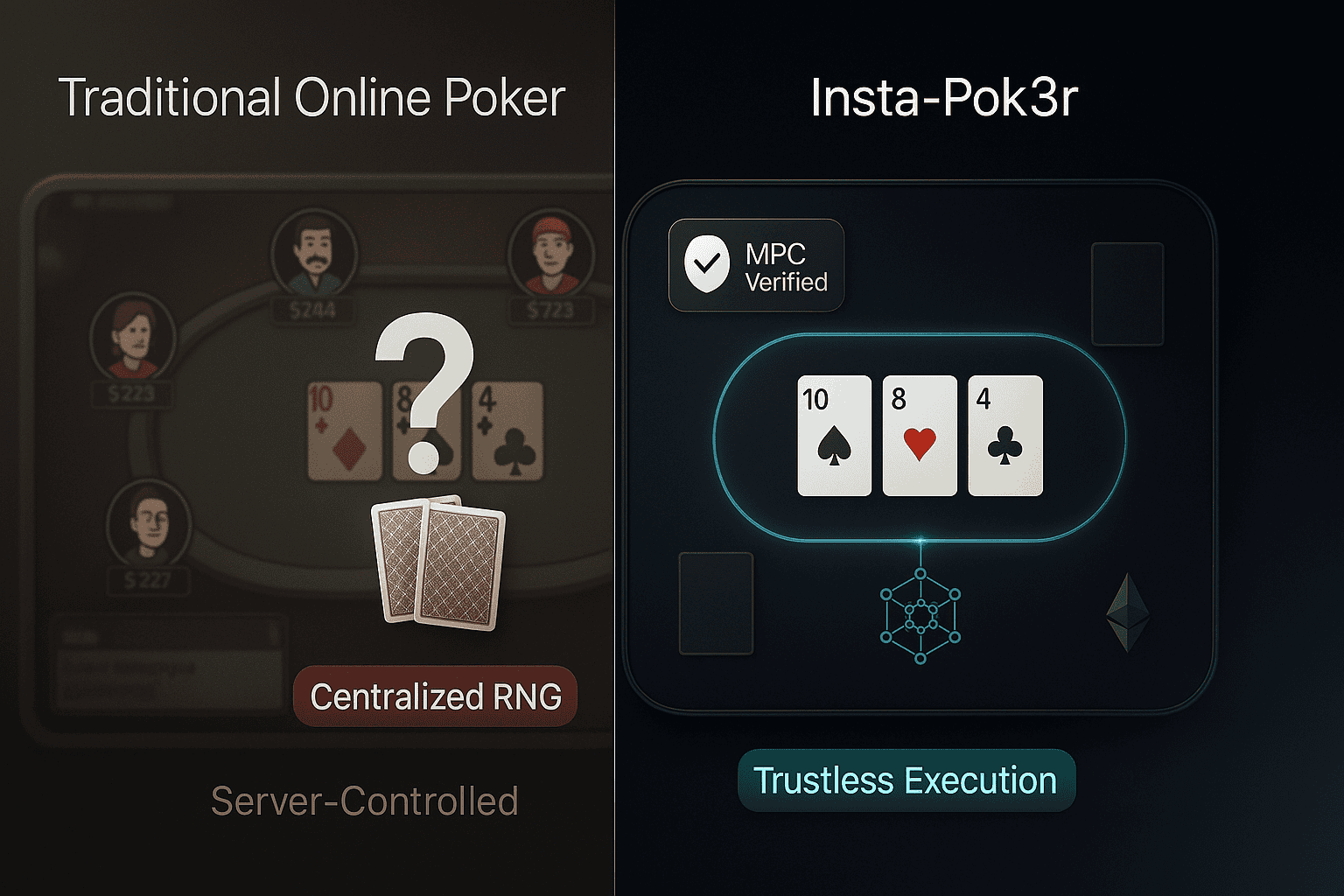
Most blockchain-based poker systems fall into one of two traps:

  1. Too slow – Everything is on-chain. No 10-second delay before folding? No thank you.
  2. Decentralized in name only – Some only take crypto payments but retain the game logic on centralized servers.

Insta-Pok3r avoids both:

  • The gameplay is real-time, off-chain, and instantaneous.
  • Cryptographic game integrity is ensured by verifiable encryption and threshold signatures
  • It settles and pays on-chain with total transparency

This is actual poker on the block chain – never simply poker paid with cryptocurrency.

SVME: The Crypto Behind the Curtain
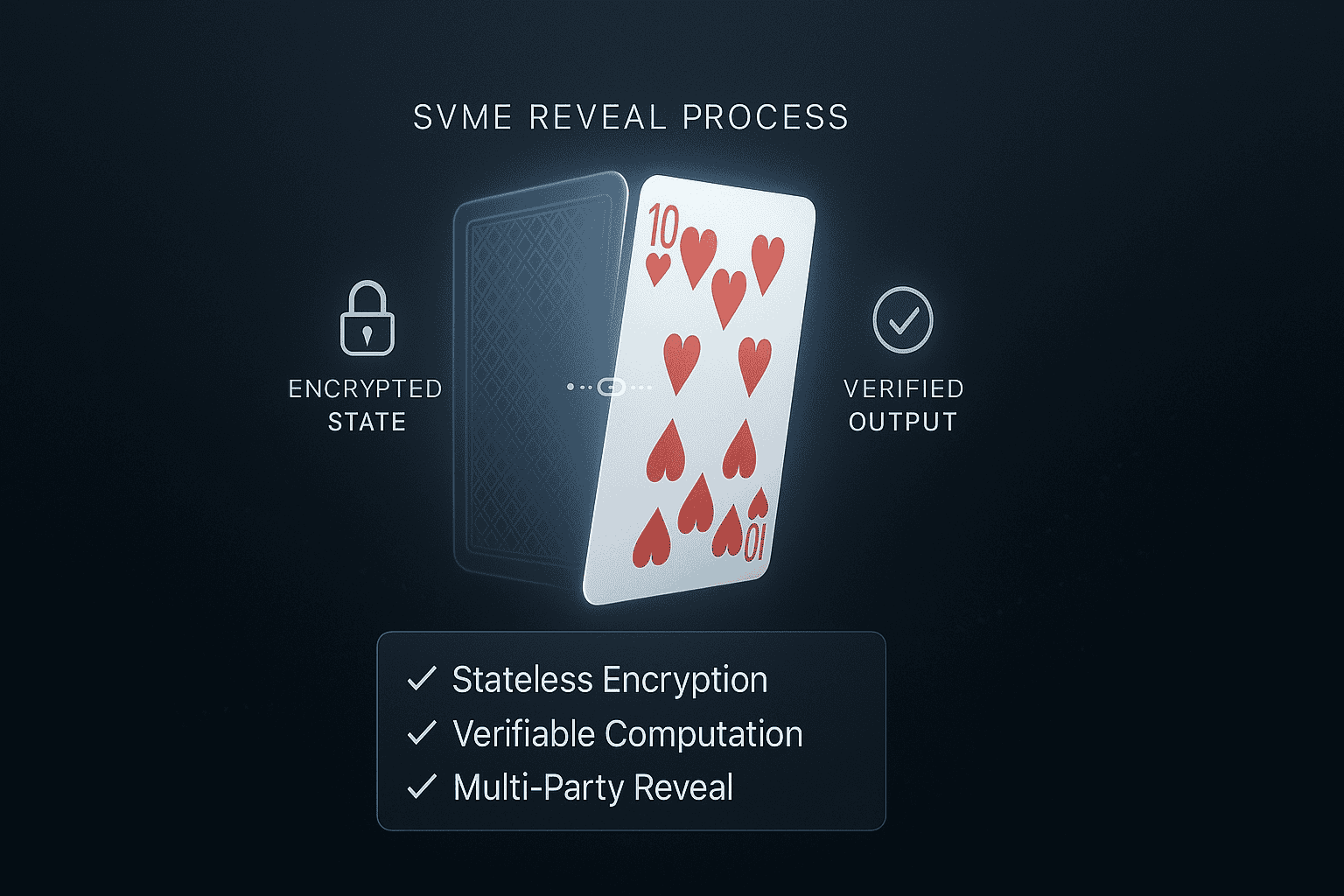
A big piece of the Insta-Pok3r puzzle is SVME (Stateless Verifiable Multi-party Encryption).

Here’s what that means in human terms:

  • “Stateless” = The system doesn’t store past game data – so no risk of leaks
  • “Verifiable” = Everyone can mathematically prove that the encryption is correct
  • “Multi-party” = Cards are encrypted and shuffled collectively, not by any single party

The end result: players don’t need to trust each other, the software, or the server. The system proves its own honesty with math.

It’s like building a poker table where the deck, the chips, and even the dealer are verifiably neutral – and nobody can rig the game.

So… Is This Really Playable?

Yes – and no.

Right now, Insta-Pok3r is in prototype and research phase. The system works in test environments and academic demos, but it’s not on the App Store (yet).

However, the architecture is sound. The use of MPC and verifiable encryption is well-established in cryptography. The real challenge is making it usable for normal players – without needing a PhD in blockchain.

But that’s coming.

Insta-Pok3r and similar systems are laying the foundation for Web3-native poker experiences where:

  • Your cards are provably secret
  • No server can spy or interfere
  • No poker cheat or bot can rig the system

Can This Stop Poker Bots?

Let’s talk about the elephant at the table: poker bots.

Insta-Pok3r isn’t designed to detect bots – but it does limit their effectiveness:

  • All clients are verifiable, so cheat software can’t access decrypted cards
  • Poker online bots relying on screen scraping or exploit scripts won’t work if UI is encrypted and logic is off-chain
  • Real-time communication can be monitored or rate-limited via smart contracts

So, while it won’t eliminate bots entirely, it raises the bar significantly – and could lead to bot-proof poker environments if integrated with AI behavior tracking.

What About Poker Cheat Sheets and Assist Tools?

This is where ethics meet engineering.

Using a poker cheat sheet is still possible – but because the game logic is decentralized and randomized with MPC, exploit-based tools are far less effective. You can’t just “memorize the spot” when the system dynamically changes encryption keys every round.

It can still be valuable for strategy, however, just not for prediction.

And that is a strength: it brings attention on real capability, rather than software crutches.

The Future: Decentralized Poker Rooms

Absolutely.

Imagine:

  • Self-custodied wallets – no deposit needed
  • Smart contract on-chain prize pools paid instantly
  • Global anti-fraud on top of cryptographic verifiability
  • Intermediary-free and host-free P2P tournaments

Insta-Pok3r is just the beginning. Add on real-time identity protocols, zk-rollups for optimization, and dynamic reputation systems for players – and the result is the most unbeatable poker game.

Final Thoughts: No Science Fiction – It’s Next

It is no fantasy we’re talking here. The technology exists. The prototypes work. And with the likes of the Insta-Pok3r, the path is being paved.

Not only is trustless poker safer – it’s also fairer, more transparent, and fun.

when you’re free from the fear of bots, bias, and backdoors.

You can now focus on the matters at hand: the play.

1,133 Words

Why Risk-Loving Players Chase Glory in Online Poker

Let’s get real – if poker were all about maximizing long-run EV, then the entire world would play like a robot. Cold. Calculating. Boring.

And yet humans don’t function that way. Especially not in internet poker, where thousands of people sit down to grind every day but also to hit that one mythical big win. The glory hand. The all-in triple-barrel bluff that either busts the stack or makes you a legend.

Turns out, there’s a name for this psychological tendency: skewness preference. And a new study shows that it’s alive and well on the virtual felt.

First Off: What the Heck Is “Skewness”?

Quick math detour – promise it won’t hurt.

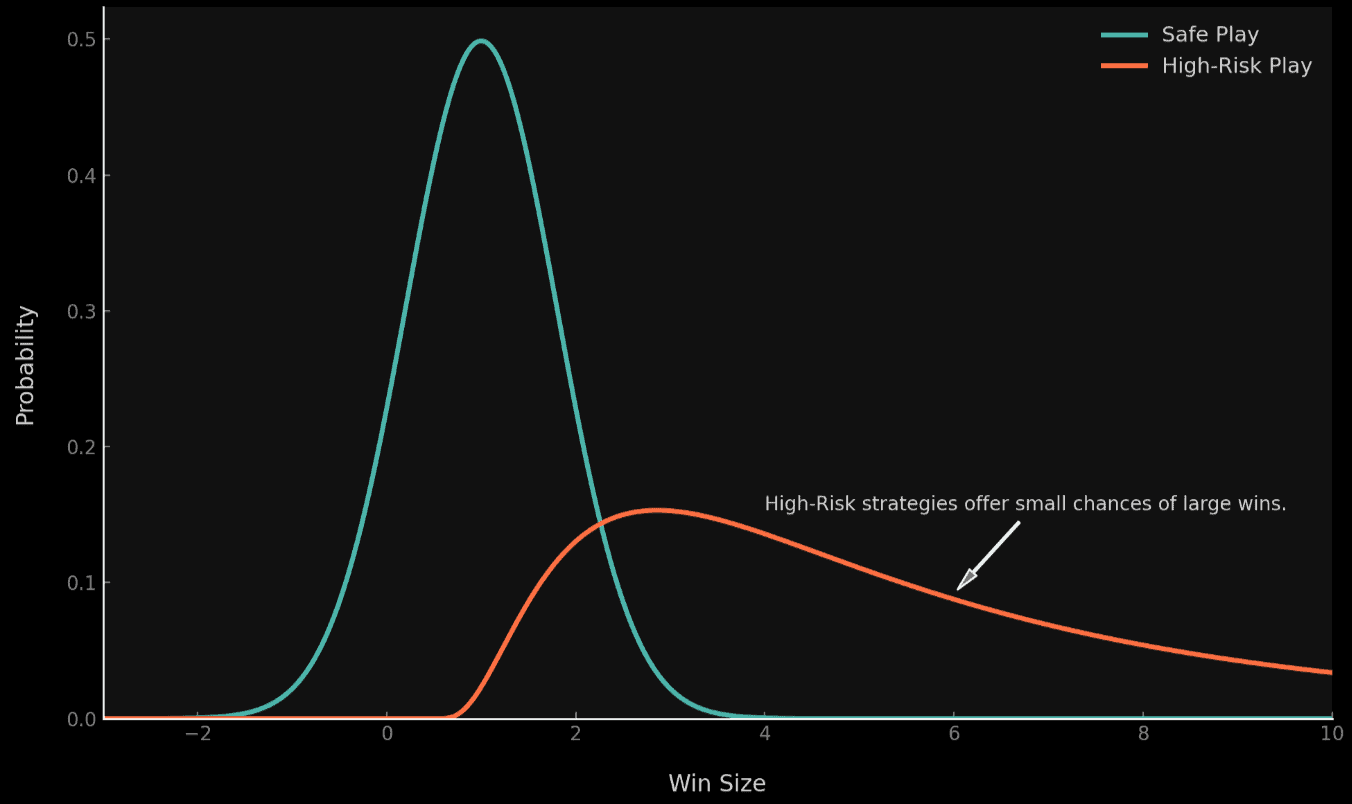
In statistics, skewness measures how much a distribution leans toward one side. In poker terms, we’re talking about strategies or decisions that usually lead to small losses… but occasionally hit a huge win.

Think of it like this:

  • A negatively skewed strategy: small, frequent wins, but rare huge losses. (Safe, but you can bust hard.)

  • A positively skewed strategy: lots of small losses, but sometimes? Boom. Massive payout.

And guess what kind of skew most players secretly love? Yup – positive skew.

What the Study Looked At (And Why It’s Cool)

A group of researchers analyzed millions of online poker hands from real players. We’re talking actual money, actual decisions, and no theoretical lab nonsense.

They measured:

  • How often players went for skewed plays (like chasing long-shot draws)

  • Whether more skewed strategies led to better or worse long-term outcomes

  • How preferences shifted across skill levels, formats, and stakes

And the verdict?

Players – especially recreational ones – show a consistent preference for positively skewed strategies. Even when those plays have a negative expected value.

Translation: people know it’s -EV… and do it anyway.

Why Would Anyone Play -EV Hands on Purpose?

Ah, the million-dollar question. Or maybe the $0.01/$0.02 question, depending on your bankroll.

Here’s why skewness is so seductive:

  1. The Power of the Jackpot Fantasy
    Humans love upside. Even if the odds suck. Just look at lottery sales or crypto moonshots. Same logic in poker – players chase huge wins because they feel amazing, even if they’re rare.

  2. Emotional Amplification
    Winning a massive pot with a crazy draw gives you more dopamine than grinding out five small pots. Our brains aren’t wired for balance; they’re wired for story.

  3. Tilt Insurance (Weird, But Real)
    When you’re losing, you might intentionally go for high-variance lines to “turn the session around.” It’s not rational, but it’s human.

  4. The Twitch Effect
    Streamers, content creators, and online personalities often skew their play toward highlight-reel hands. Viewers don’t care about tight folds – they want fireworks.

Skill Level Matters (But Not How You Think)

One of the most surprising findings?

Even experienced players show a skewness bias. Not as extreme as newbies, sure, but still present. Especially in tournament formats, where big swings are baked into the structure.

Here’s what the data suggests:

  • Cash game regs skew less – they’re more disciplined, especially at higher stakes.

  • Low-stakes grinders skew more – likely chasing fast results or “breaking even with glory.”

  • Tournament players skew naturally due to payout structure (hello ICM), but the preference spikes when stacks are short.

So next time someone jams a weird combo draw on the turn… it might not be a punt. It might just be skewness doing its thing.

Okay, So What Does This Mean for Your Game?

If you’re playing online poker seriously – or building a poker bot, or training an AI system – this insight is gold.

Here’s how you can use it:

  • Exploit skewness chasers: Know that certain players will overvalue huge upside plays. Set traps. Overfold turn bluffs. Value bet wide on rivers.

  • Track your own tendencies: Are you jamming because it’s right… or because you want the adrenaline hit?

  • Train smarter bots: If you’re using a poker bot (or training one), teach it not just GTO, but also how to counter human skewness patterns.

  • Build better tools: Apps like poker now hack or poker cheat sheet could benefit from factoring in skew preference data – not just solver math.

The AI Poker Angle: Humans ≠ Bots (and That’s the Point)

We hear a lot about poker AI, pluribus poker, deepstack ai, and so on. But most of these systems assume rational, GTO-level opponents. That’s cool in theory… but in the wild?

Humans have quirks. We like stories. We hate folding. We tilt. We chase dragons.

A truly smart poker online bot or ai poker bot needs to understand these quirks – not just solve math problems.

Imagine a bot that:

  • Recognizes a player who just lost a big pot and shifts into skew-chasing mode

  • Adapts its aggression vs opponents with different risk profiles

  • Exploits overuse of bluff lines in emotionally charged spots

That’s not just smart AI – that’s human-aware AI. And it’s the future of both poker bots and poker itself.

The Casino Knows You Love Skewness

Don’t believe it? Look around.

  • Slot machines: ultimate positive skew. You lose often. But that one spin? Jackpot.

  • Spin & Go tournaments: low buy-in, chance at a massive prize. Sound familiar?

  • Jackpot poker formats: built entirely on skew-chasing logic.

These games aren’t broken – they’re built for players who prefer long-shot glory over steady gain. Skewness sells.

Final Thought: Are You a Skewness Addict?

Let’s be honest.

We’ve all chased a draw we shouldn’t have. We’ve all told ourselves, “If this hits, I’m a genius.” And sometimes? It hits. And we feel unstoppable.

But being aware of skewness – both in yourself and in others – is what separates casuals from crushers.

So next time you’re facing that tempting semi-bluff… pause. Ask yourself:

“Am I making the right play?
Or just chasing the story?”

If it’s the latter… maybe fold. Or go for it. Just don’t say you weren’t warned.

1,005 Words

How PokerGPT Is Changing the Game in Online Poker AI

There’s a new player at the table – and no, it’s not another hoodie-wearing grinder or Twitch-streaming shark. It’s PokerGPT, a lean, mean, language-model-powered machine that’s been quietly flipping the script on what it means to build smart, scalable poker bots. And unlike its power-hungry predecessors, it doesn’t need a data center to win.

If you’ve ever wondered how artificial intelligence poker is evolving past brute force computation and toward something, dare we say, intuitive-you’re about to find out.

From CFR to GPT: Why Poker Needed a Smarter Brain

Let’s be real: most previous poker AIs were overkill. Pluribus and Libratus? Brilliant, sure-but resource hogs. These monsters used counterfactual regret minimization (CFR) to conquer the poker machine. We’re talking thousands of CPU cores, terabytes of memory, and weeks of crunching just to simulate a few million hands.

And if you’ve ever tried extending CFR from heads-up to multi-player tables, you know the game tree balloons like a bad bluff-completely impractical in real-time play.

That’s where PokerGPT comes in swinging. This new model ditches heavy computation in favor of large language models (LLMs) – the same tech behind ChatGPT – and it’s surprisingly good at the whole poker thing.

What Makes PokerGPT a Game-Changer?

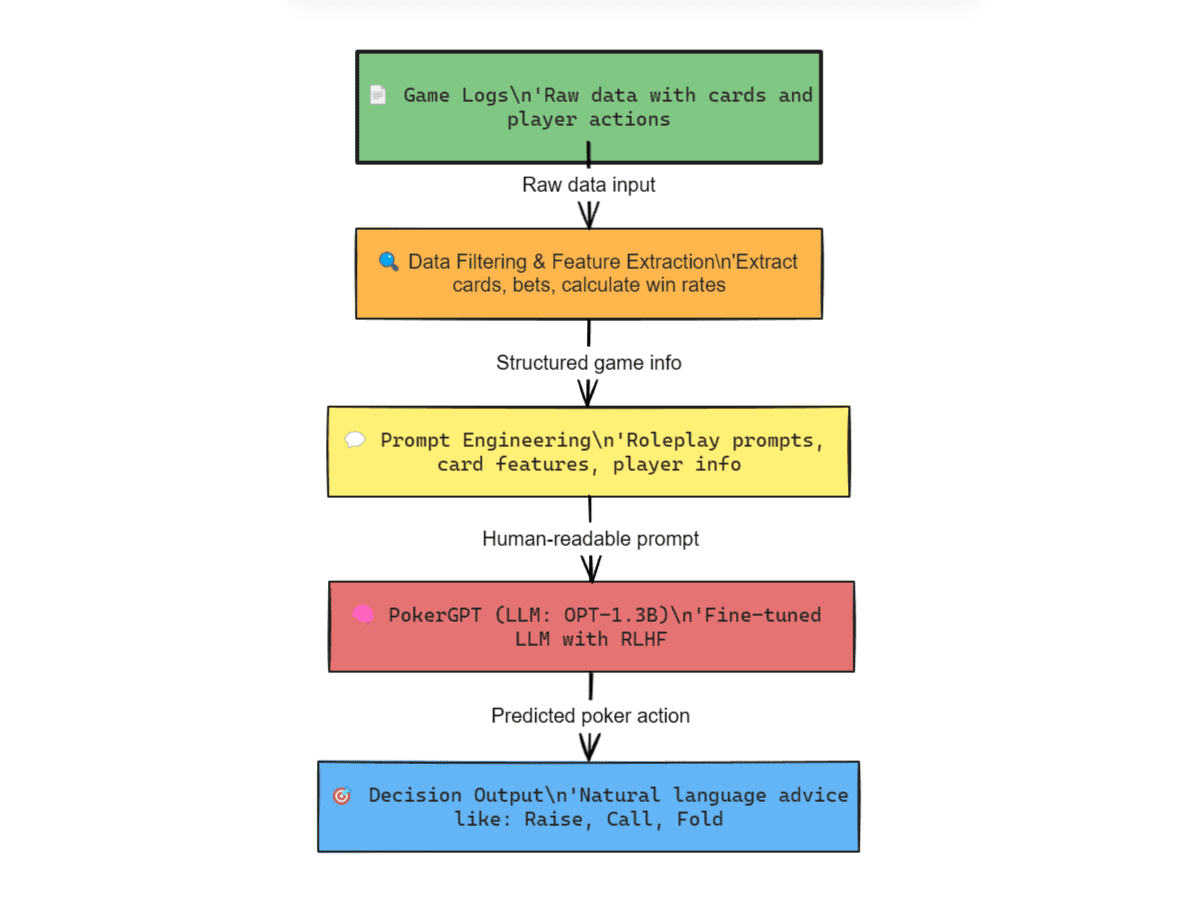
So what exactly is PokerGPT? It’s a lightweight, fine-tuned LLM that doesn’t rely on handcrafted game trees or endless self-play. Instead, it learns from real-world poker logs – millions of hands from actual online games.

That means it isn’t just theoretically strong. It plays like a human, thinks like a human, and reacts in real time-just like you’d expect from the best poker bot in the room.

Here’s the cheat sheet version of what makes PokerGPT different:

  • Text-based input/output: Forget game trees-PokerGPT reads poker history and makes decisions like a chatty coach.

  • Fast and lean: Trained on a single GPU in under 10 hours. Response time? About five seconds. Talk about efficient poker hacks.

  • Multiplayer ready: Works across any number of players – something most CFR-based systems simply can’t do well.

  • Low barrier: No need for PhDs in game theory to use or modify it.

It’s the first truly end-to-end, multiplayer-friendly poker AI that doesn’t require cloud-scale infrastructure to run. Just some clever prompt engineering, a bit of fine-tuning, and a healthy dose of reinforcement learning from human feedback (RLHF).

Wait, Language Models Can Play Poker?

You bet they can.

At first glance, it might seem wild to use a text model to make high-stakes poker decisions. But think about it – poker is a game of partial information, psychology, and pattern recognition. LLMs, trained on massive amounts of text data, are phenomenal pattern detectors.

By feeding PokerGPT with engineered prompts – like betting histories, player positions, and hand descriptions – it can predict the optimal next move in any given situation. And because it uses language, its recommendations are human-readable. Think less “bet(0.5)” and more “You should raise to 0.50 because your hand is strong, and opponents are likely bluffing.”

That level of explainability? Huge.

Data-Driven Smarts: How PokerGPT Learns

PokerGPT’s developers gathered over a million real poker games from platforms like PokerStars. Then they filtered, cleaned, and labeled them based on outcomes and player skill (measured in milli-big-blinds per hand, or mbb/h).

They used this data to fine-tune Facebook’s OPT-1.3B model – a compact LLM that performs comparably to GPT-3. And they didn’t stop at just supervised learning. They trained a reward model to recognize good vs. bad decisions, then applied RLHF to sharpen PokerGPT’s instincts over time.

The result? A poker AI that adapts to human behavior, plays strategically across stages (preflop to river), and even mimics the styles of winning players.

And guess what? When tested against bots like Slumbot, it delivered a higher win rate than other leading models, including AlphaHoldem and ReBeL – all while using fewer resources.

PokerGPT Plays Well With Others

One of the most exciting features of PokerGPT is its ability to scale up – fast.

Whether you’re facing two players or a table of fifteen, PokerGPT stays consistent. It adjusts its aggression, tightens up when needed, and plays a smart long game. The more players at the table, the more conservative it becomes – just like real high-level players.

In multi-player tests, PokerGPT’s action patterns matched closely with human tendencies. It bet more in early stages, folded when the risk wasn’t worth it, and ramped up aggression with strong hands.

And unlike rigid bots or overly cautious algorithms, PokerGPT takes requests. Ask it to play more aggressive? It’ll start raising. Want to minimize risk? It’ll lean into tighter folds. That’s true interactivity, something most bots just can’t do.

So… Can I Download This Thing?

Yep. The entire framework, from data pipeline to model weights, is open source. You can tinker, train, or run it right now – no license fees or black-box restrictions.

You can even combine it with your own poker cheat sheet, or plug it into a bot software download to create a customized training tool, assistant, or even a poker bot that’s optimized for your personal style.

Whether you’re a developer looking for a poker AI online, or just curious about the future of bots in poker, this is as plug-and-play as it gets.

PokerGPT vs Traditional Bots: Who Wins?

Let’s break it down:

Feature CFR-Based Bots PokerGPT
Multi-player support ❌ Limited ✅ Full support
Hardware requirement High (thousands of cores) Low (single GPU)
Win rate (vs. Slumbot) ⚖️ Decent 158 mbb/h
Adaptability ❌ Rigid ✅ User-interactive
Training time ⏳ Weeks ⏱️ 9.5 hours

It’s not even close. While CFR systems like Pluribus were game-changers in their time, the next wave is smarter, lighter, and way more accessible.

Final Thoughts: Is This the Dawn of AI Poker 2.0?

If you’re playing poker in 2025 and ignoring what LLMs like PokerGPT bring to the table… you might be leaving chips behind.

Whether you’re building your own poker now hack, exploring wsop cheats (hey, for research, right?), or just curious about AI poker bots – PokerGPT is a glimpse into where the game is heading.

It’s not about brute force anymore. It’s about nuance. Context. Smart reasoning. And maybe, just maybe, understanding poker the way humans do – but faster.

So next time you’re in a hand and wonder, “What would a bot do here?” – well, PokerGPT might have an answer. And it just might be better than yours.

1,087 Words