
When people think about online poker, they tend to fall into two extremes.
Either it’s a harmless game of cards, played casually between friends or hobbyists—or it’s a dark tunnel to addiction, financial ruin, and obsession.
But reality, as always, is more complicated.
Thanks to a large-scale prospective epidemiological study of internet poker behavior (spanning over two years and thousands of tracked participants), we now have a clearer, data-driven view of how online poker is actually played, who plays it, and where the real risks lie.
Let’s sort out the key lessons—and why they’re needed now more than ever.
Study Design: Not Another Survey
Much of what we know about gambling comes from self-report data. So, one asks individuals about how frequently they gamble, how big they lose/win, and so forth.
This research accomplished something new.
It mimicked real player activity based upon data directly taken from gambling site logs, combined with participant self-reported health, demographic, and psychological data.
The researcher followed over 2,500 frequent online poker players for 24 months, which was one of the largest, behavior-based studies ever performed in the online gaming industry.
Key Finding #1: Most players are low-risk, recreational players
One of the strongest conclusions
The majority of online poker players do not have problem gambling.
The overwhelming majority of respondents
- Played occasionally (1–2 times)
- Spent moderate quantities
- No negative psychological or financial impact were reported.
This supports the argument that internet poker is, for most, a skill-based game, an avocation, rather than an unsafe habit.
But that is only part of it.
Key Finding #2. A Minority Causes Most of the Losses
About 5-8% of players were found to have behavioural profiles consistent with problem gambling, and were responsible for over 60% of all net losses in the sample.
these players showed
- Increased frequency of sessions over time
- Raising deposit requirements
- Following losses in downswings
- Ignoring or avoiding one’s own boundaries
That is, most manage. But those who fail to manage manage poorly—and in grossly disproportionate numbers.
Key Finding #3: Young men at greatest risk
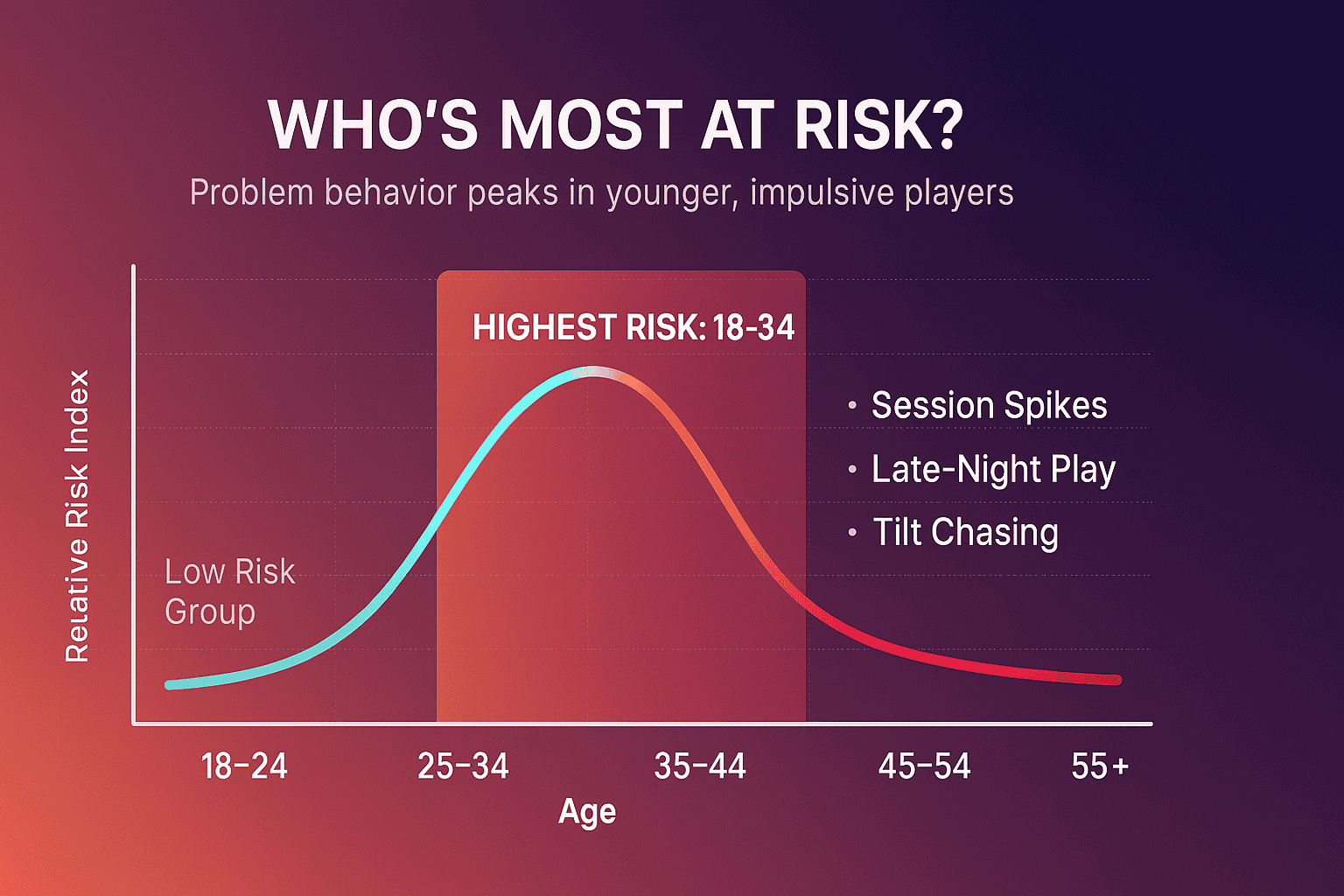
One stood out among the high-risk subgroups
Male 18- to 34-year
These players were:
- More impulsive (based on psychometric tests)
- More likely to play after midnight
- More likely to play multiple tables simultaneously
- More likely to blur the line between poker and other forms of gambling
This confirms earlier clinical findings suggesting that impulsivity and sensation-seeking traits correlate strongly with problem gambling behavior.
Key Finding #4: Early Behavior Predicts Future Harm
One of the most valuable aspects of a longitudinal study is pattern detection over time.
Researchers found that:
- Players who doubled their session frequency in the first 6 months were 4x more likely to show problem behavior by Year 2
- Ignoring bankroll limits in the first year was a predictor of eventual account closure due to self-exclusion
These patterns suggest online poker platforms could use early behavioral flags to pre-emptively intervene—with reminders, cool-down prompts, or voluntary breaks.
Key Finding #5: Skill Level Correlates with Risk Reduction
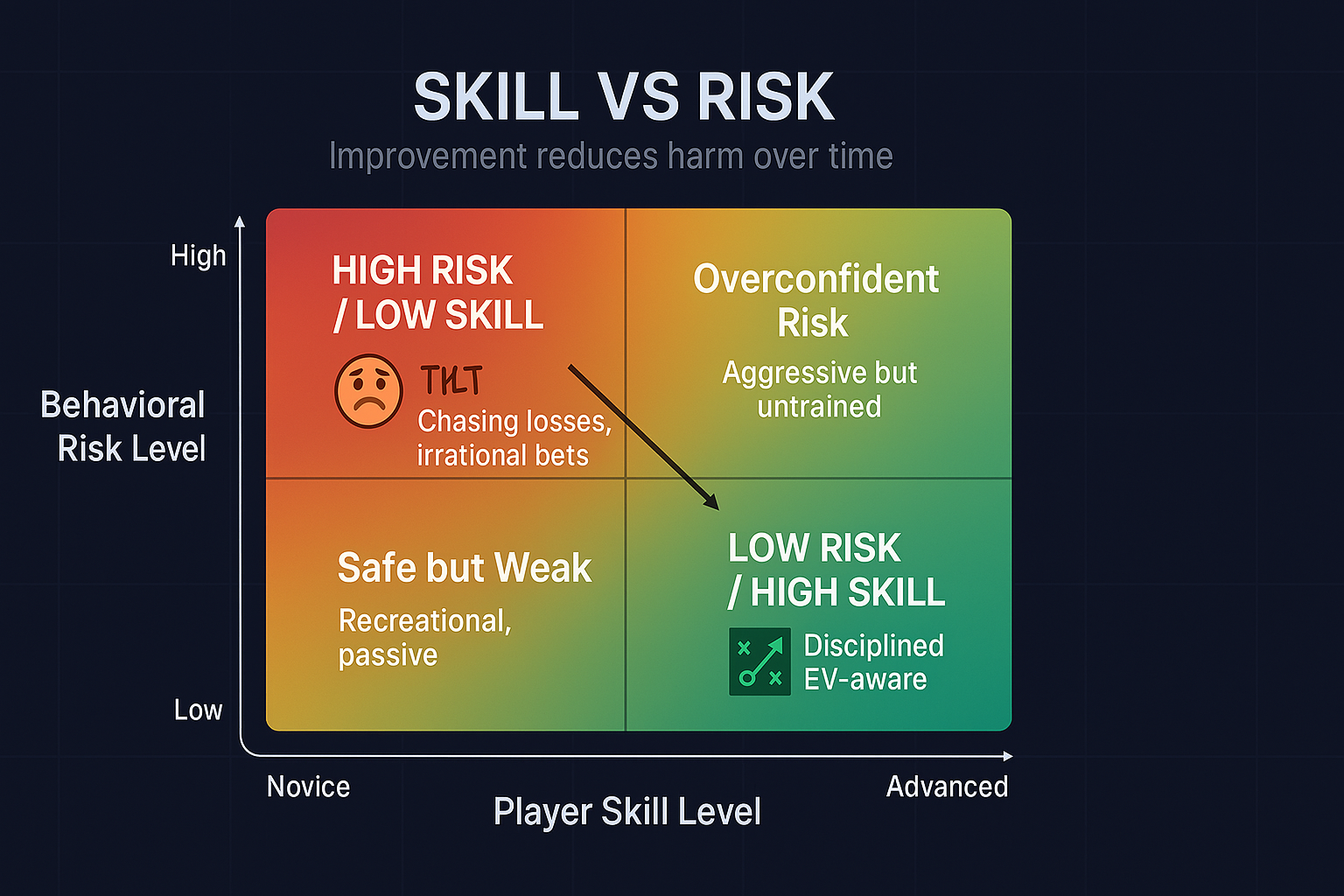
Here’s a fascinating twist.