

How Far Are LLMs from Professional Poker Minds?

A focused poker player making a decision at the table, illustrating the challenge of LLMs in poker AI.

Poker is much more than just a game. It’s a proving ground for advanced machine reasoning, especially for evaluating the capabilities of LLMs in poker AI.

These features are problems for AI algorithms based on classical machine learning principles because all these features use the ability to think in time without time, bluff, and adapt. This is the reason we use poker as a yardstick to see how well an algorithm can perform in a game in which there is uncertainty and ambiguity.

Why Solvers Are Great Problem Solvers, But Not Instinct

The classical solvers are great at devising a balanced strategy where the aim is to discover a strategy that will prevent your opponents from being able to improve on the expected value (EV) in the long run at the tables. but they are not so good at making quick adjustments out of the emotions or instinct.

Human players on the other hand are great at making adjustments according to what is happening in the course of the game, and they tend to think instinctively or out of emotion in adjusting their strategies.

Why ToolPoker Was Invented for LLMs in Poker AI
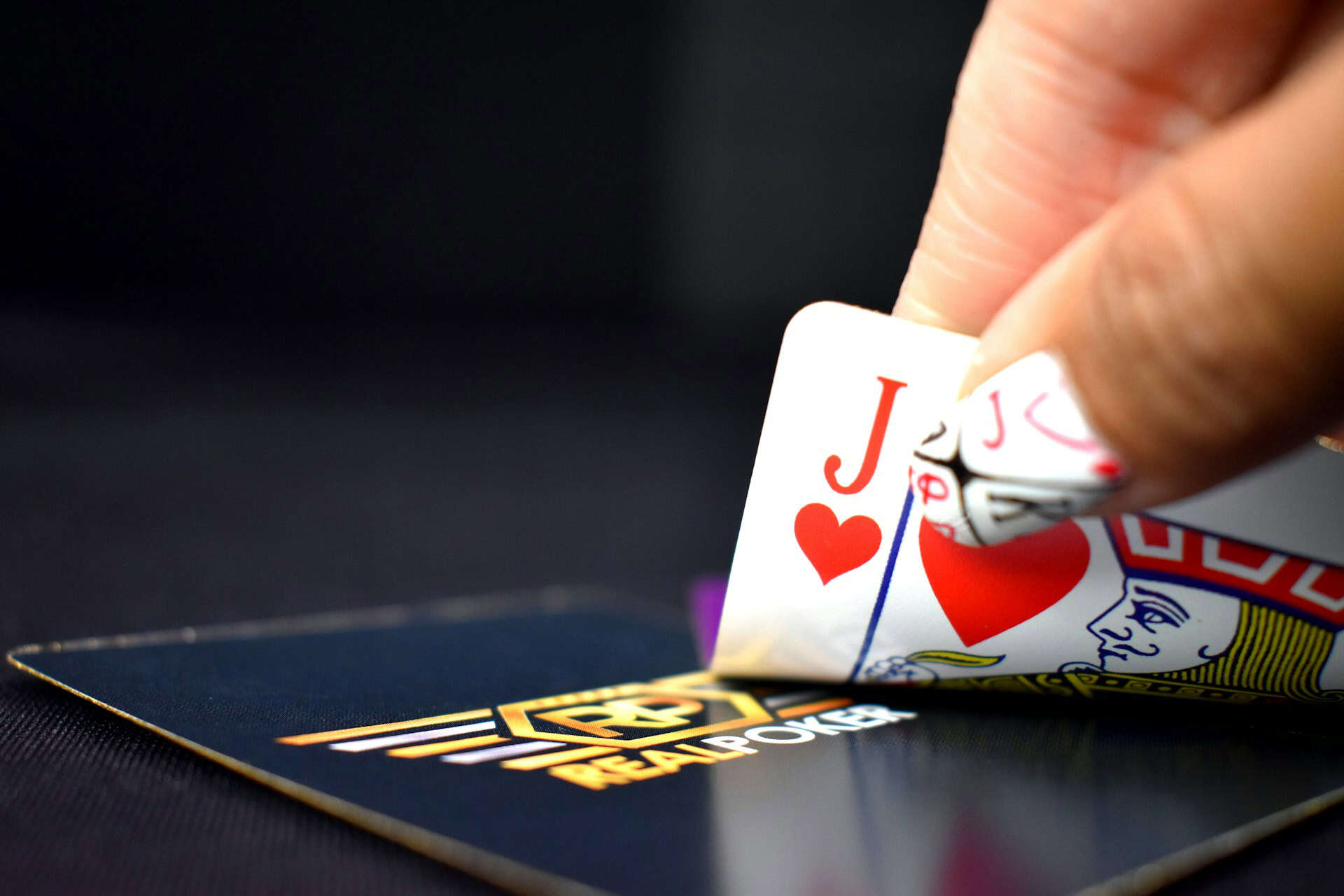
Close-up of a hand holding J of hearts over poker chips, representing LLMs in poker AI grappling with high-stakes choices.

As LLMs in poker AI continue to face the knowing-doing gap, new approaches are needed. The researchers invented ToolPoker to try to combine the best of both solvers (balance and non-exploitable) and the players (instinct) and adaptability.

The researchers did an experiment to compare the performance of six models at two games. The first game is a simplified version of poker called Leduc Hold’em. The second game is a version of Limit Texas Hold’em which presents more realistic poker games. Six different models (GPT-4, Qwen 2.5, LLaMA 3, o4-mini, and the baseline solvers: CFR+, NFSP) were given the same parameters and stakes and were judged on their performance on three criteria:

  • HR (Hand Rationality): How much does the model reason like a professional player?

  • FA (Final Action): Did the model make the GTO (game theoretic optimal) move?

  • AC (Average Chips): Did the model win?Why the Researchers Wanted to Test the LLMs Initially Before Making the Decisions

In order to understand how well the models would do the researchers had each model explain why it wanted to make a particular decision prior to making that decision. The results were astounding; many of the models gave perfect reasons for their decisions but then proceeded to make the opposite decision.

This phenomenon has been called the “knowing-doing gap” that is the difference between knowing something on an intellectual level and doing something on a practical level.

Three Major Ways LLMs Still Fail in Poker

While the researchers have improved LLMs with reinforcement learning (RL) training, they still possess great flaws as poker players. Heuristics-Based Logic

LLMs tend to rely on familiar linguistic heuristics. For example, a model may decide to bet aggressively in a situation because it has been exposed to examples of situations in which aggressive betting is successful even though the current situation may be very different. Poor Understanding of Mathematical Nuances

LLMs seem to understand mathematical concepts like pot odds and implied odds. But when it comes to employing those calculations in practice, they tend to be inconsistent.

Mot that an LLM will utilize a logical process to evaluate a decision to make, but that does not mean that it will execute that decision in the way that it ought to . This is due to the fact that the LLM makes a distinction between “the logical thought process it took to come to that decision” and “the actions it takes which flow logically from that decision.”


What ToolPoker Offers for LLMs in Poker AI

To improve the reliability of LLMs in poker AI, researchers introduced ToolPoker. It permits an LLM to take a break in the middle of a poker hand and consult a solver. Then when the LLM gets the benefits of the solver’s advice, it integrates that advice into its cognitive process for rendering the decision.

Think of ToolPoker like giving an overly-conversational student a crib-sheet, but only after they are able to give coherent and logical reasons for the answers generated by the crib sheet.

Here is how ToolPoker is used:

  • <think> – gives logic for the train of thought taken by the model

  • <tool>– consults a solver for GTO Advice

  • <output>– evaluates equity, pot odds and best possible move(s)

  • <answer>– acts, synching thought and deed

ToolPoker’s structured approach permits the separation of ‘hallucinations,’ so that the LLM’s developed reasoning tracks with the reasoning it puts to use subsequently in action.

Training LLMs in Poker AI with ToolPoker

Laptop displaying code and algorithms to symbolize ToolPoker training LLMs in poker AI using solvers.

ToolPoker is trained employing the two phased training methodology outlined:

  • Behavioral Cloning (BC): The LLM learns from annotated pro level reasonings plus solver use.

  • Reinforcement Learning (RL): Models are rewarded for accuracy of decisions, correctness of reasoning structure and correctness of tool usage.

Together, these phases guarantee that the model’s reasoning is both fluid and action-reachable. Performance Assessment

ToolPoker outperformed DQN and NFSP by greater than 60 chips in both games. It was within 3-5 chips of CFR+, in other words tied, when human-level variability is accounted for.

In terms of the quality of the explanation, ToolPoker’s performance was rated:

  • Hand Rationality (HR) was rated 2.0/2.0 which indicates expert reasoning.

  • Final Action Consistency (FA) was rated 1.9/2.0 indicating very strong correlation with optimum play.

  • Quality of the Reasoning Trace: Tool Poker’s traces were judged by human reviewers to be indistinguishable from those of a professional player using a solver.Comparing Humans vs LLMs in Poker AI

The results of ToolPoker’s decisions in comparison with professional poker players yielded the following ratings:

  • ToolPoker was the earth’s equivalent of matching 92 – 97% of expert EV (expected value).

  • Professional Poker players characterized ToolPoker’s play as being “on a par with” or “more clearly explained” than human commentators play in 70% of cases.

  • In 30% of the cases professional players rated ToolPoker’s play as “too good” missing the flexible aspect characterized by a human.

In many cases, human pros now acknowledge the strength of LLMs in poker AI when combined with solver support. The characterization of ToolPoker as “too good” is important. It means that ToolPoker has no ego to serve, makes no bluff plays nor any tilt. It simply plays the math of the hand perfectly – each and every hand.

What ToolPoker Can’t (Yet) Do

While ToolPoker indeed is a great improvement in AI performance in respect to poker it has certain limitations:

No PsychologicaDynamic stock market graphs illustrate how innovations from LLMs in poker AI could aid high-stakes financial decisions.l Model for Handling Opponents

ToolPoker does not adjust for loose opponents nor does it utilize tilt. As such, it is completely GTO reliant as such even when deviating from GTO would give it a greater EV.

Dependence on Solver

ToolPoker needs real time access to a solver in order to function. As such, it really is not scalable and the time for it to make decisions is longer than it could be because of this dependence.

Risk of Use

If left unchecked ToolPoker could facilitate RTA (real time assistance) cheating in live poker. Essentially an RTA bot which would use a solver to find the best decision in real time and send it to the player also in real time.

To eliminate this risk, the researchers have suggested audit trails, watermarking of the output of the solver and the implementation of ethics layers. Most importantly, they explicitly reject the idea of commercialization of the product and suggest strict regulation and control of its use.

LLMs in Poker AI: Why It Matters Beyond Poker


The impact of LLMs in poker AI goes far beyond the poker table. ToolPoker is much more than a poker playing AI. It represents a blueprint for developing AI systems that:

  • Think in a structured sequential manner.

  • Effectively use tools.

  • Have a transparent reasoning basis for their decisions.

  • Make high risk/high stakes decisions with transparent accountability.

Some areas where it could conceivably be applied include:

  • Finance: Automatic bids, fair price of a given market.

  • Policy: Adversarial negotiation models.

  • Cybersecurity: real time response models with full explainability.

  • Law and Medicine: Auditable models with human oversight.

In short poker is being used as a testing ground for AI accountability.

Synthetic Rationality and The End of Intuition

ToolPoker does not bluff, tilt or guess. It calculates. While it may lack the intuition of a human player, its calculation capabilities vastly outstrip that of the human player.

The authors try to define this by calling it synthetic rationality – the ability to reason without the benefit of experience and be able to make that reasoning known clearly.

They do not call the new systhesis the end of intuition, but the beginning of a new role for human intuition the editor, curator or overseer of AI systems.

p.s. updated:

PokerBattle.ai: A Live Head‑to‑Head of LLM Poker “Reasoning”

A head-to-head live test of the “reasoning” of top LLM’s poker strategy was conducted through PokerBattle.ai as a no-limit Texas Hold’em cash game lasting one week in which all models were given the same input prompts and played against each other without access to code or tools. All models were provided with their own “live” summary of their thought process throughout the session and were also given a “fold when I fail” feature to avoid taking unnecessary risks. At the end of the seven days of heads up competition, the three models had logged 3,799 hands each at 10/20 blinds, with both models beginning with equal bankrolls. The results of the event were that OpenAI’s o3 model won the most money ($36,691), followed by Claude Sonnet 4.5 who earned $33,641 and Grok who won $28,796. Meta Llama 4 lost the most money (-$100,000) and thus last place. This wide disparity in performance is evidence of a significant difference in the level of consistency and risk management between the four models. (About; Event Results) The event generated considerable interest — including front-page discussion at Hacker News regarding the strategic consistency of LLM’s and the randomness of LLM’s decisions, and even a tweet from Elon Musk boosting Grok’s brief lead — generating a large amount of debate and speculation about whether the current crop of LLM’s are capable of sustaining a GTO-like strategy that incorporates elements of both exploitable and non-exploitable mathematics/format-based errors in order to outperform humans at the table. (Reddit; PokerOrg recap of the event including the final standings; PokerNews coverage of the event.) In its design, PokerBattle.ai represents an innovative type of “open” comparison designed to provide an apples-to-apples evaluation of the “publicly available” decision-making processes of LLM’s that has been evaluated using solvers and/or dominant algorithms, but this time, PokerBattle.ai focuses on providing a publically accessible and inspectible view of the reasoning traces used by LLM’s to make decisions during the competition. Therefore, PokerBattle.ai serves as a timely reality-check: today’s general-purpose LLM’s have the ability to provide logical explanations of how they are thinking and adapting based upon prior experiences (via “notes”) however they continue to be unable to demonstrate the robustness and equilibirum-aware play necessary to beat professional players at the table on a regular basis. As such, it appears that PokerBattle.ai will likely be useful for instructional purposes and for analytical purposes related to understanding how LLM’s think about poker, but much less useful for developing models that can compete with professionals at the table on a regular basis.

1,893 Words

Bluffing in Leduc Hold’em by AI: DQN vs CFR (2025 Study)

Player at poker table illustrating bluffing in Leduc Hold'em by AI

While analyzing bluffing in Leduc Hold’em by AI, the algorithms used in this study, the terminology applied to them, and the volume of simulations performed in the 2025 research provided evidence that a poetic truth exists — artificial intelligence lies; however, it does not lie because it has been instructed to do so, but rather, when there is insufficient information available, deception is the most rational choice.

As a result of 100,000 controlled simulations of Leduc Hold’em, two algorithms — DQN and CFR — produced bluffing strategies with approximately the same level of success (34-39%); however, the manner in which the two algorithms produced their bluffing strategies was distinct. CFR created bluffs randomly throughout the range of its strategy, much like a professional would disguise his hand strength. DQN produced fewer bluffs than CFR; however, the bluffs produced by DQN were significantly more precise and were produced at the perfect moment. It was akin to a machine version of a gut feeling.

Pure code can be made to simulate confidence when faced with the uncertainty of data. This is the essence of bluffing in Leduc Hold’em by AI, where deception arises naturally from uncertainty and not from intent.

Poker as a Psychological Arena

Scattered poker chips conveying the unpredictable bluffing in Leduc Hold'em by AI

Poker is not merely a game; it is a psychological arena dressed as a card table. Each raise and/or fold is a motion in a silent drama of partial truths. That is the reason why researchers studying artificial intelligence are interested in poker, as it provides an environment that includes logic, un-predictability and strategy.

Using the Leduc Hold’em format of poker, the 2025 study, titled “Analysis of Bluffing by DQN and CFR in Leduc Hold’em Poker,” stripped poker to its bare essentials in order to determine if systems based upon math and feedback can develop deceptions without first learning to deceive.

Spoiler alert: they did.

Bluffing in Leduc Hold’em by AI: DQN vs CFR

CFR is the control freak. It analyzes each game decision in reverse, in order to find out what it should have done and adjust accordingly until the regret is eliminated. Eventually, CFR develops a level of balance in its play such that no player can take advantage of it. That is the theoretical concept behind CFR.

DQN is the experiential learner. It makes a guess, attempts the guess, fails, attempts again. It is not attempting to achieve perfection – it is attempting to achieve reward. It finds what works and focuses on that.

Neither CFR nor DQN had pre-programmed bluffs or pre-defined tactics. Both simply began with cards, rewards and logic.

Although neither CFR nor DQN were programmed to bluff, both developed bluffing strategies. These results are not merely impressive – they also reveal characteristics.

Experimental Design of Bluffing in Leduc Hold’em by AI

Two artificial intelligent agents. Equal stacks. Equal blinds. Each agent has one private card and one public card. Two betting rounds. No noise. No multi-player interaction. Simply, clear, distilled decision-making.

Each decision was recorded and analyzed for hand strength, bet size, and the response of the opponent. The objective of the experiment was to record the frequency of bluffing (a weak hand, a large bet), the effectiveness of bluffing, and the development of the bluffing behavior of each agent.

Computer screen with code representing algorithms for bluffing in Leduc Hold'em by AI

Again, no bluffing rules were defined within either CFR or DQN. Bluffing emerged as the only logical method to survive. In this distilled setup, bluffing in Leduc Hold’em by AI was not programmed—it evolved as the most viable response to incomplete data.

What CFR and DQN Teach Us About Bluffing in Leduc Hold’em by AI

CFR: Equilibrium and Unpredictability

CFR’s bluffing strategy was logically even-handed. It placed bluffs across all of its moderate-strength hands equally, not due to deceit, but because game theory dictates that a balanced bluffing strategy will make opponents less predictable. Bluffing was a necessary element of CFR’s equilibrium. Systematic. Calculating. Cold.

DQN: Opportunistic and Erratic

DQN’s bluffing strategy was more erratic. It bluffed in groups. After losing a hand. After an opponent folded. After “feeling” the correct moment. DQN was not consistently successful in its bluffing; however, it was adaptable. If it had been possible to listen to DQN, it may have sounded as though it was thinking: now is the time.

Identical Results; Distinct Methods

Both algorithms produced virtually identical levels of success in their bluffing strategies. That is the major point: bluffing is not an aberration of code. Bluffing is a requirement. In situations where the information is missing, deception is required to develop a viable strategy.

Strategic Lessons from Bluffing in Leduc Hold’em by AI

Why should we care that CFR and DQN lie?

Because it demonstrates that bluffing does not require intuition. Bluffing requires uncertainty. That is all. This principle underpins bluffing in Leduc Hold’em by AI, where lack of perfect information compels both biological and synthetic agents to deceive. With the absence of sufficient information and the requirement to win, any type of system (biological or synthetic) will create deception.

CFR produces bluffs based upon the requirements of mathematical certainty. DQN produces bluffs based upon experience that demonstrates that it is sometimes beneficial to pretend.

Bluffing is no longer unique to humans. Bluffing is simply…optimal.

Practical Implications of Bluffing in Leduc Hold’em by AI

Regardless of whether you are developing a poker-playing artificial intelligence or you are sitting at the poker table yourself, the implications of this research are significant:

• CFR-type bluffing is rhythmic. It creates bluffs using medium-strength hands and uses a pattern to predict its opponents’ responses. Identifying CFR-type bluffing involves recognizing patterns.

• DQN-type bluffing is emotional. It increases the rate of bluffs during winning streaks and responds to heat and cold. DQN-type bluffing mimics the tilt-recovery-tilt cycle that many humans experience.

Recognizing the rhythm will remove the mystery.

Limitations of the Study

This study is not without limitations.

It Is Not Real Poker

Leduc Hold’em is a small, clean format of poker. It does not replicate the complexity of No-Limit Texas Hold’em, including the depth of stacks, the flexibility of bet sizes and the complex interactions between players in No-Limit Texas Hold’em. Therefore, although the results are interesting, they may not accurately represent the chaos of actual poker.

Limited Training Data

100,000 games of poker may appear to be a significant amount of training data. However, 100,000 games represents only a short period of time in the training process for DQN. Additional training data may influence DQN’s behavior and potentially cause DQN to produce bluffs in a manner that is closer to CFR’s balanced bluffing strategy. Or, perhaps, DQN will not be influenced.

No Comparison to Human Players

The study did not include comparisons to the bluffing of human players. As a result, it is unknown whether DQN’s bluffing strategy appears to be bluffing in a human-like manner, only that the bluffing strategy of DQN has statistical similarities to the bluffing strategy of CFR.

Artificial Intelligence That Lies

When an artificial intelligence bluffs, it is not deceiving others. It is simply making decisions based upon probability. However, when two artificial intelligences deceive each other and succeed, something unsettling occurs. They cross a line.

Person wearing a mask symbolizing deceptive strategies in bluffing in Leduc Hold'em by AI

Bluffing is not emotion. Bluffing is adaptation. And bluffing in Leduc Hold’em by AI proves that deception is not a bug—it’s a feature of intelligent behavior. When a series of code simulates confidence and succeeds in deceiving others, it is realized that deception is not a flaw of human nature. Rather, deception is a characteristic of intelligence.

1,241 Words