AI Poker Hacks: Revolutionizing the Game

Poker is intuitively no longer won. With artificial intelligence already taking over the game, players who had insight into the recent developments in poker have come up with a number of advantages, from poker bots and AI-powered models to strategic “hacks” and cheat sheets. Tools today help reshape the way poker is viewed and played. Let’s explore how technology has changed this game of ages into a cutting-edge competition.

The Rise of AI in Poker

AI has transformed from a conceptual theoretical model into an implemented useful tool that commands at the poker table. AI machines like DeepStack AI, Pluribus, and PokerAlfie were designed for real-time analysis of tricky situations, calculating probabilities and optimal plays faster than any human mind. This technological advantage is becoming increasingly evident in professional and casual games alike, and therefore players need to understand and adapt to these changes.

Poker Bots: Helpers or Threats?
Poker bots – programs which automatically play poker – are very controversial among both players and platforms alike. This technology can therefore mimic human strategy, considering revised information in real time. Indeed, bots like AlphaPoker from DeepMind have beaten professional players in major tournaments.

But there is also a dark side. Most poker sites ban bots outright, as their participation tends to give some players an unfair advantage over the rest. Advanced versions beat detection systems and come with disturbingly high ethics, given how they are downloadable or privately created.

Pros of Bots: The ability to analyze many more permutations per second than is humanly possible and thus make better decisions. Cons of Bots: Over-reliance or misuse of such bots will ruin the spirit of gaming. For players who are into using poker bots, these can well be put into good legal use offline while training or as a personal refinement of strategies.

The Strategic Poker Hacks and Cheat Sheets

AI is not the only way to do it. For those preferring a manual advantage, strategic tools like poker cheat sheets and hacks will serve well.

Quick References

A cheat sheet just makes decision-making a whole lot easier by summarizing optimal plays for any situation. When to bluff, when to fold? A good cheat sheet tells you this and takes the guessing out of it. These download-ready sheets are available for both amateurs and pros.

Examples of Poker Cheat Sheets:

  • Odds calculators that determine the strength of your hand.
  • Tables on how to react to common betting patterns.

The above tools won’t play the game for you but will certainly give you great insight into how you can make the odds of the game fall in your favor.

Poker Hacks: How to Take It to the Next Level

But what’s a poker hack? Not methods of cheating, but how to play wiser. Most hacks require incorporating some form of technology during gameplay. This could be real-time betting pattern analysis or even the use of specialized software for opponent studies.

Popular ones include the following:

  • Poker Now Hack: Perfect during live games to give probabilities instantly.
  • WSOP Cheats: More specific strategies for World Series of Poker events.

Game Theory Meets Poker: The AI Innovations

The influence of AI in poker goes beyond just bots. Recent breakthroughs in game theory are redefining strategy, with tools able to solve complex games of imperfect information. In a study, researchers Sam Ganzfried and Tuomas Sandholm showcased algorithms that could compute the optimal moves for the notoriously tricky river rounds in Texas Hold’em.
Qualitative Models: A Smarter Way to Win

Traditionally, poker relied on abstraction-based approaches-simplifying games to make them computable. This approach often resulted in strategies that were exploitable. Now, with modern AI, qualitative models analyze the structure of decisions-like when to bet, bluff, or fold-to drive more robust solutions.

  • Infinite Approximation Models: These solve an infinite version of the game, mapping the results back to the real-world scenario for better accuracy.
  • Mixed-Integer Programming (MIP): An advanced method to calculate precise equilibria, even in multiplayer settings.

This technology gives an edge by lowering exploitability and improving the accuracy of decisions, fitting well for competitive play.

Facing AI Opponents

As AI tools become commonplace, it is inevitable that a player will eventually face off against an AI-driven strategy. Fear not-human creativity still has a place.

Tips for Beating AI

  • Introduce Chaos: Bots are great with patterns. Take this away by playing unpredictably, and the bots go haywire.
  • Over-Optimize It: Some AI is so over-tuned that they cannot adjust when other players have less conventional moves.
  • AI Detectors: Most poker platforms nowadays give tools for identifying bots. It keeps the game fair.

The Ethical Dilemma

With poker inevitably changing due to technology, there is one important ethical question to be raised: just where is the boundary between legitimate tools and outright cheating? Bots, for one thing, are universally forbidden. More gray areas are AI-powered assistants and cheat sheets, however.

Balancing the Future

Regulators have much work to do if they are going to keep pace with the changing technology landscape and maintain the integrity of the game. Steps being taken include:

  • Increased clarity around the rules of AI in poker.
  • Further encouragement of trainers that help players improve without undermining the fairness of the game.
  • Improved bot detection for level playing fields.

The Future of Poker: Humans + AI

In the future, poker could become less about humans vs. the machines and more about humans + machines. Envision AI tools as training partners that help players grasp high-level concepts via simulation.

At the same time, players will have to adhere to ethical guidelines to make the game complement technology instead of going against it. Whether one is competing in the WSOP or playing casually online, knowing the role of AI has now become an integral part of poker mastery.

Conclusion

Poker is no longer a card game but one of wits, technology, and adaptability. Advanced poker bots, AI-powered hacks, and qualitative models are just some of the tools of the future that are already here. For players willing to embrace this brave new world, the rewards are as exciting as the game of poker itself.

1,015 Words

Demystifying Poker AI: The Role of ACPC Protocol

In the last few years, Artificial Intelligence has hit the poker world, changing the dimensions of online gameplay. One tool facilitating this revolution is the ACPC protocol: a framework of rules designed for automated computer poker competitions. This article deconstructs how the ACPC protocol works, what it means for poker players, and the general role of AI in online poker.

What is the ACPC Protocol?

The Automated Computer Poker Competition, or ACPC, protocol is a communications framework originally designed to uniformize interactions between poker-playing programs and servers in the context of competitions. While the phrase may sound niche-level technical, this is actually the protocol that underlies strategies for some of the most advanced poker bots.

At the heart of the ACPC protocol lies determining how poker bots communicate with a server, interpret game state, and make decisions on their actions. It’s like the language an AI poker player uses to “speak” to the dealer and other players around the table. It’s designed to handle gameplay elements such as rounds of betting, visibility of cards, and positions at the table with incredible accuracy.

How Does the Protocol Work?

At first glance, the ACPC protocol can appear to be an alphabet soup of match states, betting strings, and card notations. Its functionality, however, is pretty straightforward if you break it down.

Match States: The Core Communication Unit

The server sends MATCHSTATE messages to the client (the bot) constantly, which describes the current state of the game. They consist of:

  • Player position: Who is next to act.
  • Hand number: Which hand is being played.
  • Betting actions: A list of actions taken during the current round (e.g., “r” for raise, “c” for call).
  • Visible cards: Hole cards and community cards.

For example:

MATCHSTATE:0:30:rc/:9s8h|/8c8d5c informs the bot about its position, the hand number, the betting history, and visible cards thus far.

Player Responses: Calculated Actions

The bots respond to match states with actions that are calculated very carefully based on probabilities and game theory. A simple response might look like this:

MATCHSTATE:0:30:rc/:9s8h|/8c8d5c:c

The bot decides to call here after analyzing the game state.

Flexible for Different Poker Variants

Whether it’s limit or no-limit Texas Hold’em, the protocol extends to support game rules describing betting, the rank of hands, and the interaction between players. The flexibility of this protocol is part of its popularity in both research and competitive domains.

How Do Poker Bots Utilize the Protocol?

In essence, poker bots use ACPC for processing game information, assessing their positions in a game, and using strategies. A closer look:

  • Pattern Detection on Betting: Bots utilize match states as a way to follow the sequence of events: bets, raises, and folds. A simple string, such as r300r900c, may show them that the opponent is overly aggressive and lead them to implement the necessary defense mechanism.
  • Probability Calculation: They calculate odds in real time. Supposing community cards appear to be 8c8d5c with the hole cards 9s8h, from there, the bot could very well take a shot at making a straight or full house and react based on that probability.
  • Decision Trees and Game Theory: More advanced bots make their moves in accordance with game theory. A raise, call, or fold is not done on a whim. Each move has been computed exhaustively in order to maximize profit.

Challenges of Playing Against Bots

For human players, though, there are huge challenges looming in the shape of AI-powered opponents. Poker bots have some serious advantages using protocols such as ACPC:

  • Consistency and Precision: Bots don’t tilt. Emotions, fatigue, or pressurizing never affect them, so they can maintain relentless precision.
  • Data-Driven Strategies: With access to historical game data, bots can easily switch tactics mid-game to play on players’ weaknesses.
  • Unerring Memory: Bots remember every hand that’s been played, and over time they’re able to recognize patterns and adjust—which few pros are really able to manage.

Can You Tell If You Are Playing a Poker Bot?

As challenging poker opponents, there are a few ways of recognizing poker bots at your table. Here are a few basic tips:

  • Predictable Behaviour: Many bots stick to very consistent strategies. If one player always responds to raises in the same way, he may well be a bot.
  • Inconsistent Timing: Bots usually respond almost instantly to situations that would cause hesitation from human decision-making.
  • No Emotion: Players who never tilt or fall for your bluff may well be an AI.

Report bots to the platform administrators upon detection. In fact, most poker websites do wish to rid themselves of them in order to keep the game fair.

The Future of Poker and AI

The ACPC protocol was really just the beginning of where the game of poker would like to go with AI. Here’s what that will look like:

  • Deep Learning Means More Sophisticated Bots: Already, bots like DeepStack and Libratus use complex neural networks to trounce professionals. Coming future AIs could integrate not just deep learning but the ability to make better judgments in real time.
  • Better Training: AI isn’t for adversaries alone—it’s one incredibly powerful tool for training new players. Pros-to-be can run hands versus virtually any number of bots.

Ethics

As AI continues to evolve, so will ethical considerations of bots in online poker. Just how invasive should a bot be for an unfair advantage in winning?

Final Thoughts

The ACPC protocol has been an interesting confluence of technology and strategy that helps the bots play at the highest level of poker. However, when demystified, understanding how those bots work could finally yield an essential edge for human players over them. Adaptation and learning will ensure that even the most advanced AI adversary finds you prepared in the game.

Time to Get Better: Master deep play against poker bots, one hand at a time.

984 Words

Mastering Poker with AI: Potential-Aware Abstractions

Poker has for a while been celebrated as a card game of skill, chance, and mental finesse but is now increasingly becoming a testing ground for artificial intelligence. The sheer size of the game tree for poker – particularly no-limit Texas Hold’em – puts even the technically best algorithms to the test. Given the fact that there are approximately 10¹⁶⁵ nodes in the complete tree of games, the kind of straightforward solving of the kind is not computationally feasible. Abstraction is one of the groundbreaking ways by which poker is abstracted for the AI. The latest development in this arena now takes AI poker strategies a step beyond the rest: potential-aware imperfect-recall abstraction.

Game Abstraction in Poker

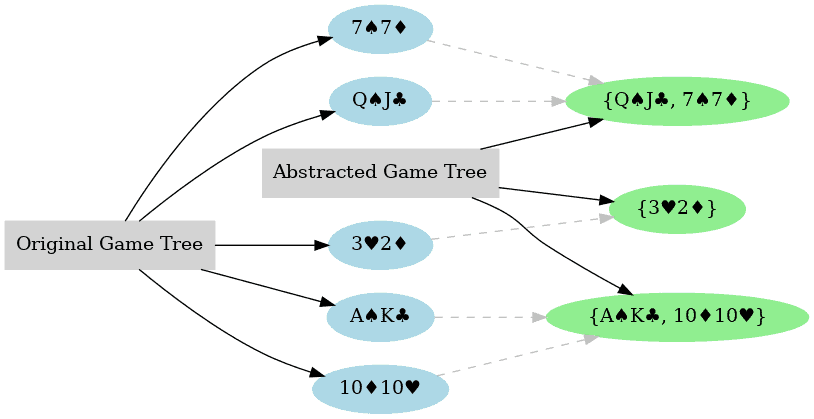
Abstraction reduces complicated games such as poker by bundling comparable states of the game and hence lowers the level of decisions the AI must make. It would be equivalent to attempting to estimate the grains of sand in a beach by performing analysis on the potential result of each hand – it’s too much. With abstraction, however, AI breaks down such a massive decision tree in clusters manageable for the tech.

First, this abstraction was manual – a human-intuitive way to define clusters. Several years later, an automation using algorithms to group states into clusters based on metrics of expected hand strength, such as a measure of a hand’s probability of winning against a random opponent, was proposed. Fair enough, but often quite out of touch with the actual nuances of how hands unfold throughout a round.

Earth Mover’s Distance and Distribution Awareness

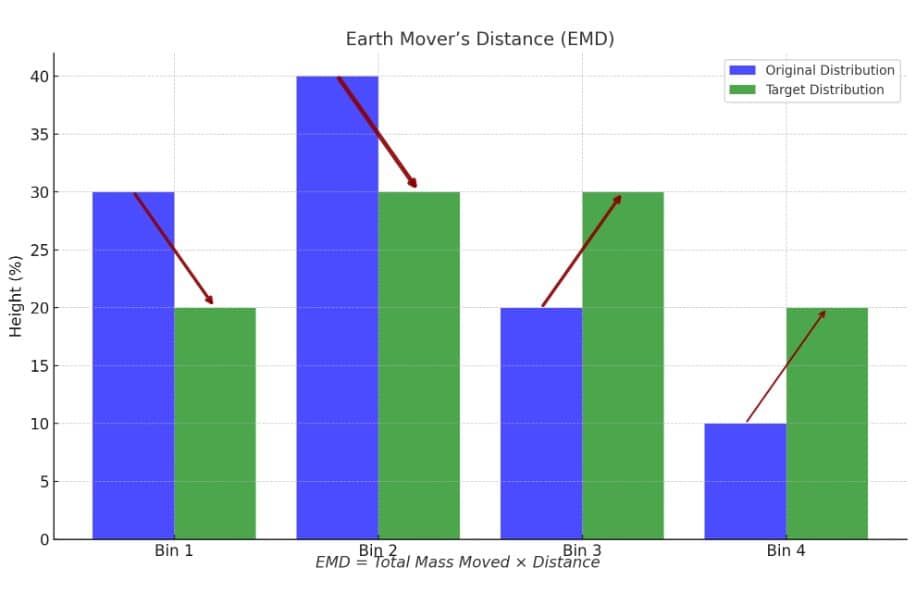
More abstraction refinement involved the application of the distribution-sensitive techniques such as taking a complete distribution of the strength of the hand instead of averaging. Such a procedure was also combined with the application of the Earth Mover’s Distance, a mathematical tool for ascertaining the amount of work involved in transforming one such distribution into another. In the context of poker, such a process can be conceptualized as the comparison of probabilities of winning through a complete set of board possibilities.

There are also constraints in the case of distribution-aware abstraction. It concentrates in the end-round of poker and overlooks build-up of the strength of the hand by previous rounds. Two hands may look the same in terms of the end-round distributions of the equity while playing quite differently in previous streets. This omission paved the way for potential-aware techniques.

Introducing Potential-Aware Imperfect-Recall Abstractions

Potential-aware imperfect-recall abstraction is a paradigm shift. Rather than targeting the endgame alone, this method takes account of the way a hand’s equity evolves in every round. Through the analysis of the “trajectory” of the strength distributions, AI is capable of making more subtle decisions.

One such innovation is the application of imperfect recall such that the AI can “forget” during later rounds. Paradoxical as it seems, forgetting can serve by putting computation in the context of the more important details. Thus, for instances like TcQd and 5c9d, they can have comparable endgames but differ a great deal earlier in the rounds as indicated by their paths in the turn and flop distributions.

Experimental Success in No-Limit Texas Hold’em

The potential-aware algorithm was put to test in no-limit Texas Hold’em in extensive experiments where it ruled supreme over the older methods. The researchers used a fixed betting abstraction for their experiments and found enormous improvements.

One of the many tests the researchers found out that the AI with the new algorithm would, over many hands, prove to be 2.58 mbb/h better than the benchmark. That number might sound really small, but when the stakes are high, the slightest gain translates to substantive advantages over thousands of hands played.

Advantages

  • Correct Clustering: Since the full paths of the hand strength are being used for the grouping.
  • Computational efficiency: Appealing to heuristics for the approximation of EMD, despite the algorithm’s complex nature.

Wider Implications and Future Applications

The framework of potential awareness not only generalizes to poker but also to sequence imperfect-information games. It also provides the potential for broader applications for AI such as financial modeling, strategic planning, and military simulation.

Things to be Solved

  • Scaling: The hand clustering in the later rounds of poker continues to remain a CPU-bound program. Bigger datasets will need algorithms optimized even more.
  • Combination with abstracted actions: While abstracting potential awareness achieves notable performance in grouping information, the combination of the above and scalable betting strategies remains a task yet unfinished.

Lessons for Poker and AI Enthusiasts

To poker players, potential-aware abstraction is not a point in time hand equity – it’s a dynamic process. Fans of AI are free to borrow the inspiration for the use of imperfect recall, showing the surprising benefits of selective forgetting.

Conclusion

With the coming of potential-aware imperfect-recall abstraction, a new frontier has opened up within poker strategy, literally marrying the best of mathematics with the ingenuity of AI. The approach, by tracking the trajectory of hand strength and thus optimizing abstractions, topped all previous algorithms so far and brought AI one step closer to mastering probably the most intricate game devised.

As they continue to evolve, they are bound not just to alter poker but a considerable amount of other strategic domains. The game, in a way, can now begin.

877 Words

The Game Theory Twist in Poker: Uncertainty Explained

Poker has long been a testing ground for strategic thinking, fusing together psychology, probability, and game theory. The most interesting investigation, perhaps, is the model advanced by von Neumann and Newman-a simplified approach, which reduces poker to its most basic, possible moves. How different things become when you add a little wrinkle-a little uncertainty about the strength of the terminal hand. Let’s dive into how this nuance of game theory morphs strategies and what it says about poker today.

A Simplified View: Von Neumann and Newman Poker

John von Neumann started to analyze poker using his new field of game theory back in the 1920s. A simple model of two-person poker was later extended by Newman. The model represents a two-player poker game in which each player is dealt a “hand,” a real number between 0 and 1. First, player X has the right to bet a fixed amount or to check. If player X bets, then player Y responds by either calling the bet or folding.

The simplicity reveals two important insights. First, optimal strategies involve bluffing-a mix of betting strong hands and low-value hands-so opponents can never be sure what they’re up against. This, Von Neumann proved, gave Player X a predictable edge of 5/9 of the pot in the basic model.

The Newman’s model gave more leeway to Player X in that he could vary his bet size. It boosted the flexibility of the bettor’s edge up to 4/7 of the pot. These models remain important touchstones in research about the strategic essence of poker.

Uncertainty: Flipping the Script

In real poker, perfection of information is a mirage. Unseen cards and shifting possibilities mean that players rarely have any sure idea about their ultimate hand strength. Researchers built a “flip” into the von Neumann and Newman versions of poker.

Here is how this goes: whenever a showdown occurs, an unbalanced coin flip with bias q determines whether the weaker hand takes the pot. With probability 1 − q, the winner is the stronger hand. But with probability q, the tables turn – introducing randomness, akin to the real poker surprises, such as community cards in Texas Hold’em flipping a weak starting hand into a powerhouse.

At q=0, this is the flip-free game, identical to the original models. At q=1/2, the result is a pure coin toss-the player has no advantage. Somewhere between these extremes, a surprising result was found.

Surprising Results: The Power of Uncertainty

One intuitive feeling might be to think that uncertainty hurts the bettor, Player X. After all, adding randomness to the outcome of the game seems to undermine any control. Surprisingly, the math tells a different story.

For the von Neumann model, starting at q= 0 and increasing, Player X’s advantage increases and reaches a maximum at q=1/3. Player X’s expected payoff soars to 7/12 of the pot, a 5% increase over the original game. Why? Less bluffing is required, since with the flip, Player Y must call more often, even with mediocre hands.

In Newman’s extended model, Player X’s advantage increases linearly with q until it reaches a maximum just below q=1/2. Unlike in the case of von Neumann, this model rewards increasing randomness, since Player X’s flexible betting strategy allows him to extract even greater value.

Strategic Shifts: Adapting to the Flip

The flip dramatically affects the strategy of both players. Player X cuts bluff bets as q q rises, while his value bets-strong hands-increase in strength as Player Y has to consider he will lose with a better hand. When q=1/3, bluffing disappears completely in von Neumann’s model; Player X concentrates all his energies on exploiting his strong hands.

In turn, Player Y is increasingly forced to call the bet, realizing that to fold means ceding the pot to a worse hand. It is an evolving game of chicken in which psychological pressure is ratcheted up.

Modern Applications: AI and Poker Bots

This insight is not some academic plaything; it also finds reflection in poker bots and artificial intelligence. Bots like Pluribus and DeepStack build upon these game-theoretic premises, mixing up calculated bluffs with play adaptation based on uncertainty.

The logic of the flip applies particularly well to online poker, whereby randomness, whether through human unpredictability or algorithmic quirks, can blow up conventional strategy. Knowledge of such dynamics lets bots-and sophisticated human players-exploit opponents who crack under pressure.

Besides that, tools such as poker cheat sheets and sophisticated AI analyzers enable players to internalize such principles into their own games. From Texas Hold’em to variants, uncertainty can be key to your game.

Lessons for Poker Enthusiasts

The von Neumann and Newman models, advanced by the flip, suggest that poker is less about mastering odds than about mastering uncertainty. Here are what players can take home:

  • Embracing uncertainty: Players should learn to realize that uncertainty may be your friend, whereby you’re forcing opponents into bad decisions.
  • Adapting bluffs: Players should learn to reduce reliance on bluffs in uncertain situations and instead seek to extract value with strong hands.
  • Learning from AI: Players take advantage of tools and strategies modelled after game-theoretic insights to help them stay ahead.

Conclusion: Re-Thinking the Game

The beauty of poker lies in the blend of chance and strategy that it presents. The von Neumann and Newman models demonstrate how even slight modifications – a coin toss, for example – can unleash sophisticated strategic insights. The more one understands such dynamics, whether a casual player or professional, the deeper their appreciation of the game will be. Next time you sit at that table, recall that sometimes embracing the unknown is the ultimate poker hack.

930 Words