
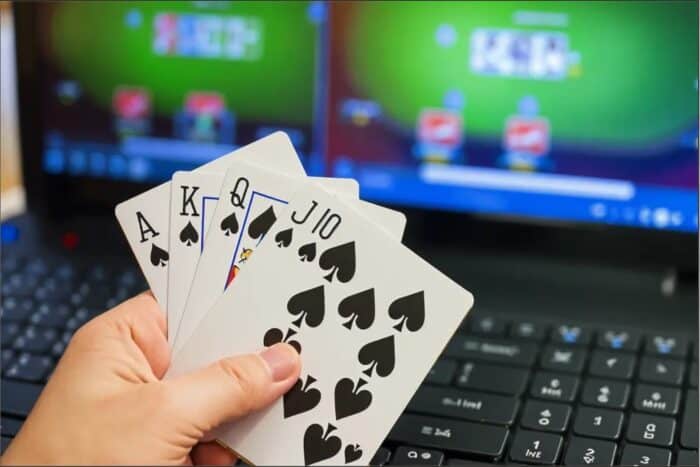
The Power of AI in Online Poker Strategy
It used to be that online poker had a strategy, but things flipped with artificial intelligence coming in. It is now that there is a set of developed algorithms that implements various techniques, including Nash equilibria and gradient optimization, toward the finetuning of gameplay. Thus, this should balance the general aggressiveness with caution in developing robust yet adaptive strategies.
These are some state-of-the-art approaches which developers in poker bots rely on. Gone are those simple hacks at poker. Deep AI systems, based on that kind of theory-DeepStack AI, and Pluribus poker-regularly defeat even the best human player.
What does the Nash Equilibrium mean in poker, exactly?
The Nash Equilibrium is that point at which no player is able to get better payoffs by a unilateral alteration of strategy. In poker, it would be the simplest example: AI plays so that nobody can exploit it.
Here’s why this matters:
- Unexploitable play: AI systems use Nash equilibria in hope that even the best of human players cannot exploit them while playing.
- Balanced strategies: AI, on an optimal level, then does the balancing of betting, calling, and folding for most profit in the long run.
- Dynamic adaptation: Modern systems operate under Nash principles, in dynamic environments. Examples abound, from multi-table tournaments.
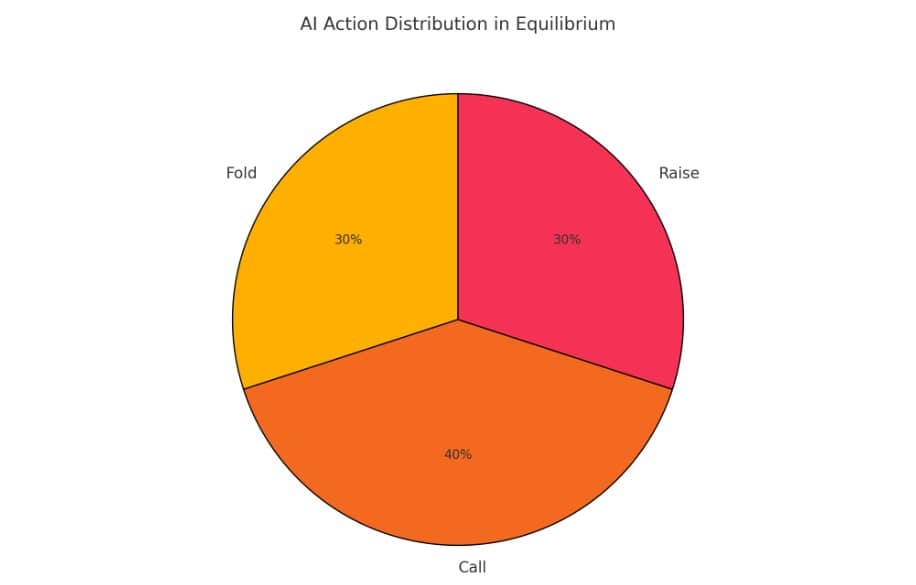
Whereas the unsophisticated poker cheat would rely on rigid and unbending rules, in the Nash-based AI system, modifications are done dynamically by considering opponents. This is indeed the very framework PokerAlfie uses to rout ultra-high-stakes games.
Place of Gradient Optimisation in Poker AI
Gradient optimization is really just fine-tuning strategies in small, incremental improvements. Consider having a poor strategy to begin with; methods of gradient look at every little decision and slightly adjust to slowly hone in on an optimal playstyle.
Examples are like a poker AI bot, which, on a very rudimentary level, can start with quite a simple decision tree. With experience, through gradient optimization, this will learn to adjust its game in light of:
- Opponent tendencies.
- Historical hand results.
- In-game, real-time dynamics.
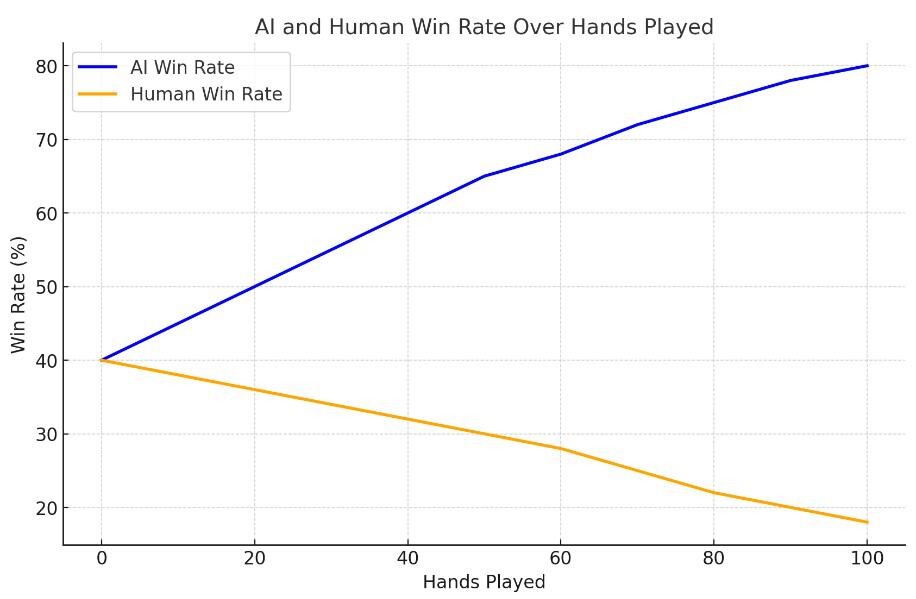
That is quite effective in those very cases where nothing else could work, like the so-called poker cheat sheet. Gradient optimization will ensure that AI chooses the most optimal play and adjusts in the process to opponents’ strategy changes.
Combined Nash Equilibria and Gradient Optimization
It is in combining these techniques, however, that the true power of AI really starts to come into being. The Nash equilibria give very strong theoretical underpinning, while the gradient optimization keeps it improving. Put together, they tend to create unbeatable AI systems.
Let’s break it down.
- Base strategy: A theoretically un-exploitable strategy in the very beginning, in game-theoretic terms-such as Nash.
- Adaptation (Gradient): The system adapts this prior to exploit particular opponents or situations.
This is a synergy that creates considerable ease for an AI system, like DeepMind Poker Bot, to create great results both in theoretical and practical play-a sizeable proportion beyond any poker machine hack.
Applications in Online Poker
- Tournament play: In such an unstable environment as WSOP is, AI systems try to succeed with the help of the Nash and gradient methods. This way, AI can compete even with very aggressive or unpredictable opponents.
- Training tools: Most of the training sites base their functionality on these algorithms, fine-tuning a player’s strategy. Such tools can be much more indicative about this than standard poker hacks.
- AI vs. AI: In games between online poker bots, Nash-based strategies ensure fairness and balance, while gradient optimization fuels improvements.
Of course, there are some opportunities for welcome improvement such as the ability to downloadbot software, which would enhance training possibilities.
Challenges and Ethical Considerations
With that tremendous power can come great ethics questions. With that, does this now mean that players should allow the use of such AI tools when playing in live games? Most online platforms ban the use of poker bots while finding training tools still widely acceptable.
Transparence is the key. Now, platforms useAI detectors to identify unauthorized systems that don’t play fairly. Yet, the line that separates the use of acceptable tools from taking unfair advantages grows ever thinner.
Poker AI of the Future
The combination of Nash equilibria with gradient optimization is but just the beginning. Other possible extensions to follow may consider:
- Multiplayer optimization: Algorithms that excel in games with more than two players.
- Real-time emotional analysis: Systems that adjust strategies based on opponents’ emotional states.
- AR and VR integration: Training tools that use augmented reality to simulate live poker environments.
As things stand now, the best players need to look elsewhere for such tools as apps like Download Global Poker or Poker Online AI. It is, therefore, important in such a competitive space to understand how ai and poker work.
Conclusion

This really ups the ante with AI in online poker. Modern systems already make use of Nash equilibria and gradient optimization; hence, they are impressively correct and able to adapt with much ease.
From casual but intense down to professional, knowing those tips really shows that they will occasionally give any player an added advantage in the game. It is never static; neither will you be if you possess the right hardware.
Next time you sit around the table, remember this: You ain’t playing poker-you’re into a sport created by the coolest technologies of its time.