
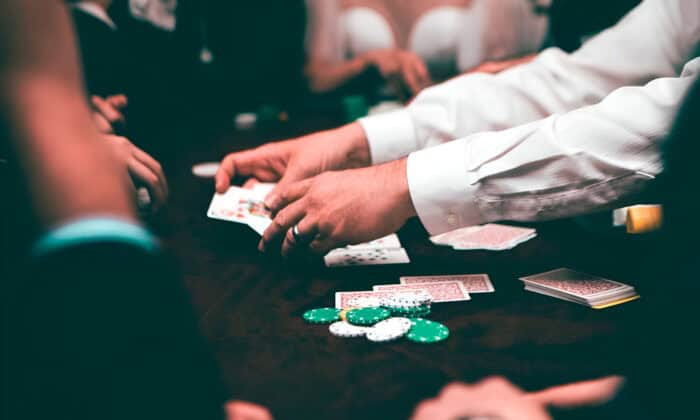
Poker is more than a game; it’s an interesting choreography of deductive reasoning, psychology, and decision-making. Every hand has a story behind it, and every decision one makes is an amalgamation of past experience and intuition, spiced up with a tinge of unpredictability. From a classical player’s perspective, poker is strikingly human; it is all about reading your opponent, managing risks, and handling uncertainty.
But then, there is the flip side. Change the lens to AI, and poker acquires a whole new dimension. For an AI engineer, poker is a well-posed problem. This is a game of finite states, probability, and optimization, where seemingly infinite complexity in human behavior goes down to numbers and algorithms.
Let us break this dualism down and examine the philosophy of poker from a human and an AI perspective.
What Is Poker to an AI Engineer?
Poker, in simple terms, is a game, a well-defined set of rules that governs interactions among players. But unlike any other game, poker is intrinsically based on incomplete information. This very inability to know makes poker such fertile ground for human creativity and AI modeling.
Key elements of poker strategy from the artificial intelligence perspective:
- Finite states: A finite number of variables specify the situation at every point in poker: chips, cards, the amount of possible acts (check, call, raise).
- Mixed moves: Players are not deterministic. They attach a probability weight to every possible act they may perform, e.g., calling 45% of the time and folding 55% of the time. This injects randomness into the game.
- Expected profit: Each decision, whether deterministic or randomized, can be evaluated through the concept of a long-run average payoff.
This formalized vision reduces poker to a mathematical problem, an optimization problem whose solution involves probabilities and optimization divorced from any human emotion or intuition.

Human Decision-Making: Looking Beyond Rules and Logic
While AI tackles poker as an exercise in logic, human players bring much more to the table. Human decisions are influenced by an alphabet soup of different factors:
- External Observations: The opponent’s betting patterns, facial expressions, and table talk all feed into a player’s decisions.
- Internal State: Mood, fatigue, or even the “phase of the moon” may affect decisions.
- Adaptation: People dynamically adjust strategies according to both game states and psychological cues.
Example of Mixed Strategies in Action:
A player is on a tough call:
- Folding means losing $10 for sure.
- Calling can win $40 but comes with a 50% chance of losing.
By calling 50% of the time and folding 50%, the player maximizes expected profit while remaining entirely nondescript.
As an AI engineer, this probabilistic behavior would be reduced to math. For the human, though, it’s partly a logical process and partly instinct – a decision informed by years of experience and the feel for the moment.
The “Infinite Problem” Explained
There seems to be this assumption that poker is an infinite game due to its complexity. It is not, say AI engineers.
Why Poker Is Finite:
- Mixed Strategy Simplifies Complexity: Probabilistic actions impose order on the decision-making process. An AI computes the expected profit created by many moves and finds the optimal strategy.
- Finite Game State: While poker is a complex game with hundreds of variables, every decision is firmly bound by the rules of the game. Possible actions and their outcomes are high but finite.
Interesting Nuance:
Even such a minor detail as the size of the stacks at the start may have a twist. For example, a $600 starting stack might disturb a superstitious opponent enough to adjust their strategy. These seemingly insignificant details highlight the balance between pure logic and human psychology.
Strengths and Weaknesses: AI Versus Human Players
AI systems excel in areas where human players often fall short:
- Accuracy: AI processes large volumes of information, finds patterns, and builds genuinely optimal strategies.
- Steadiness: AI doesn’t get tired, emotional, or distracted.
- Speed: AI can consider multiple options in seconds and provide real-time recommendations.
But humans have advantages AI lacks:
- Psychological intuition: Reading opponents and dynamically changing strategy.
- Creativity: Making plays that are uncanny and illogical.
- Adaptability: Acting unpredictably in unforeseen circumstances.
Mixing Strengths
The most interesting approach is to mix strengths: using AI’s analytical power as a teaching aid to improve strategies while preserving the human touch that makes poker so special.
Key Takeaways for Players and Engineers
- Poker Is a Finite Puzzle: What makes poker complicated can actually be boiled down to finite structured strategies.
- The Significance of Mixed Moves: Randomizing moves keeps opponents guessing; it’s the best move in maximizing long-term profit.
- The Ways That Both Humans and AI Play Poker Differ: AI relies on probabilities, while humans combine logic with psychology and intuition.
- Collaboration Is Essential: AI tools can analyze a player’s game and enhance decision-making without eliminating the unique style of human play.
Practical Applications for the Budding Player
For Players:
- Study human psychology to improve your ability to read opponents.
- Use poker software to analyze your game and refine your strategy.
For Engineers:
- Focus on modeling human unpredictability to create more realistic AI opponents.
- Experiment with hybrid systems that integrate rule-based logic and machine learning.
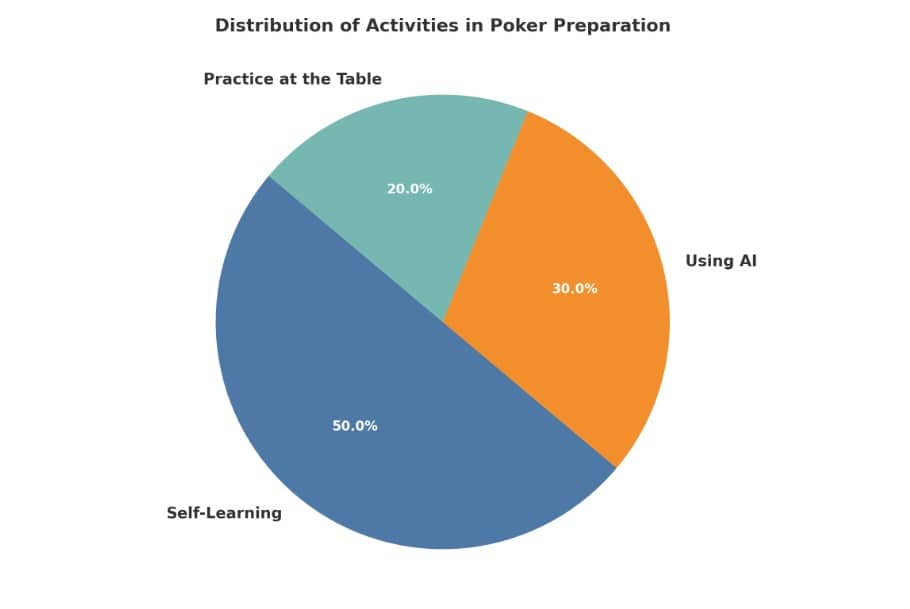
Understanding poker from both human and AI perspectives creates a competitive edge – whether you’re at the table or engineering the next generation of poker bots.
For further insights on poker strategy and AI applications, explore resources that merge human ingenuity with technological precision. The game is ever-evolving, and your next move is.