

Poker has long been a proving ground for psychological battles, with opponents reading each other, bluffing, and acting in seconds under uncertainty. What happens, then, when artificial intelligence (AI) enters the mix?
AI long ago conquered games such as chess and Go, both perfect information games for each move. Poker, however, involves a challenge—hidden information, deceit, and unpredictable humans. How, then, can AI poker robots win in a sea of uncertainty? The answer is through opponent modeling and expectimax search, two techniques that allow poker robots to learn, adapt, and outmaneuver humans at poker.
So, let’s see how AI is unlocking the poker code and its implications for future poker
AI Poker: Something Greater Than Simple Probability
The conventional view is a poker bot is nothing but a math calculator that works out odds and acts in terms of probability alone. Hand strength and pot odds count, naturally, but top-class AI poker robots go a whole lot deeper in terms of arithmetic.
The real wizardry comes with opponent modeling—the ability for an AI to monitor an opponent’s style and adapt its behavior in reaction. That’s when AI outdoes conventional “static” pokerbots, following unchangeable, pre-written programs.
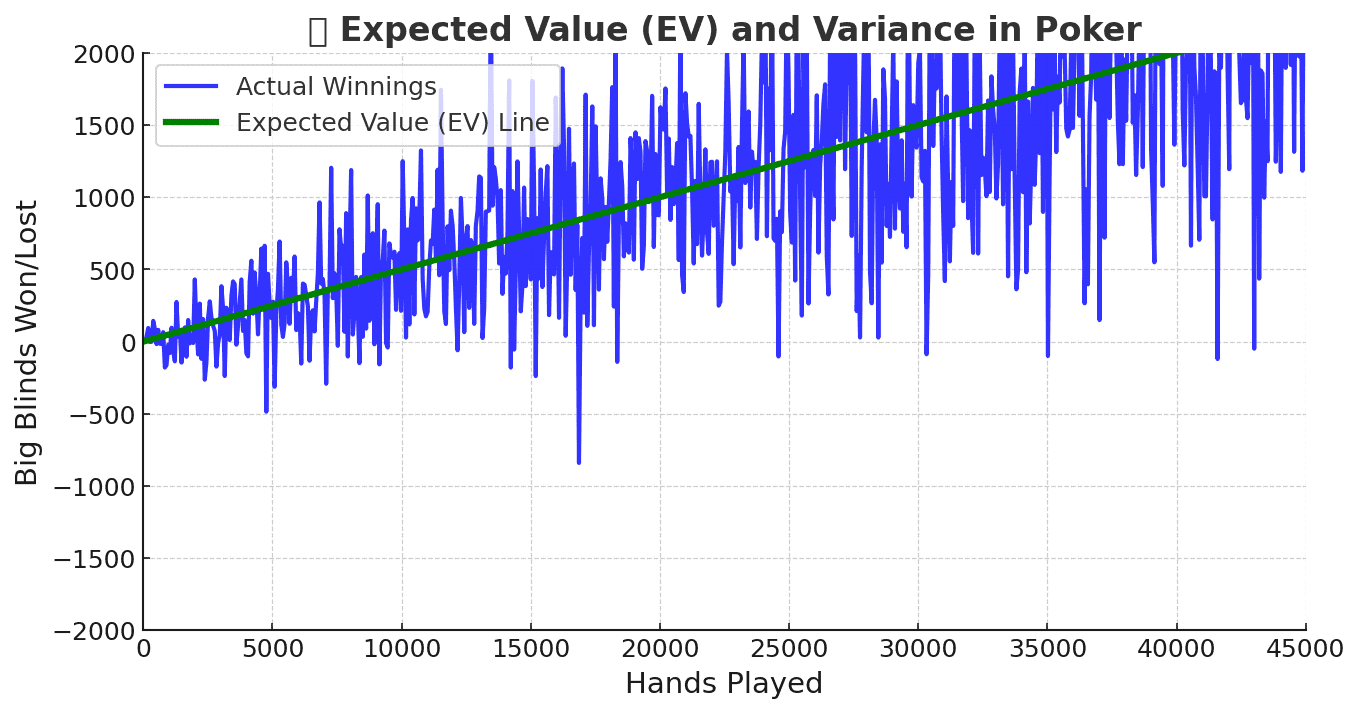
How Opponent Modeling Works
Imagine yourself at a table with a bot that watches your every move. It logs your bluffer’s frequency, when and when not to fold, and how high a bet to make in a case in point. Over a period, it constructs a rich picture of your routines, similar to an experienced player.
Here’s an opponent model an AI looks out for:
Betting Habits – How often will an opponent raise in position? Do they follow through with a bet following a flop?
Bluffing Rate – How often, and under what circumstances, will an opponent bluff?
Reactivity to Aggression – Do opponents fold when aggressed, or will they call down a poor hand?
Over Time Adjustments – Do opponents change over a stretch of play?
By gathering and processing such information, AI refines its style to exploit weaknesses—calling down a bluffer, for instance, or tightening when a loose opponent comes at them.
Expectimax Search: AI’s Best Kept Secret
So, then, how will an AI make its move with regard to such an opponent model? Step in expectimax search, a powerful decision algorithm for allowing AI to navigate poker’s uncertain information environment.
Expectimax search is an extension of minimax search, a renowned algorithm for perfect information games like chess. But in poker, information is hidden (in opponents’ hands) and uncertain (the draw of community cards), and decision-making a whole lot more complicated.
How Expectimax Search Works
Simulates Outcomes – AI takes into consideration all conceivable hands an opponent can have in terms of past behavior.
Assigns Probabilities – AI estimates probabilities for each conceivable opponent hand and bet.
Estimates Expected Value (EV) – AI estimates each conceivable move (bet, call, fold, raise) for its profitability in terms of opponent behavior.
Makes Optimal Action – AI takes the move with the most EV, for the most long-term gain.
Such a model can enable AI to play dynamically and adapt, not in terms of a scheme but in real-time in terms of changing circumstances.
Example: Defeating a Bluffer
Let’s say, in heads-up, your opponent AI realizes that you bluff a lot at river and, with the use of expectimax search, comes to a realization that it can make a profit in the long run in such a case. Not fearing your bluffs, it starts to call your river bets with its trash hands, revealing your bluffs and taking profit off your style of play.
And, in a similar case, in case your style of play is too passive and doesn’t bluff enough, your opponent AI will fold too much when you bet, depriving your strong hands of value extraction. Such adaptability in real time makes AI-powered poker bots almost unbeatable.
The History of Poker AI: Simple Bots to a Superhuman
The development path of poker AI over the past two decades can hardly be overestimated. Poker bots of early years played simply according to a programmed script and could not stand even an experienced player’s attack. With technological improvement and machine learning development, AI reached the level of a superhuman player.
Key Events in Poker AI Development:
- Poki (1999-2003) – One of the early poker AIs, but couldn’t resist a strong opponent.
- PsOpti (2005) – Applied game-theoretic approaches in heads-up limit Hold’em at a high level.
- Polaris (2008) – First AI to beat professionals in heads-up limit Hold’em.
- Cepheus (2015) – Solved heads-up limit Hold’em with GTO approaches.
- Libratus (2017) – Beat top human professionals in no-limit Texas Hold’em and changed its strategy in real time.
- Pluribus (2019) – First AI to win in multi-player no-limit Texas Hold’em, and for many, an achievement considered impossible.
Today, AI pokerbots don’t “play the odds” in a simple, direct way – deep strategic thinking, psychological manipulation, and deceit, same as the best human players.
Can Humans Beat AI?
Is AI poker supremacy a fait accompli? Not yet, but increasingly not.
AI masters heads-up poker, but at full-ring (multi-player tables), it still suffers its Achilles’ heel. Unlike in chess and Go, both of which AI will forever make perfect moves in, poker involves taking advantage of opponents’ errors—something humans have yet to vanquish in multi-player, complex environments.
But AI tools no longer price humans out of poker; AI tools actually enhance humans’ capabilities. Most professionals use GTO solvers to simplify approaches, review hands, and adjust to playing in a balanced, exploitable style.

The Future of Poker AI
AI isn’t transforming poker in a vacuum; AI is transforming high-stakes decision-making in finance, cybersecurity, and negotiation, too. Poker AI’s best-choice decision-making under uncertainty can generalize in many real-life environments, extending well beyond tables.
What’s in store?
- AI Helpers for Poker Players – Real-time HUDs with deep analysis of opponents.
- Smarter AI – Future pokerbots will use NLP to simulate human psychology even more naturally.
- Unbeatable AI? – If AI comes to “solve” no-limit Hold’em, will online poker become bot-ridden? Online platforms may require AI anti-detector tools to maintain fair play.
What’s for certain, at least, is that poker is no longer a purely human activity. AI has forever changed poker’s face.
End Thoughts: Man vs. Machine
The rise of AI poker is both exciting and disquieting. On one level, it is a demonstration of artificial intelligence’s enormous capabilities for learning, adaptability, and success in complex environments such as poker. On another, it raises considerations for the future of poker, cybersecurity, and humanity in an AI-driven world.
Regardless of whether you’re a weekend player, a weekend warrior, or a full-time grinder, an awareness of AI’s orientation towards poker can make you a competitive force at the tables. After all, if AI can take advantage of your weaknesses, can’t you use AI to exploit your opponents’ weaknesses?
So, when you sit down at the tables in the future, wonder: are my opponents beating me, or is an AI beating them?