
In poker, knowing one’s opponents may be as important as understanding the odds of any possible play. Be it an opponent being onto a bluff or playing tight, the dividing line between success and failure is thin. It is this challenge applied to AI again that ANN-based opponent modeling can help overcome.
These algorithms make use of historical player action, betting patterns, and tendencies to enable the AI to fine-tune strategies in real time. Unlike those traditional ways of cracking poker or using cheat sheets, ANN-based systems improve with the input of data. The neural networks take up a polymorphic approach where the poker AI bots will play against human opponents – from casual online games to top-level competitions.
Opponent Modelling
Opponent modeling in general is observing strategies that an opponent is likely to use from observation of his/her actions. Opponent modeling is the cornerstone of poker AI by being able to do the following:
- Identify patterns: Observe regular trends in betting behavior, such as whether a player tends to raise aggressively or check cautiously.
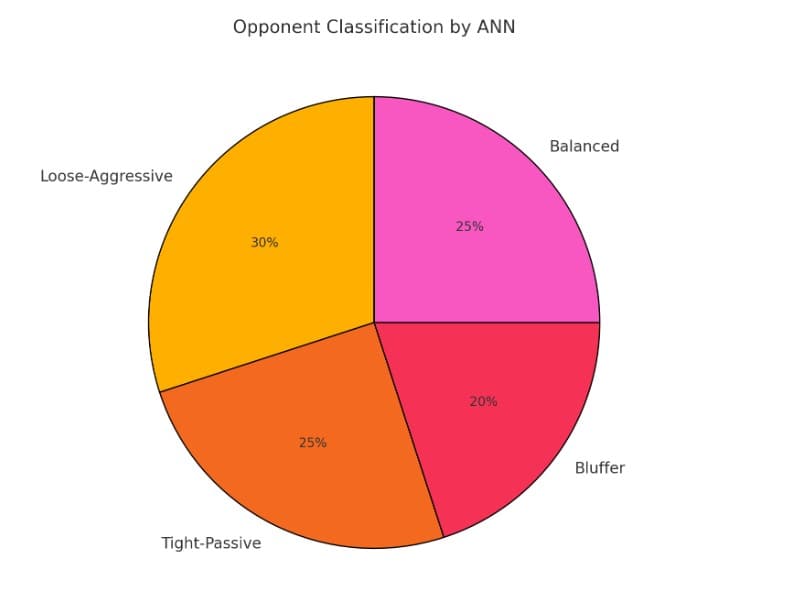
- Classify opponents: Players can be labeled as either loose, tight, aggressive, or passive.
- Change strategies: To change its playing style in order to exploit any tendencies of the opponent.
Such a winning player, he identifies, takes his main inspiration from overbetting by his opponents in situations where they have the best hand. He has a model that the bot follows, which folds marginal hands and stops further losses.
How neural networks refine opponent modeling
- Data entry
The types of analyzed inputs by ANN include, but are not limited to:- Sizing of bets
- Timing tells – the length of time taken to act
- Historical games played
- Find pattern
Here, the network discovers the pattern in the inputs. It might consider, for example, that whenever there is a bluff played, there is a fast raise 70 percent of the time. - Prediction and modification
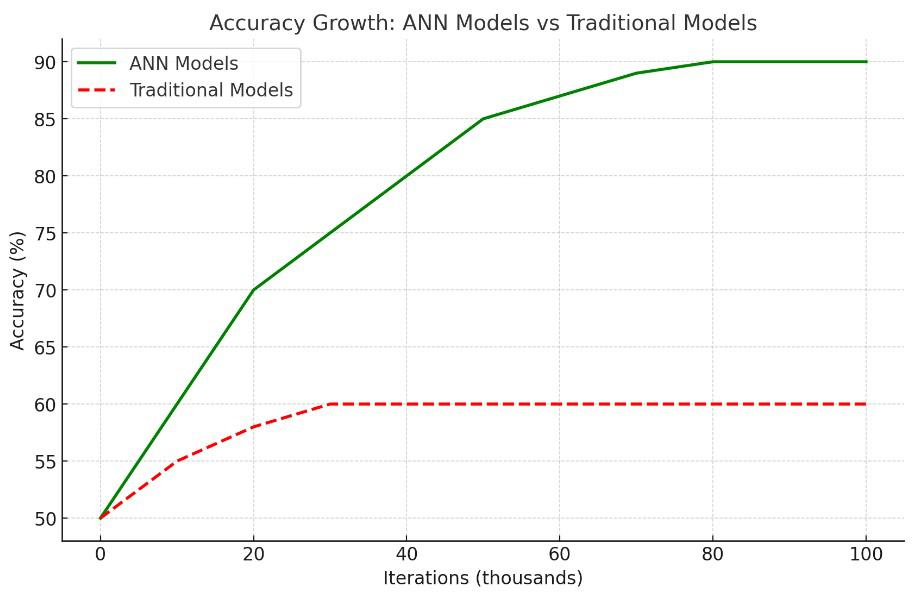
These analyses done, the network predicts what the opponent is going to play next and thus shapes its own strategy. Unlike static poker bots, systems based on ANN improve over time. They are able to handle and process difficult situations that traditional tools fail to address, such as poker machine hacks.
Applications of neural networks to poker
- Real-time opponent profiling
The neural networks thus allow AI to profile their opponents in real time. One could, for example, play tight against loose aggressive players and bluff with constant hands to exploit more cautious opponents.This dynamic allows systems like DeepStack AI and PokerAlfie to apply well even against players who can be fairly unpredictable. - Bluff detection
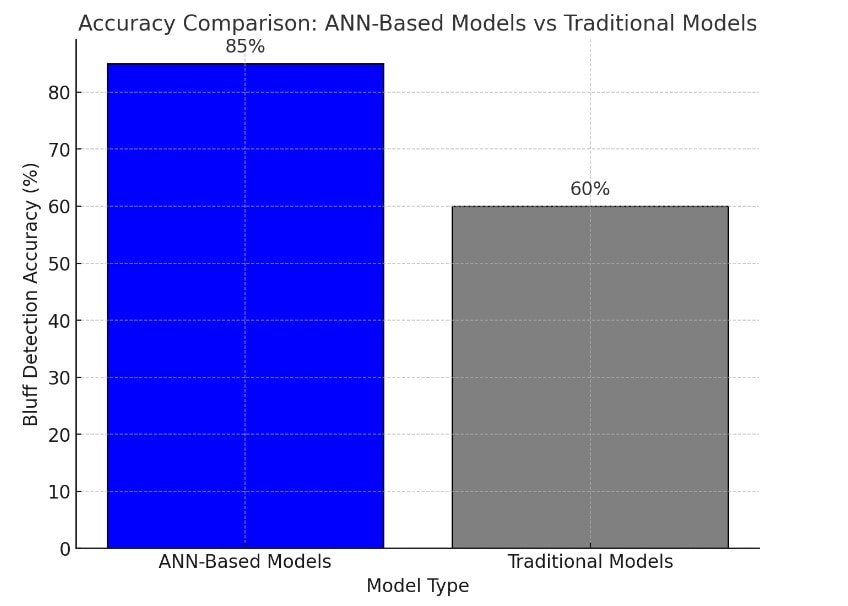
These include subtleties such as those that cue off inconsistencies in betting patterns – for example, that will help the ANNs determine whether someone is bluffing or not. Example: a player who raises pre-flop and then checks the flop is likely to be on a bluff. All of the above makes ANN-powered online poker bots much more adaptive when compared to more traditional versions. - Multi-Player environments
In multiplayer games, the neural network will be especially good at keeping parallel track of opponents. The very ability to process information speaks for itself in online poker AI, which actually understands what happens with the whole table.
ANN opponent modelling vs. traditional

The above comparison thus clearly shows why the increasing trend in online poker bots is shifting to ANN.
Challenges and ethical considerations.
The advantages accompanying ANN-based AI are huge, but a few ethical issues have come forth.
- Fair pay: Advanced poker AI bots can make the game unfair. Many platforms nowadays are hence using the installation of *AI detectors* that trace unauthorized usages of tools.
- Data privacy: There is no use of player data for training when considering ethical and legal standards throughout.
- Over-dependency: The moment players start becoming over-dependent on AI, they lose their strategic edge.
Future of ANN in poker AI
The neural networks have a bright future in poker, because they shall perform much more than they are doing today, such as:
- Real-time emotional analysis: based on the bet sizing, AI will, over time, deduce the opponent’s feelings.
- Better training platforms: where the ANN-driven simulations will enable the poker to train with realistic AI opponents.
- Integration with Game Theory: Combining ANN with Nash equilibrium strategies could result in unbeatable AI systems.
The tools so far proposed that shall guide a player in engaging most of the modern AI include download poker bot and buy online bot software.
Conclusion

Neural networks are game-changers in the way AI has been handling poker, continuously improving on opponent modeling, detecting bluffs, and adapting strategies. The ANN-based systems guarantee such a level of sophistication, way beyond the capabilities of any other conventional approach.
Whether you are a poker bot developer or just a poker player, you cannot skip the basics of ANN. Actually, poker is about to change, and the driving force standing behind such change is Artificial Intelligence. Ready for Poker Intelligence Next Generation?