Why you can no longer spot a poker bot at the table

Why human poker players can no longer visually detect AI poker bots at the table in 2026 — detection has moved to the room's security server, poker-ai.org

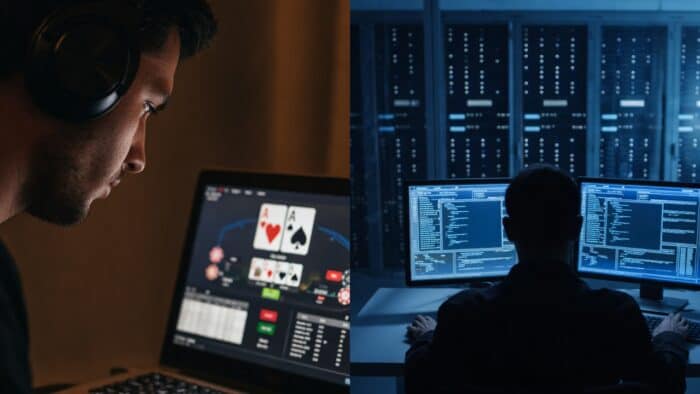
TL;DR. Throw out the guides. Seriously, delete them. The ones about “identical timing” or “silence in chat” are dead weight. It’s 2026. You sit at a table and you cannot tell a top-tier bot from a live player. Not by eye. Not anymore. Modern engines randomize their pauses — and not dumb randomization, the pauses scale with how complex the spot is. They mimic reg bet sizings. They answer in chat, and the answer comes either from an LLM or from a live operator. Does that make bots invulnerable? No. The catching happens on the room’s server now, away from your table. And not every room does this equally well. Some do it properly. Some — we’ll get there.

Every couple of weeks I get the same DM, different wording: “look, I spotted a bot — all his pauses are identical.” Or: “caught one, didn’t respond to my chat jab.”

I’ve spent the last few years working on the architecture of detection systems, not on playing strategy, so every time I end up explaining the same thing. The heuristics that worked around 2018? Dead. I wrote about this back in “Ghosts at the Table” — and since then it only got worse.

WHAT’S WRONG WITH THE BEHAVIORAL-TELL GUIDES

Everybody links the same guide. The poker bot detection guide from Upswing Poker, August 2021 — probably the most cited one in the industry. Four working signals it gives you: consistent timing, no reaction to a moderator alert, sessions of 12+ hours, 25+ tables at once. (Bet sizing and silence in chat — to their credit, they admit those are unreliable.) Fine. Except five years passed since 2021. And in 2026 not one of those four delivers what it promised. Not one.

Timing first. People imagine old bots clicked at exactly 2.4 seconds on every decision. Nonsense. Even the OpenHoldem generation, the early Shanky Poker Bot stuff — randomization was already there. Crude, yes, identical for every situation, but there. Aggregate statistics across volume were what actually busted those bots. No hero with a stopwatch on a single hand. Today the range is context-aware. Garbage preflop hand — instant fold. Tough river all-in — nine seconds of “thinking.” They even fake tilt: loses a big pot, snap-calls right after. Like a human steaming. Cute.

The moderator test doesn’t work anymore either. Direct message with a notification — a modern bot answers just as convincingly as a human. The difference is the cost of the solution. Cheap option: an LLM answering autonomously, no human in the loop, and it slips on stuff unrelated to the game — recent news, local language nuances, the model starts to drift. Expensive option, the one serious farms use: a sniffer catches the system notification and forwards it instantly to an operator in Telegram. Guy replies from his phone. Good luck jab-testing that.

The 14-hour marathon was too obvious a tell on its own. So farms dropped it. Modern table-selection code hunts weak lineups by itself, and sessions cut off on a time cap or a win-rate threshold.

Continue reading →

2,389 Words

Cognitive Biases at the Poker Table – Part 3: Rituals and Lucky Wins

Continuing this series of articles on cognitive biases in poker, I’d like to start—as is my custom—by explaining why it’s important to understand cognitive biases. After the first few parts, I hope you’ve come to realize that:

  • it’s impossible to turn off the inner monkey—the intuitive channel;
  • in certain situations, we really, really need the monkey.

System 1—or the intuitive decision-making system—is something we really, really need, and it’s precisely what distinguishes a professional from an amateur.

Imagine a professional boxer in the ring who, when his opponent’s gloved fist is flying toward him at tremendous speed, starts thinking: “I’ll dodge to the right now, then to the left, then I’ll duck, then maybe a double jab…”—and so on. If he thinks about that, he’ll be knocked out immediately—any athlete who’s ever boxed will tell you that. During training, reflexes are developed so that during a fight, the boxer thinks only strategically and positionally. At the moment of a punch or an attack, as a rule, he isn’t thinking about where to dodge, where to tilt his head, at what angle, how low to crouch, or where to extend his elbow… All of this happens automatically. And that’s exactly what our “inner monkey” does. It works quickly, without thinking—exactly what’s needed during a fight.

That much is more or less clear, but the question arises: do we need System 1 in other areas unrelated to motor coordination? Maybe we should turn it off in all other cases? Well, no!

Take a look, for example, at a game between top-level chess players. What distinguishes a grandmaster from a master, a master from a club player, and a club player from a beginner? You probably know that in chess there’s a clock with a flag. If the flag falls, time is up—which means you’ve lost. A certain amount of time is allotted for each game. The entire game depends on the speed with which the player finds strong moves. Does that mean they think better (faster) than an ordinary person—someone who isn’t a chess player? No.

Strange as it may seem, for a grandmaster, a titled master, or any trained chess player, all these moves come almost automatically; only afterward, with the help of System 2—our rational mind—does the player reject some, accept others, and decide which move to make. But there are a huge number of different moves that can be made on the board. How do you choose the optimal one from this multitude? The fact is that a chess player begins by considering the most important moves, and that is precisely what saves them time. That’s what the monkey does. And this happens not only in chess. As you might have guessed, it happens in poker, too.

System 1 (the inner monkey) is capable of making the right decisions only when a person has a certain amount of experience. And the more experience a person has, the more the energy-intensive and time-consuming System 2 delegates tasks to System 1. So I’ll repeat what I’ve said in previous articles. If you think you’ll find a “magic pill” in this text that will suddenly let you beat a poker bot—or, for that matter, defeat anyone at the poker table—you’re mistaken. My main point is this: to win, you need to make fewer mistakes, and to make fewer mistakes, we’re studying the key cognitive biases that apply to poker. In fact, I’m slightly shortening your path toward reducing systematic thinking errors when playing poker.

Continue reading →

1,701 Words

Cognitive Biases at the Poker Table

When I wrote the previous article, my goal was to keep it within a certain length so as not to overwhelm the reader with too much information. I wanted to write a comprehensive article that fully explored the topic, but as I wrote, I realized that the subject was quite interesting, and as I delved deeper and wrote the first article, I realized that systematic errors of perception (or cognitive biases) is a very broad topic. So I decided to write a series of short articles on making incorrect decisions related to this topic, using poker as an example.

In fact, if we compare modern humans to computers, and mental patterns and ways of thinking to an operating system, the following analogy best explains what is happening. The core of a modern person’s operating system is identical to that of an ancient person’s. In modern people, only the system utilities, libraries, and user applications in their minds have changed, been updated, or been rolled out. In other words, we have a program embedded within us that was formed long ago. And, unfortunately, we’ve also inherited the bugs in this software, which is what we’re talking about. What’s most interesting is that, even though we’re all different, these cognitive traps are passed down to us, and we don’t even suspect it. But, as they say, forewarned is forearmed.

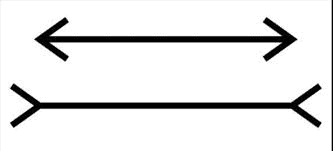
As I mentioned, we have System 1 (which I will sometimes call the “inner monkey”), whose job is to conserve mental resources and make quick decisions when necessary, drawing on life experience and the “ancient program” within us. And the cumbersome System 2, which is very labor-intensive, kicks in when we’re really thinking something through, in situations where the intuitive and fast System 1 can’t handle the task. It’s as if we’re switching from autopilot to manual control. So what exactly is the main point we need to clearly grasp for ourselves? The “ancient program” is designed to conserve energy, so your brain will try to make decisions using the inner monkey rather than System 2. And the inner monkey really, really loves to make mistakes. In this situation, I can’t help but give another example of how System 1 makes the wrong decisions. Here’s a simple picture. Which line is longer?

Cognitive Biases

System 1—or as I call it, the “inner monkey”—gives the answer: the top line is shorter than the bottom one. Now scroll to the very end of this article and see for yourself that System 1 gave the wrong answer. In fact, the lines are the same length.

It’s worth noting that no matter how hard you try, it is impossible to turn off System 1. Try looking for 5–10 seconds, for example, at a store sign in a language you know. Did it work? =)

There is also an effect known as the Stroop Effect, which was allegedly used during the Cold War to identify Soviet spies. A person suspected of espionage was shown a text in Russian; the text consisted of a word denoting a color, for example, “Yellow,” but the text itself was printed in a different color. The person had to name the color in which the word was printed, not the color the word denoted. Try practicing.

Continue reading →

1,526 Words

How to Play Against a Poker Bot

Probably every professional poker player—whom we commonly refer to as “regulars”—understands that poker isn’t just about luck. Poker is about probability, statistics, cold calculation, and emotional detachment. Emotions are an essential part of being human. On one hand, they’re a vital component of life that helps us survive and make quick decisions when necessary. You wouldn’t stop to think about what to do if a furious man with a knife suddenly charged at you on the street, would you? If you haven’t trained yourself for such a situation, you won’t even have time to think—a mix of fear and panic will make you turn and run. According to Nobel laureate Daniel Kahneman, the decision was made for you by what’s known as System 1. System 1 helps you pull your hand away if you touch a hot object; when you brush your teeth, zip up your favorite jacket, or play your favorite chords on the guitar—you don’t think about it or focus on the process.

In the other corner of the ring is System 2. Its operation requires a great deal of resources. And the human brain is wired such that, for the sake of conservation—in the context of evolutionary survival—not everyone likes to engage System 2. For example, when you’re learning to code, figuring out the rules of a new board game that the weird guy with greasy hair (but who, for some reason, is friends with your best friend) brought to the party, or watching a documentary about how a nuclear reactor works—System 2 is at work. System 2 is slow, conscious, analytical, and resource-intensive. It kicks in when you need to solve a complex problem, check logic, or suppress an impulse from System 1. Here’s a simple example illustrating when System 2 is active and when System 1 is active, using basic mathematical operations:

  1. 2 x 2
  2. 48 x 23

In the first case, you simply need to glance at this simple mathematical equation to come up with the answer 5 (just kidding, 4). In the second case, you need to break the equation down into its simplest components in your head. First, you’ll mentally multiply 48 x 20 separately, and then add the result to the result of the expression 48 x 3. It’s complicated, isn’t it? And if you were chewing gum or listening to music in the background at the same time, you’d stop chewing and wouldn’t be able to make out the sounds of the music.

Unfortunately, salespeople and marketers have adopted Kahneman’s work for manipulative purposes. The thing is, System 1 very often fails. Unscrupulous salespeople take advantage of this. Here are a few examples. The first price you see becomes the anchor against which you’ll evaluate the purchase. Displaying an old or inflated price next to the new one makes the discount seem very tempting. An expensive item in the window makes all the other prices seem more affordable. Or, for example, let me share a story from my own life. A long time ago, about 10 years back, when my belly was smaller, the grass was greener, and ice cream tasted better, I got my driver’s license and saved up for a car for about two years. So there I was at the dealership, on a friend’s recommendation, to buy a brand-new car, but one registered from the previous year. It was technically the end of the year, and in a couple of weeks, that car would be two years old on paper. That’s exactly why the dealership was offering a great discount. While I was finalizing the paperwork and drafting the sales contract, my personal sales representative’s colleague walked up to him and asked, loudly and pointedly: “Are you selling that last black Honda Civic right now? Because I already have customers here to buy it.” My first reaction was panic, and five minutes later I had already put a deposit down at the dealership’s cashier. A week later, when the car transporter delivered my car, the price had naturally gone up, and this purchase went from being a super-profitable deal to just a regular one. But what if I’d had time to read the deposit agreement and had time to make a decision? Most likely, I would have looked at offers from other dealerships and, quite possibly, bought it somewhere else.

Continue reading →

1,222 Words

3UpGaming Bot Review: $1,800 for a “Pro” AI That Plays Like a Fish

3upgaming scam site

TL;DR

A buddy of mine decided to try out a new player on the poker bot market — a “real AI bot running on poker AI + GTO that plays like top regs” — and paid $1,800 for it. Everything seemed serious and trustworthy, however, after a series of test runs (hand histories were scraped from all sessions + video recording was kept), non-stop patching of junky bugs from 3Up Gaming, we received a bot that plays worse than any fish and simply flushes your stack down the toilet — overall EV winrate: -87bb/100 hands and worse over a volume of ~10k+ hands.

I can say with confidence that this is just another well-hyped scam product on the poker bot market. 3UpGaming’s goal is to sell you the bot immediately (2-3+ units for the max price) which looks like a working product, but in reality, is just an imitation. You will only realize this after a couple of days of testing, while the 3UP manager keeps gaslighting you along with promises of updates. Stay away.

I know 3UpGaming managers might try to claim this review is fake. If anyone—potential buyers or developers—wants to see the unedited video recordings or the full database of hands, email me at [email protected]. I have nothing to hide.

The Red Flags

I rarely do these breakdowns of other people’s products, but I feel obligated to warn anyone wanting to buy a poker bot in 2026 about this scam. My friend fell for it (and he is far from a fool), so the chance of throwing a couple of thousand dollars into the void is high. Let’s get to the point.

The 3UpGaming project appeared in 2021. In 2024, judging by the Web Archive, they offered iGaming services — you buy a ready-made poker app that is customized for your brand (so-called poker skins). The contact info listed was American — phone number, email, Skype. Okay, you can find a presentation of their services on the internet, I have no questions there.

In mid-2025, global changes occur — the site is significantly reworked, the CMS changes, the text changes, new sections and services are added. It’s visible that a good SEO specialist took over the site, and copywriters are writing mountains of AI-generated articles for them weekly (processed via humanizer services, but after reading them it’s clear it’s all fluff). The site is actively promoted, and backlinks are being bought. Services for poker AI robots (bots) are added, as well as a service for club owners to fill tables with their AI bots.

3Up Gaming scam manager Alex conversation

That’s when my friend saw them on the internet, studied the site, and messaged Alex from 3UP Gaming on Telegram. So, here is what they promise:

“fully automated bots that are a mix of GTO and AI”
“They play exactly like a professional player”
“2–3 bots sit at a table, see each other’s cards and play team play”
“for each robot we give you a VM machine and a unique IP so that the percentage of robots being banned reaches zero.”
“Robots are trained and updated by AI every day.”

Setup of the bot for any poker room and poker format (Hold’em, Omaha).

And all this — for $1,200 setup + $600/month for each bot. Alex sent a few demo videos where their bots are playing on ClubGG.

Sounds not bad, right? But upon requests to show any HH (Hand History) graphs, game results, or successful cases, we get the answer:

Continue reading →

1,807 Words

How Far Are LLMs from Professional Poker Minds?

A focused poker player making a decision at the table, illustrating the challenge of LLMs in poker AI.

Poker is much more than just a game. It’s a proving ground for advanced machine reasoning, especially for evaluating the capabilities of LLMs in poker AI.

These features are problems for AI algorithms based on classical machine learning principles because all these features use the ability to think in time without time, bluff, and adapt. This is the reason we use poker as a yardstick to see how well an algorithm can perform in a game in which there is uncertainty and ambiguity.

Why Solvers Are Great Problem Solvers, But Not Instinct

The classical solvers are great at devising a balanced strategy where the aim is to discover a strategy that will prevent your opponents from being able to improve on the expected value (EV) in the long run at the tables. but they are not so good at making quick adjustments out of the emotions or instinct.

Human players on the other hand are great at making adjustments according to what is happening in the course of the game, and they tend to think instinctively or out of emotion in adjusting their strategies.

Why ToolPoker Was Invented for LLMs in Poker AI

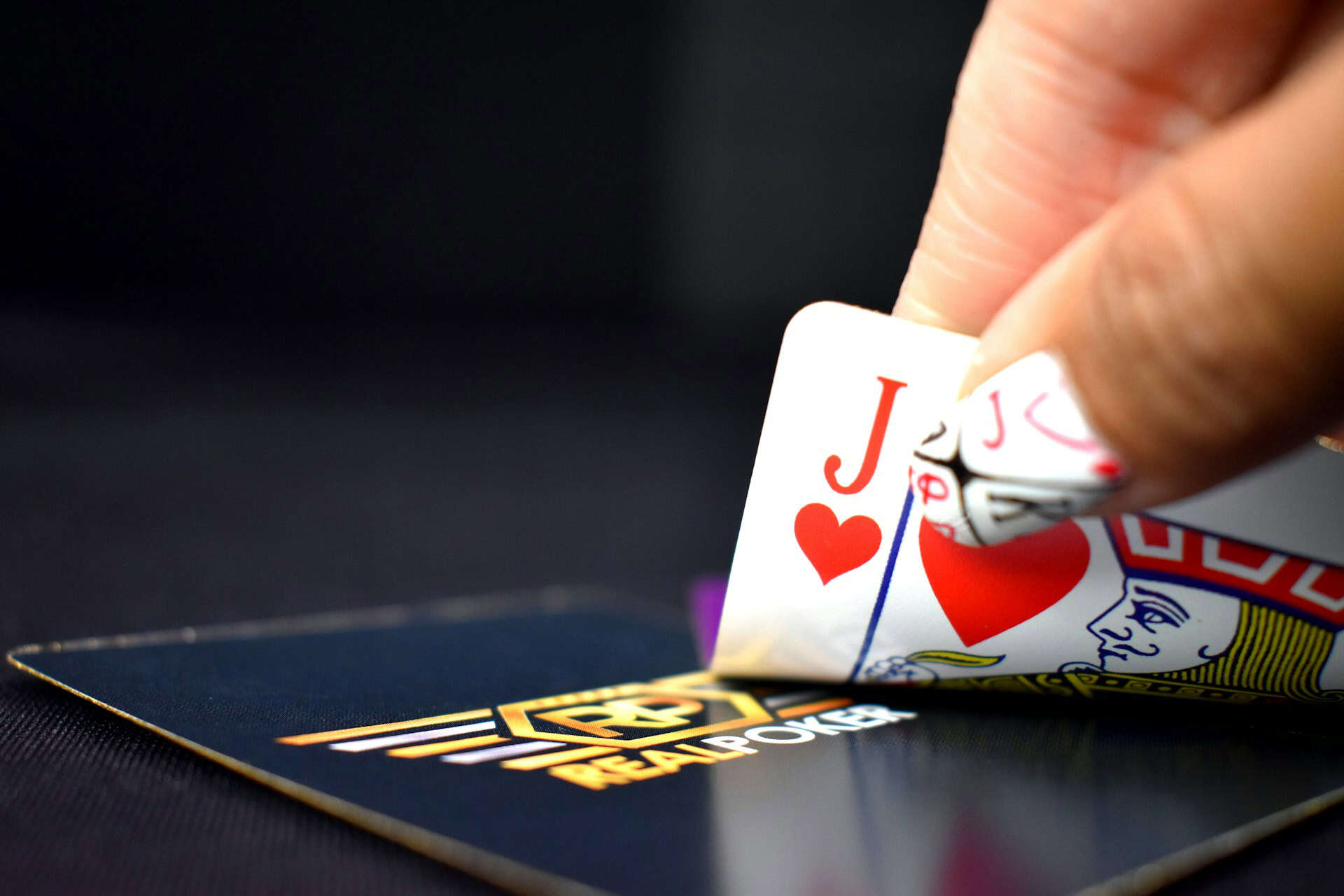
Close-up of a hand holding J of hearts over poker chips, representing LLMs in poker AI grappling with high-stakes choices.

As LLMs in poker AI continue to face the knowing-doing gap, new approaches are needed. The researchers invented ToolPoker to try to combine the best of both solvers (balance and non-exploitable) and the players (instinct) and adaptability.

The researchers did an experiment to compare the performance of six models at two games. The first game is a simplified version of poker called Leduc Hold’em. The second game is a version of Limit Texas Hold’em which presents more realistic poker games. Six different models (GPT-4, Qwen 2.5, LLaMA 3, o4-mini, and the baseline solvers: CFR+, NFSP) were given the same parameters and stakes and were judged on their performance on three criteria:

  • HR (Hand Rationality): How much does the model reason like a professional player?

  • FA (Final Action): Did the model make the GTO (game theoretic optimal) move?

  • AC (Average Chips): Did the model win?Why the Researchers Wanted to Test the LLMs Initially Before Making the Decisions

In order to understand how well the models would do the researchers had each model explain why it wanted to make a particular decision prior to making that decision. The results were astounding; many of the models gave perfect reasons for their decisions but then proceeded to make the opposite decision.

This phenomenon has been called the “knowing-doing gap” that is the difference between knowing something on an intellectual level and doing something on a practical level.

Three Major Ways LLMs Still Fail in Poker

While the researchers have improved LLMs with reinforcement learning (RL) training, they still possess great flaws as poker players. Heuristics-Based Logic

LLMs tend to rely on familiar linguistic heuristics. For example, a model may decide to bet aggressively in a situation because it has been exposed to examples of situations in which aggressive betting is successful even though the current situation may be very different. Poor Understanding of Mathematical Nuances

LLMs seem to understand mathematical concepts like pot odds and implied odds. But when it comes to employing those calculations in practice, they tend to be inconsistent.

Mot that an LLM will utilize a logical process to evaluate a decision to make, but that does not mean that it will execute that decision in the way that it ought to . This is due to the fact that the LLM makes a distinction between “the logical thought process it took to come to that decision” and “the actions it takes which flow logically from that decision.”

Continue reading →

1,893 Words

Bluffing in Leduc Hold’em by AI: DQN vs CFR (2025 Study)

Player at poker table illustrating bluffing in Leduc Hold'em by AI

While analyzing bluffing in Leduc Hold’em by AI, the algorithms used in this study, the terminology applied to them, and the volume of simulations performed in the 2025 research provided evidence that a poetic truth exists — artificial intelligence lies; however, it does not lie because it has been instructed to do so, but rather, when there is insufficient information available, deception is the most rational choice.

As a result of 100,000 controlled simulations of Leduc Hold’em, two algorithms — DQN and CFR — produced bluffing strategies with approximately the same level of success (34-39%); however, the manner in which the two algorithms produced their bluffing strategies was distinct. CFR created bluffs randomly throughout the range of its strategy, much like a professional would disguise his hand strength. DQN produced fewer bluffs than CFR; however, the bluffs produced by DQN were significantly more precise and were produced at the perfect moment. It was akin to a machine version of a gut feeling.

Pure code can be made to simulate confidence when faced with the uncertainty of data. This is the essence of bluffing in Leduc Hold’em by AI, where deception arises naturally from uncertainty and not from intent.

Poker as a Psychological Arena

Scattered poker chips conveying the unpredictable bluffing in Leduc Hold'em by AI

Poker is not merely a game; it is a psychological arena dressed as a card table. Each raise and/or fold is a motion in a silent drama of partial truths. That is the reason why researchers studying artificial intelligence are interested in poker, as it provides an environment that includes logic, un-predictability and strategy.

Using the Leduc Hold’em format of poker, the 2025 study, titled “Analysis of Bluffing by DQN and CFR in Leduc Hold’em Poker,” stripped poker to its bare essentials in order to determine if systems based upon math and feedback can develop deceptions without first learning to deceive.

Spoiler alert: they did.

Bluffing in Leduc Hold’em by AI: DQN vs CFR

CFR is the control freak. It analyzes each game decision in reverse, in order to find out what it should have done and adjust accordingly until the regret is eliminated. Eventually, CFR develops a level of balance in its play such that no player can take advantage of it. That is the theoretical concept behind CFR.

DQN is the experiential learner. It makes a guess, attempts the guess, fails, attempts again. It is not attempting to achieve perfection – it is attempting to achieve reward. It finds what works and focuses on that.

Neither CFR nor DQN had pre-programmed bluffs or pre-defined tactics. Both simply began with cards, rewards and logic.

Although neither CFR nor DQN were programmed to bluff, both developed bluffing strategies. These results are not merely impressive – they also reveal characteristics.

Experimental Design of Bluffing in Leduc Hold’em by AI

Two artificial intelligent agents. Equal stacks. Equal blinds. Each agent has one private card and one public card. Two betting rounds. No noise. No multi-player interaction. Simply, clear, distilled decision-making.

Each decision was recorded and analyzed for hand strength, bet size, and the response of the opponent. The objective of the experiment was to record the frequency of bluffing (a weak hand, a large bet), the effectiveness of bluffing, and the development of the bluffing behavior of each agent.

Continue reading →

1,241 Words

When Poker AI Took Over: From Whiskey Nights to Code Wars

Poker cards on the table in front of the poker AI interface: real-time combination analysis

It didn’t begin with a roar, but the subdued whir of a server rack nestled in a research lab whose walls weren’t quite the color of casinos. This might very well be the first one you consider now – machines in a glow, grumbling engineers; not cigarette smoke and clinking glasses. And yet here we are in the world of artificial intelligence and we are discussing poker, a card game in which the theatrics of the bluff are matched by the elegance of an algorithm.

I recall the days a poker cheat was something you held in your hand – a creased corner, a thumbprint of grime, a pal who’d curse you with a “lucky” deck he’d purchased in Reno. Poker hacks now are phrases of software patch notes themselves, and the man across from you at the table no longer smells of booze; he smells of code, polished and optimized, a world made possible by poker A.I. research that’s taken late-night confrontations and turned them into a study in statistical perfection. This development owes largely to the emergence of poker AI, taking human intuition and turning it into algorithmic perfection.

Poker AI: The Algorithm Wears No Sunglasses

There’s something eerily uncomfortable about sitting and gazing at a screen on which a small avatar grins like a Cheshire cat, not once peeking at one’s own cards and not hesitating, while you fret whether you’re going to get beaten by a rather more politely-behaved bot than any human you’ve ever known. In poker, the bots were previously patsies – beats-by-blundy opponents of obvious flaws you could calibrate your play around. Now, as poker’s machine learning gets more advanced than acaffeinated 4 a.m. trader surging down Wall Street, we have poker AI beating pros, teaching solvers how to teach themselves and — here’s the kicker — making the term ‘best poker AI’ sound like a brag in a dating profile.

I’ve played against them. Or at least, I think I have. It’s difficult to know, as the entire idea behind a good poker AI bot is subtlety, like a thief who leaves your home cleaner than it was when he found it. One minute you have aces and you feel untouchable, and the next you’re staring at an empty stack full of embarrassment just because something in a line of code just made you feel like an amateur. Such is the power of modern poker AI, capable of exploiting every micro-leak in your strategy.

Here I am pouting in a Slack channel somewhere, someone no doubt calls it progress.

Poker AI Data Center: servers that process learning algorithms for analyzing poker strategies

How Humans Built Monsters for Fun

So, the architects – the dreamers, the tinkerers, the MIT pokerbots team who asked themselves, why not make poker an AI dominance testing ground? From DeepStack AI to Pluribus poker, the very names sound like a Marvel comic and not around a felt table. These innovations are the golden age of poker AI research, defining the very essence of the game. But this is the reality: poker AI design was not about beating others with cards. It was about solving a centuries-old mental dance, about telling the world, “Yes, this – the holy game of patience, aggression, tequila shots occasionally – all this can be solved.”

Continue reading →

1,155 Words

Poker AI Strategy: How Algorithms Are Changing the Game

Friends playing poker at a table, smiling while collecting chips, representing the psychology and unpredictability of poker AI strategy.

Have you ever sat down at a table and felt like everyone else is in on some secret that you’re not? It’s not just a card count, but a script, an algorithm, a silent hum of certainty trafficing in the dark behind their sunglasses. That’s where I ran into trouble — or, at least, that’s when the kinds of questions that prevent you from getting to sleep while the chips are still disappearing began to occur to me.

Back then, poker was theater. Men resting on elbows, women pretending not to show any interest, the barely audible clink of ice in a tumbler that spoke a thousand times more than any bet might. One raised eyebrow could send you folding kings without blinking. That was the game — reading faces, not code. But here we are, scrolling forums for poker hacks, downloading poker cheat sheets that promise mastery in six bullet points and whispering about bots in poker like they’re campfire ghosts. Today, poker AI strategy shapes the way we approach every decision at the table, blending old instincts with algorithm-driven precision.

I once tested one of these a.i. poker tools. For curiosity’s sake, not boredom, or at least that’s what I told myself. It wasn’t pretty, just a clonky piece of poker AI software you could download in three clicks, then install and — bam — now you have a digital consigliere. A voice that whispers, “Bet 37 percent here,” as if analyzing probability like some dispassionate surgeon. It didn’t blink, didn’t doubt. If only I could say the same for me.

Poker AI Strategy vs Human Instinct

Playing cards and poker chips casually arranged on a felt table.


You see, the psychology of poker was always a heady blend of confidence, pattern recognition and risk. Your neurons ignite in time with your heartbeat, the taffy of your cognitive load stretching and pulling whenever someone in your game check-raises on the river. There’s a name for it — executive function under uncertainty. Academics love phrases like that. Me? I refer to it as sweating bullets and pretending to drink bourbon.

Then machine learning in poker arrived. Deranged neural nets gobbling up hand histories, spitting out poker AI strategies so sharp it made Doyle Brunson sound like your uncle giving fishing advice. Pluribus poker, DeepStack AI, names more fit for a sci-fi movie than the felt. They aren’t tools, they’re predators—top poker AI ever coded to take advantage of every leak in your game before you even realize you’ve sprung one. These breakthroughs prove that poker AI strategy is no longer an abstract concept—it’s a dominant force changing competitive play.

I remember one time at the Bellagio I asked a guy if he was scared of bots. There was a harsh laugh, almost a scornful noise, followed by some muttered comment about “adapt or die.” Less than two weeks later, he was railing on a forum about online poker bots ruining his life. I didn’t say I told you so. Hell, I didn’t tell anyone.

When Poker Bots and RTA Change the Strategy

Close-up view of colorful programming code on a dark screen, representing algorithms and neural networks used in poker AI development.

Continue reading →

1,167 Words

Poker AI and Bots: Ghosts at the Table?

You wonder whether you felt the shift initially. At a quick glance, it appears to be no different from any other game. Some familiar avatars, the same old chat-box piffle, a few limp calls. But then something begins to scratch at the back of your mind. That player – screen name “RiverSaint88” – never hesitates. Not once. Bet sizing? Ideal, as though they’ve memorized all the poker cheat sheets ever made on Earth. They bet where they have no business betting, check-raise because they feel like raising, muck when most common folks would not be able to contain their curiosity chips and play the board. And there’s the thought, faint at first and then loud: this is not only skill. This is something else.

I’ve been streaming online for years, through every fad, and so-called “new edge.” First, it was HUDs. Then solvers. And then there were “training apps” that promised to make you a GTO wizard overnight. Hell, I even spent months getting obsessed with poker bot research again like, some caffeinated grad student, pouring over academic papers. I reassured myself that it was all in the name of the love of the game, even though, let’s face it, I simply wanted an edge that didn’t entail selling my soul.

And now here we are. Poker AI is no more the ghost in the forum or the bogeyman of paranoid regs. It’s here at the virtual table across from you, smiling facelessly.

When Bots Stopped Being Dumb

Remember when bots were jokes? From scripts that went all in on a pair of threes, to scripts that folded two aces due to a mistyped condition. Those days are gone. In other words, today we’ve got monsters like Pluribus, cooked up by Facebook and Carnegie Mellon, casually taking apart pros who thought variance was their best friend. And you DeepStack AI – don’t even get me started. Someone taught this machine how to do more than play poker: They taught it how to love breaking hearts.

The first time I ran up against what I later learned was a bot, I didn’t realize it immediately. I just remember thinking, wow, this guy’s good. Not great, in the soul-reading, Phil Ivey, fusillade-of-chips sense, but inevitable. Like gravity. Each bet was a size that was just right for maximum EV. No tilt. No hesitation. No chat-box complaining about bad beats. (And believe me, I tried. Dropped a classic “nice hand” after a brutal river – nothing. Not even a dot.)

Later, sifting through hand histories, that made sense. The lines were not just strong; they were surgical. Too regular for a human heartbeat. And that’s when I went down the rabbit hole – poker AI programming, poker AI algorithms and a seemingly endless march of software names that could double as secret government projects.

Machine Learning at Midnight

Wanna hear the scary part? As they don’t just play but also learn, these systems don’t mention the law or any concepts; they can’t. Machine learning in poker isn’t just some sort of academic buzzword, but something that’s silently plotting your doom each time you binge-watch that Dexter re-run on Netflix between sessions. They go through hands, identify patterns and develop counter-strategies while you war over limp-calling in the small blind on Reddit about whether this play is “balanced.”

I’ve read the studies – hell, I’ve been there. From basic range charts to neural nets which adjust on the fly mid-hand, it’s all out there. And if you fancy that you can outsmart it with a couple of “poker hacks,” well, God be with you. Those old tricks – timing tells, overbets designed to spook somebody, whatever – they rebound off of these things like pebbles against steel.

Continue reading →

1,188 Words