
Poker has for a while been celebrated as a card game of skill, chance, and mental finesse but is now increasingly becoming a testing ground for artificial intelligence. The sheer size of the game tree for poker – particularly no-limit Texas Hold’em – puts even the technically best algorithms to the test. Given the fact that there are approximately 10¹⁶⁵ nodes in the complete tree of games, the kind of straightforward solving of the kind is not computationally feasible. Abstraction is one of the groundbreaking ways by which poker is abstracted for the AI. The latest development in this arena now takes AI poker strategies a step beyond the rest: potential-aware imperfect-recall abstraction.
Game Abstraction in Poker
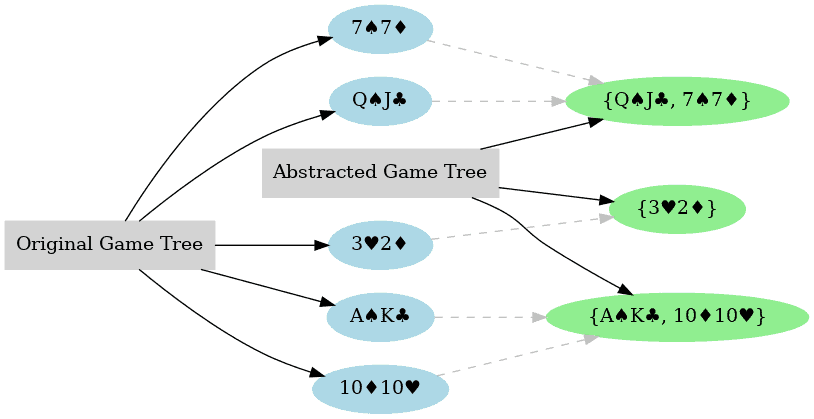
Abstraction reduces complicated games such as poker by bundling comparable states of the game and hence lowers the level of decisions the AI must make. It would be equivalent to attempting to estimate the grains of sand in a beach by performing analysis on the potential result of each hand – it’s too much. With abstraction, however, AI breaks down such a massive decision tree in clusters manageable for the tech.
First, this abstraction was manual – a human-intuitive way to define clusters. Several years later, an automation using algorithms to group states into clusters based on metrics of expected hand strength, such as a measure of a hand’s probability of winning against a random opponent, was proposed. Fair enough, but often quite out of touch with the actual nuances of how hands unfold throughout a round.
Earth Mover’s Distance and Distribution Awareness
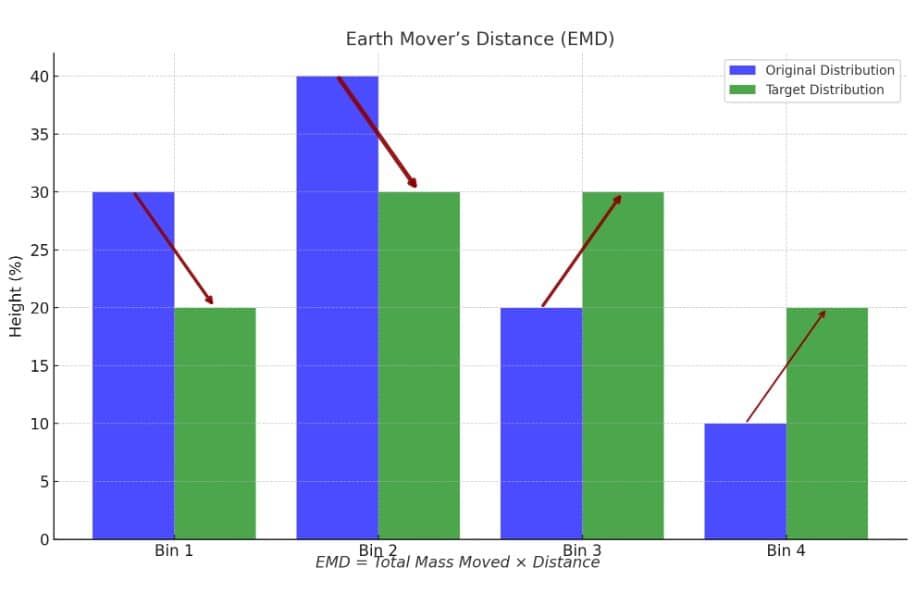
More abstraction refinement involved the application of the distribution-sensitive techniques such as taking a complete distribution of the strength of the hand instead of averaging. Such a procedure was also combined with the application of the Earth Mover’s Distance, a mathematical tool for ascertaining the amount of work involved in transforming one such distribution into another. In the context of poker, such a process can be conceptualized as the comparison of probabilities of winning through a complete set of board possibilities.
There are also constraints in the case of distribution-aware abstraction. It concentrates in the end-round of poker and overlooks build-up of the strength of the hand by previous rounds. Two hands may look the same in terms of the end-round distributions of the equity while playing quite differently in previous streets. This omission paved the way for potential-aware techniques.
Introducing Potential-Aware Imperfect-Recall Abstractions
Potential-aware imperfect-recall abstraction is a paradigm shift. Rather than targeting the endgame alone, this method takes account of the way a hand’s equity evolves in every round. Through the analysis of the “trajectory” of the strength distributions, AI is capable of making more subtle decisions.
One such innovation is the application of imperfect recall such that the AI can “forget” during later rounds. Paradoxical as it seems, forgetting can serve by putting computation in the context of the more important details. Thus, for instances like TcQd and 5c9d, they can have comparable endgames but differ a great deal earlier in the rounds as indicated by their paths in the turn and flop distributions.
Experimental Success in No-Limit Texas Hold’em
The potential-aware algorithm was put to test in no-limit Texas Hold’em in extensive experiments where it ruled supreme over the older methods. The researchers used a fixed betting abstraction for their experiments and found enormous improvements.
One of the many tests the researchers found out that the AI with the new algorithm would, over many hands, prove to be 2.58 mbb/h better than the benchmark. That number might sound really small, but when the stakes are high, the slightest gain translates to substantive advantages over thousands of hands played.

Advantages
- Correct Clustering: Since the full paths of the hand strength are being used for the grouping.
- Computational efficiency: Appealing to heuristics for the approximation of EMD, despite the algorithm’s complex nature.
Wider Implications and Future Applications
The framework of potential awareness not only generalizes to poker but also to sequence imperfect-information games. It also provides the potential for broader applications for AI such as financial modeling, strategic planning, and military simulation.
Things to be Solved
- Scaling: The hand clustering in the later rounds of poker continues to remain a CPU-bound program. Bigger datasets will need algorithms optimized even more.
- Combination with abstracted actions: While abstracting potential awareness achieves notable performance in grouping information, the combination of the above and scalable betting strategies remains a task yet unfinished.
Lessons for Poker and AI Enthusiasts
To poker players, potential-aware abstraction is not a point in time hand equity – it’s a dynamic process. Fans of AI are free to borrow the inspiration for the use of imperfect recall, showing the surprising benefits of selective forgetting.

Conclusion
With the coming of potential-aware imperfect-recall abstraction, a new frontier has opened up within poker strategy, literally marrying the best of mathematics with the ingenuity of AI. The approach, by tracking the trajectory of hand strength and thus optimizing abstractions, topped all previous algorithms so far and brought AI one step closer to mastering probably the most intricate game devised.
As they continue to evolve, they are bound not just to alter poker but a considerable amount of other strategic domains. The game, in a way, can now begin.