
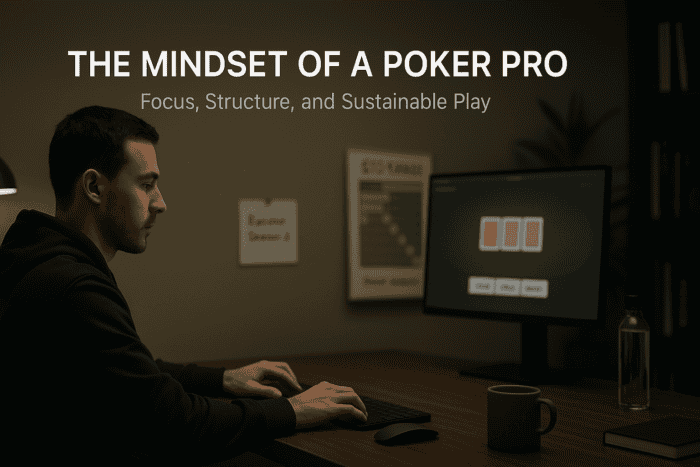
Poker online enjoys a bad rep.
Ask the general public what they think about, and you’ll hear such responses as “addiction,” “loss of money,” and “harming by way of gambling.” But here’s the catch: while the majority struggle at the virtual tables, a minority of elite online poker players prosper – psychologically, emotionally, and economically.
So what’s their secret?
A pioneering work by University of Sydney researchers delved deep into this question by conducting interviews of 19 top online poker professionals. These were not part-time grinders or by chance upswings – they were full-time pros, many with years of reliable income and emotional discipline.
Their stories show something extraordinary: it’s not merely technique – it’s psychology.
The Big Idea: Poker Doesn’t Have to Hurt
Gambling typically includes damage – financial loss, time addiction, emotional distress. But the players in this research? They are largely exempt.
Why?
Because they don’t bet like a common bettor.
They approach it like:
- A performance practice
- A mental game of endurance
- A business strategy
That mentality is the difference maker.
What Makes Elite Online Poker Players Different?
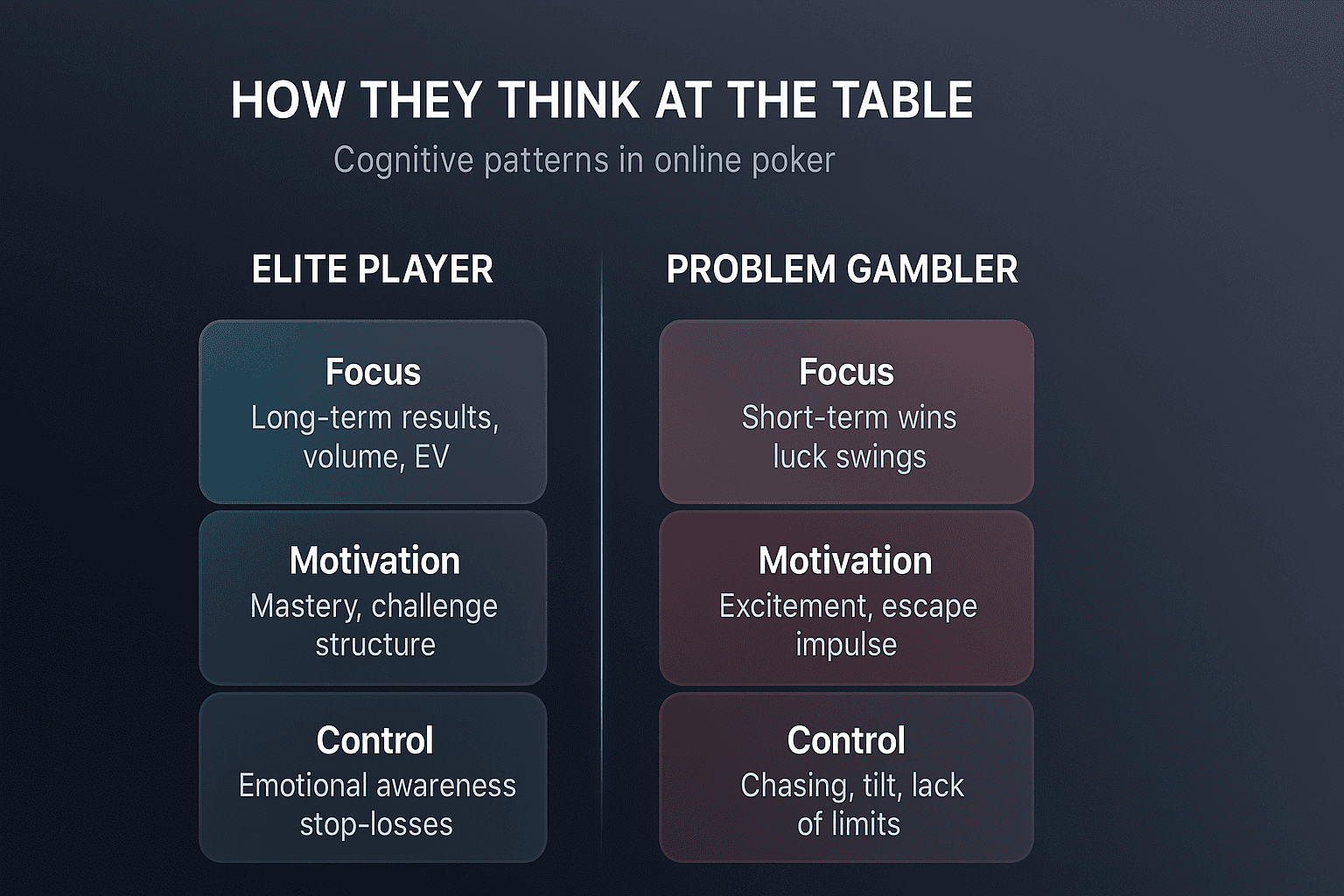
Elite online poker players not only win more – they also think differently. Here’s how they differ:
They are long-term oriented:
Top players are not in individual sessions. They think in thousands of hands, months or years. They know variance is a part of the game and are not bothered by short-term results impacting the long term.
One player described it this way:
“I play 100,000 hands a month. Why would I care about one bad river?”
That mindset alone prevents them from chasing losses or going down an emotional spiral – two behaviors damaging in a majority of players.
They organize everything:
Top players utilise the use of trackers, solvers, HUDs and journals. All decisions are reviewed. All leaks are targeted.
It’s not just about raw talent – it’s about rigid process.
That’s quite a different picture from the problem gamblers, who bet impulsively, emotionally, or compulsively.
They distinguish ego from outcomes:
You can play by the rulebook and lose at poker. Pros know this better than anybody – and they don’t take it personally.
They do not go for cooler points or for “getting back at” rivals. They make the smart move and move on.
Compare that to the gambler who tilts after every bad beat. The difference? Ego management.
Motivation: They Play to Win – Not to Escape
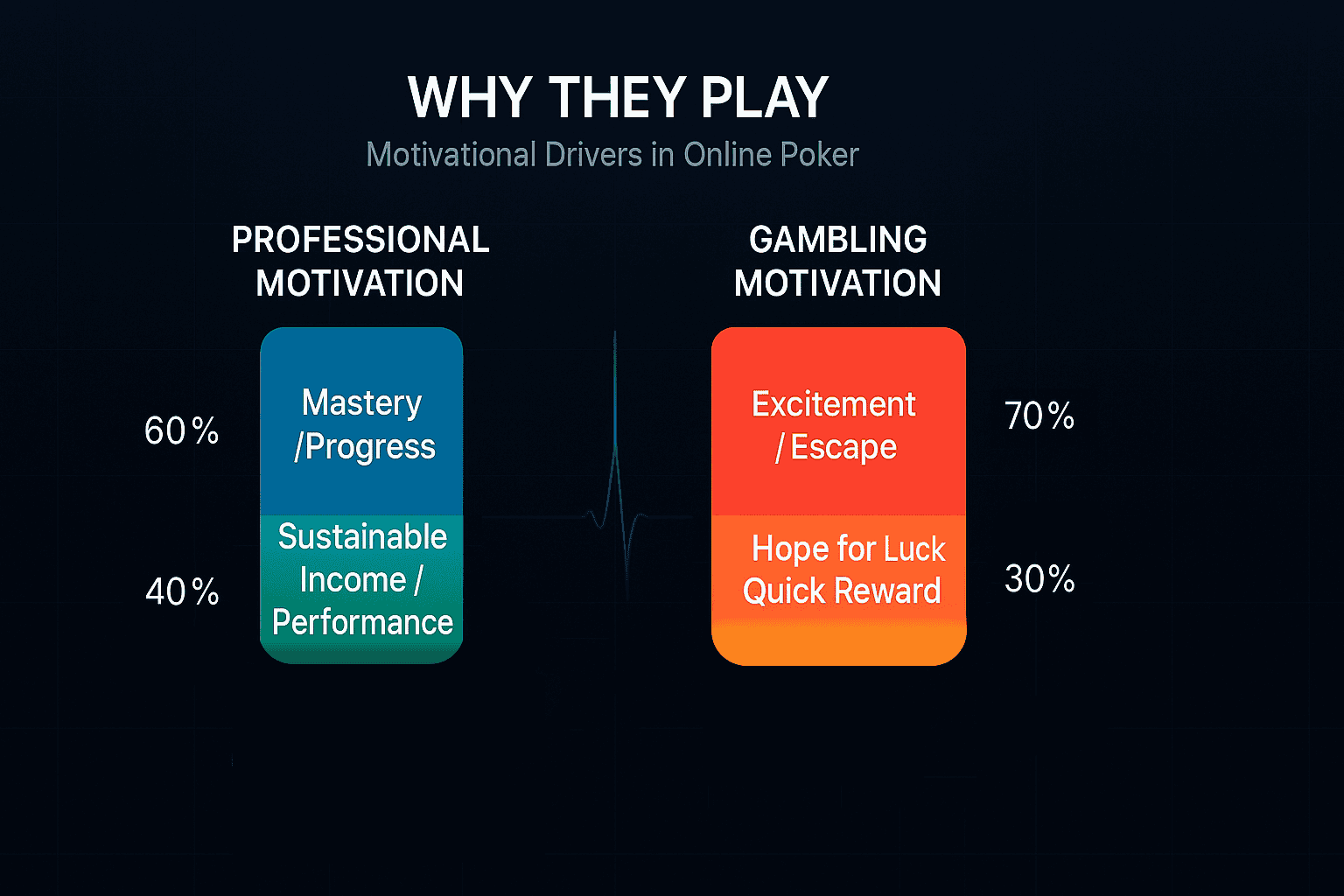
most problem gamblers bet for escape from boredom or stress or negative emotions. Not pros.
In fact, one of the strongest findings of the study was this:
“The best players were not inspired by excitement and thrills. but by improvement and becoming the best.”
Poker as a livelihood. Poker as a solvable game. Poker as a portal for self-improvement.
That implies they themselves are not hooked on the experience – they are hooked on the process.
That is a much better habit.
They Don’t Play to “Get Lucky”
Pros consider poker not a game of luck. Okay, in the short run you experience luck – but they bet for the long run.
That belief protects them from magical thinking, loss chasing, and desperation.
Instead of saying:
“I’m going for a win…”
They say:
“This is in my range. I’ll continue running my edge.”
That kind of mindset cannot evolve without framework, coaching, and constant learning. And one of the reasons why elite players won’t go haywire – even in the throes of variance hell.
How Elite Online Poker Players Manage Bankroll and Emotions
Here’s a big one: pros bet what they cannot afford to lose.
They keep detailed bankroll plans; down in stakes during downswings; reduce volume when tilted. Some even stop entirely when they feel emotional risk rising.
It’s not because they are cold robots – it’s because they respect the randomness in the game.
This kind of discipline isn’t just financial. It’s mental protection, and it’s one of the main reasons why elite online poker players avoid gambling harm.
Compare that to a person in a downswing who adds more in hopes of chasing. That’s the path of damage.
They See Themselves as Performers
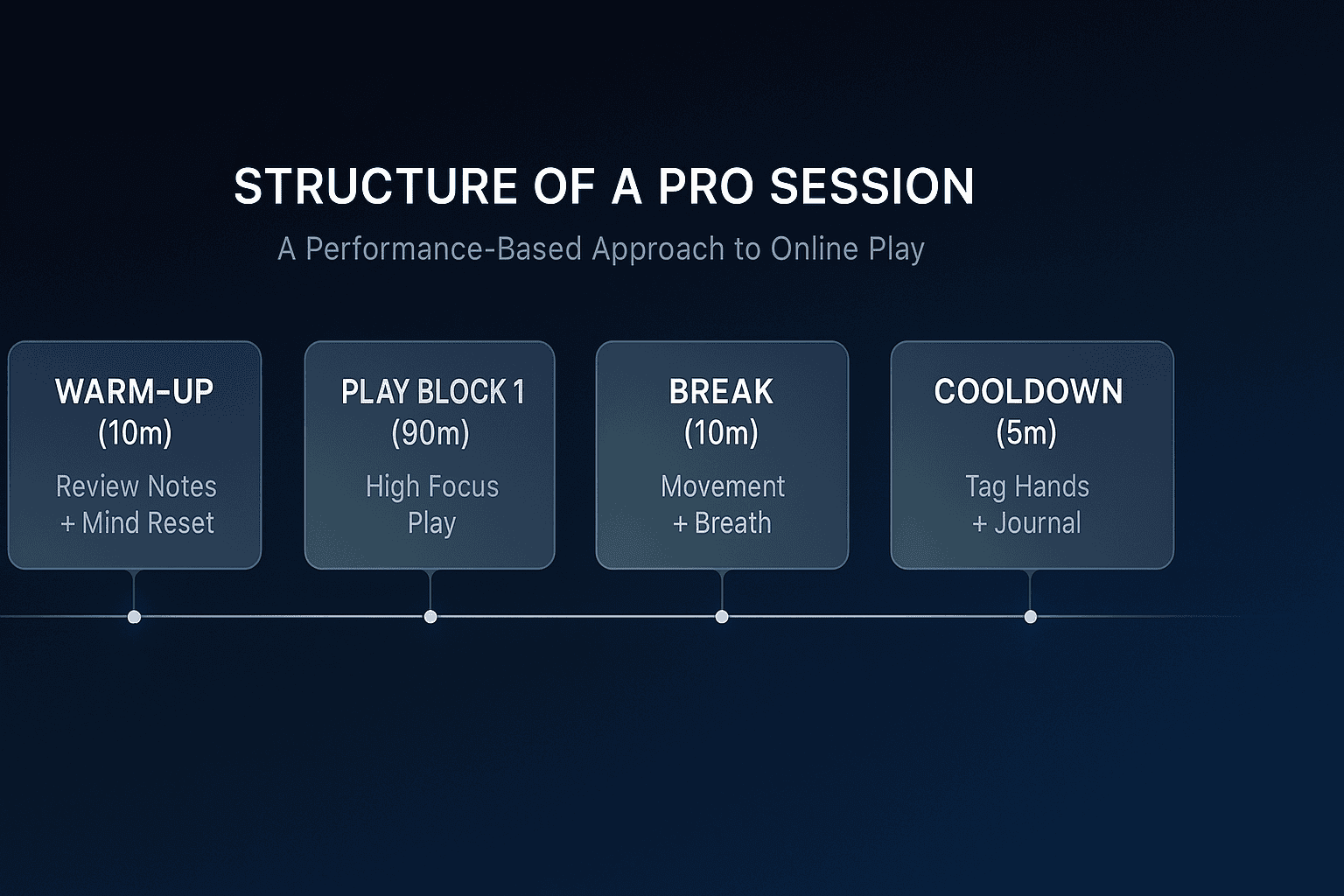
One of the surprising research findings: champions view their jobs like artists or performers.
That is:
- Warm-ups before sessions
- Psychological reset procedures
- Focus drills
- Health behaviors (nutrition, exercise, rest)
They take poker seriously, not as a pasttime. They don’t just play good poker – they position themselves to play good poker.
And that’s why they’re resilient.
How They Handle Tilt
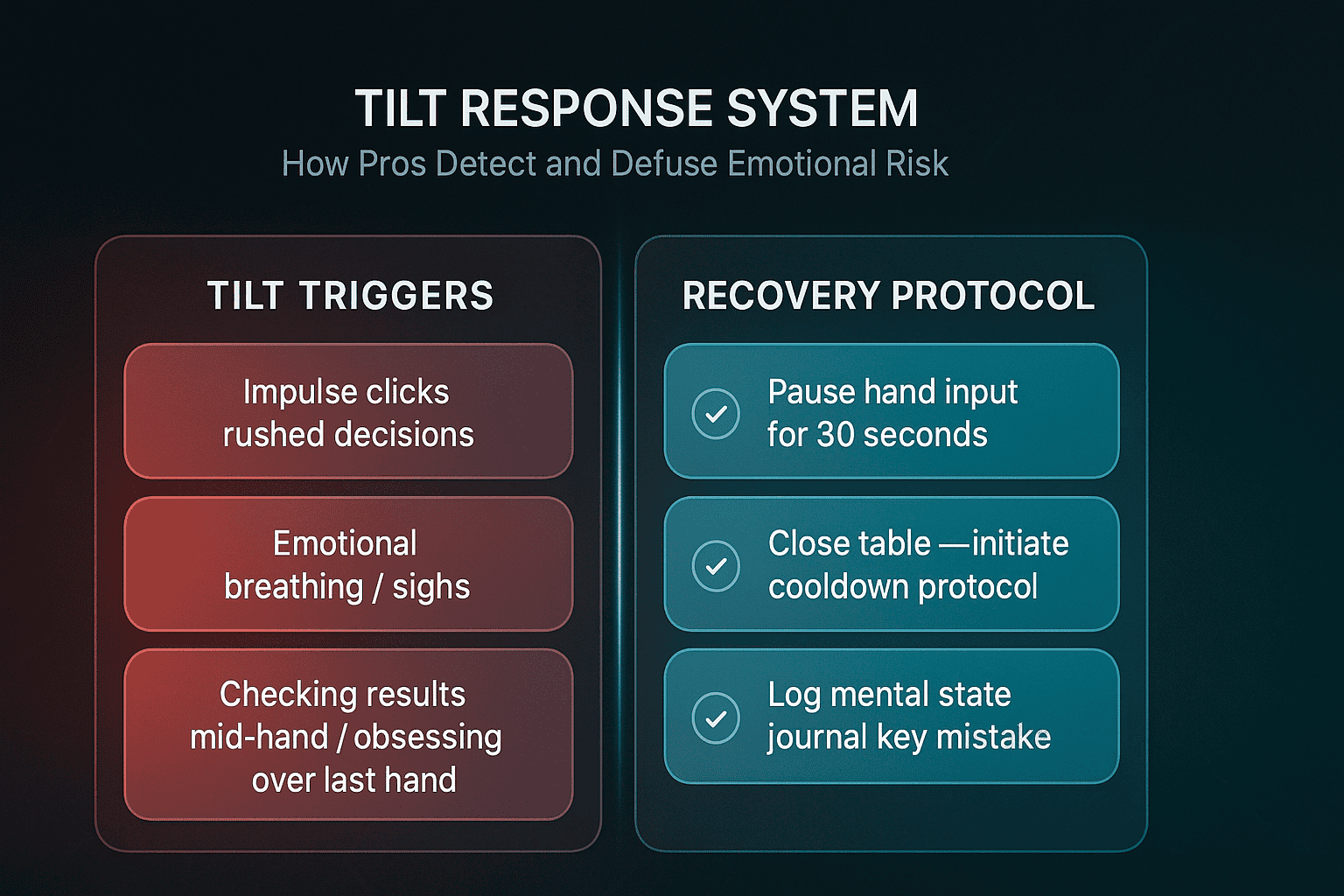
You wouldn’t think elite players wouldn’t tilt. They just realize it early and react.
They also possess individual “tilt triggers” and regulations:
- Stop loss limitations
- Time-out procedures
- Emotional checklists
They won’t hesitate to turn and go when they are not in control.
One observer noted:
If more than two sessions in a month are tilted, then something is wrong in my process.
That’s a kind of superpower of self-awareness.
Should Everyone Play Like Elite Online Poker Players?
Not necessarily. Most people play poker for fun – and that’s great.
But there are lessons here for everyone, especially those who feel the game pulling them in unhealthy ways.
If you:
- Run loss
- Play emotionally.
- Avoid reviewing your game
- Feel at a loss.
…then one or two of the elite player tendencies at a time can make a huge difference.
Try these:
- Trace your hands (even by using a notebook)
- Establish a definitive maximum bankroll
- Take 2-minute breathing breaks every hour
- Inquire “Did I play a good game?” rather than “Did I win?”
The Bottom Line: Poker Isn’t Harmful – Uncontrolled Poker Is
This research does not contend that poker is safe.
It reveals how poker can not just be safe – but healthy – played in a disciplined process and performance mindset.
Elite players showed no signs of gambling harm. No out-of-control behavior. No distress. In fact, many described poker as a path toward:
- Independence
- Cognitive control
- Emotional regulation
For elite online poker players, poker is not a risk but a structured discipline. That’s not a gambling problem. That’s a training discipline. And for anyone who cares about playing the game seriously.