
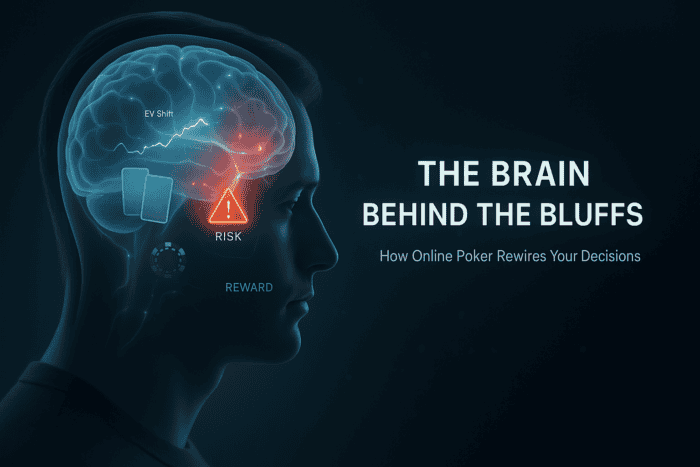
You’re half through a hand, staring at the monitor. The ante has been high. The stakes look real. And, before you can even know anything about anything, your head begins to glow like a Christmas tree.
Welcome to the secret world of internet poker – where neuroscience and strategy collide and where the largest game is not necessarily being dealt on the table… but in the mind.
A new study in Addiction Biology in 2024 in Giustiniani et al. leads us into the brain of a poker player – quite literally. Researchers used EEG (electroencephalography) to detect what effect online gaming has upon the brain reward circuitry, cognitive control, and decision-making.
You will not believe what they found.
The Study: What Happens When Poker Meets Neuroscience?
The researchers brought in two groups:
- Experienced online poker players (without gambling disorder)
- Non-poker-playing control participants
Each participant played through simulated poker tasks and gambling decisions while connected to EEG machines. The goal? To measure how their brains responded to:
- Wins and losses
- Risk and uncertainty
- Decision conflict
- Feedback from outcomes
In short, they wanted to see: does online poker change how we think and feel – even when we’re not technically addicted?
Spoiler: yes. And in some surprising ways.
Online Poker Players Had Lower Brain Reactions to Rewards

One of the study’s most unexpected findings was that regular online poker players showed lower late positive potential (LPP) responses to both wins and losses.
What does that mean?
LPP is a brain signal tied to emotional arousal and attention. Higher LPP = more engaged and emotionally responsive. But for these players, big pots and close decisions barely moved the needle.
This suggests a kind of emotional blunting or “flattening” – not necessarily in a clinical sense, but as a learned reaction to constant stimulation.
They’re not tilted. They’re trained.
Risk? What Risk? Players Processed Losses Differently
Poker is a game of risk – but how you process that risk determines your style.
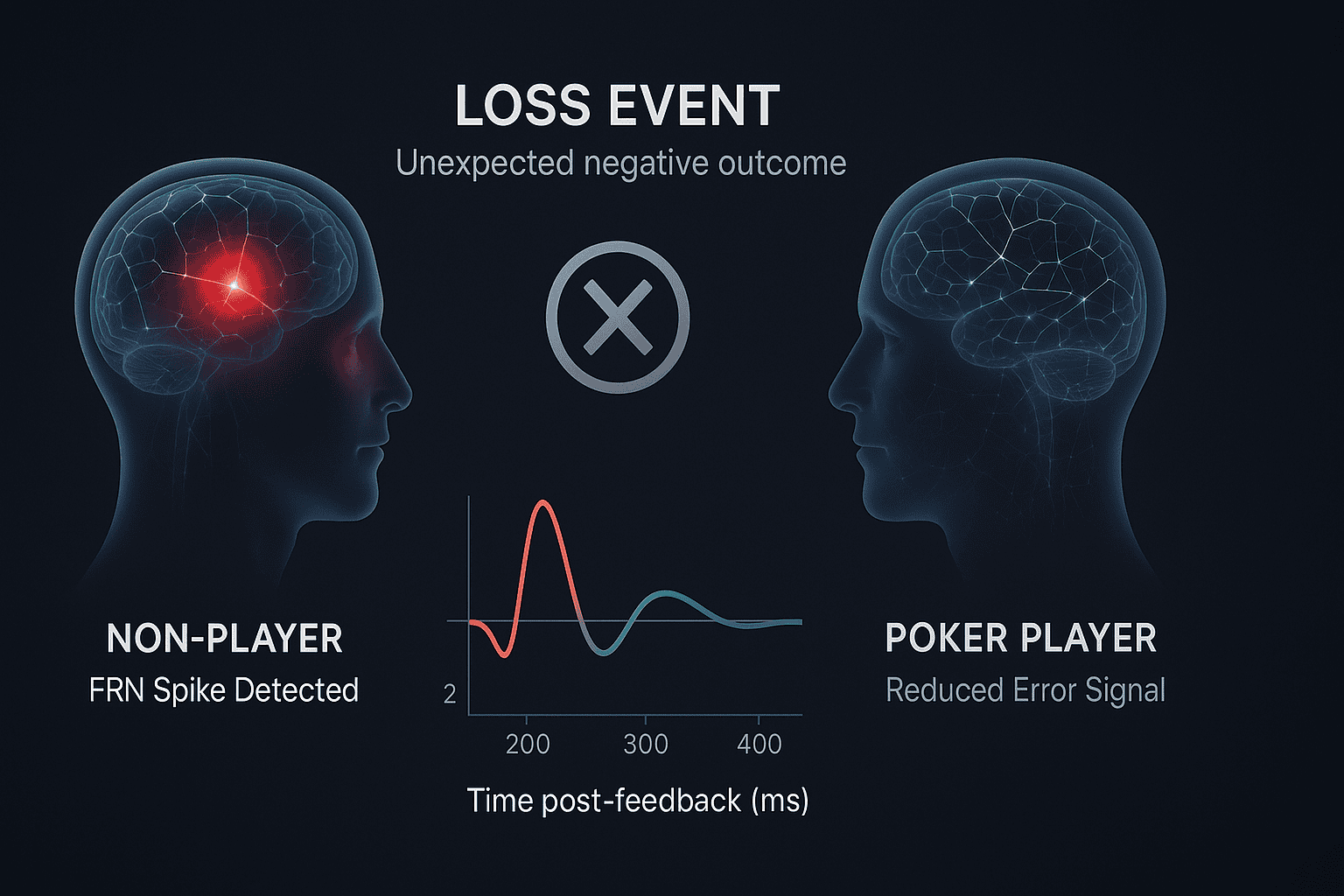
EEG results showed that online poker players had reduced feedback-related negativity (FRN) when losing risky hands. FRN is a marker for how the brain flags mistakes or unexpected outcomes.
Lower FRN = less surprise, less conflict.
In other words, seasoned online players might not view losses the way the average person does. Instead of seeing a failed bluff as a mistake, they see it as part of the plan.
This has deep implications for poker bots, training platforms, and even real-time assistants. Modeling human emotion – or its absence – is now part of AI training.
Ironically, Non-Players Made “Better” Decisions
Now here’s where it gets weird.
In certain gambling tasks, participants who didn’t play poker actually made more rational, utility-maximizing decisions than the poker group. They showed higher engagement in goal-oriented decision-making and responded more strongly to feedback.
The poker group? More muted, more automatic.
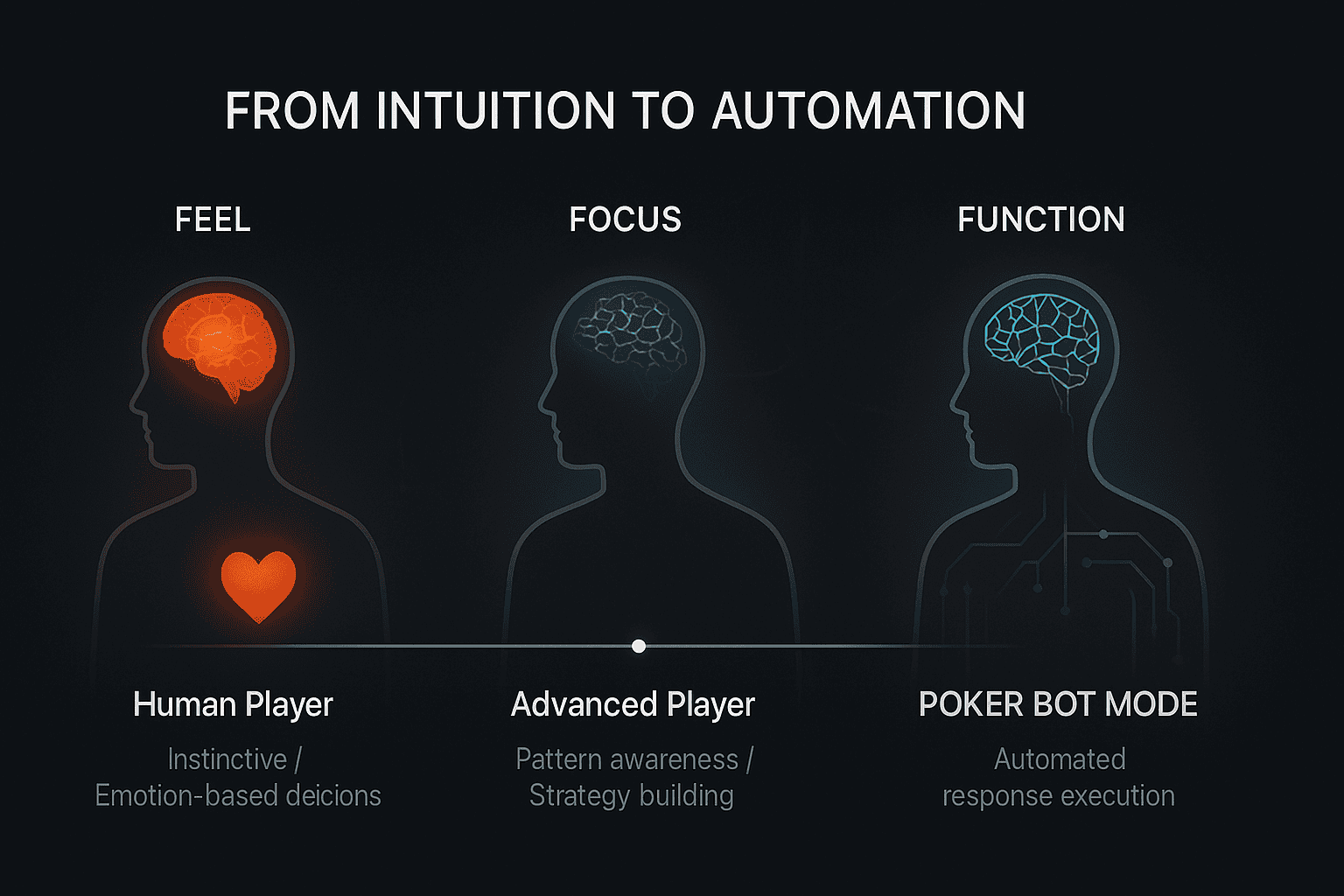
Why? The researchers suggest it may be due to habitual processing. Online players make hundreds of micro-decisions per hour. Over time, their brains automate those choices – efficient, but less emotionally engaged.
This opens up a wild question:
Are bots in poker more human than the humans?
And vice versa: are humans training themselves to think like bots?
What About Gambling Addiction?
This study didn’t focus on disordered gamblers – but its insights help us understand addiction better.
One takeaway: repetition reshapes emotion.
Players weren’t addicted, but still showed altered brain responses similar to what’s seen in compulsive behavior. That suggests that even without addiction, frequent online poker can dull emotional sensitivity and shift how risk is perceived.
It’s not dangerous on its own. But it explains how habit loops form – and why some players spiral when they stop analyzing and start reacting.
Poker Bots, AI, and the Human Mind
Now let’s talk tech.
If bots are learning to think like humans, but humans are thinking more like bots… what happens in between?
Many training tools now incorporate emotional modeling. Instead of just GTO outputs, they adjust for:
- Risk perception
- Emotional stability
- Frequency of tilt behaviors
The best ai poker bots don’t just play “perfect” – they predict imperfection. This study helps improve that modeling by showing what parts of the brain fire (or don’t) when players make tough calls, face variance, or see outcomes.
That’s huge for building more human-like poker bots, but also for detecting unusual behavior – including bots trying to pass as humans.
Takeaways for Players: What You Can Do with This Info
Okay, science lesson over. What should you do with this?
- Train Emotional Awareness
If you’re grinding online every day, take a break and ask:
- Do I actually feel wins/losses anymore?
- Am I making decisions or just reacting?
- Can I still recognize when I’m tilted?
A good poker cheat sheet covers strategy – but doesn’t cover mindset. You need both.
- Use Tools That Give Feedback
Some training apps now measure:
- Risk tolerance
- Response patterns under pressure
- Session-based tilt risk
These aren’t gimmicks. They’re built on real research like this one.
- Don’t Become a Bot
Efficiency is great – but if you disconnect from feedback, you’ll stop improving.
The best players? They balance GTO logic with situational creativity; stay human; still feel the game.
Final Thought: The Brain’s the Real Battleground
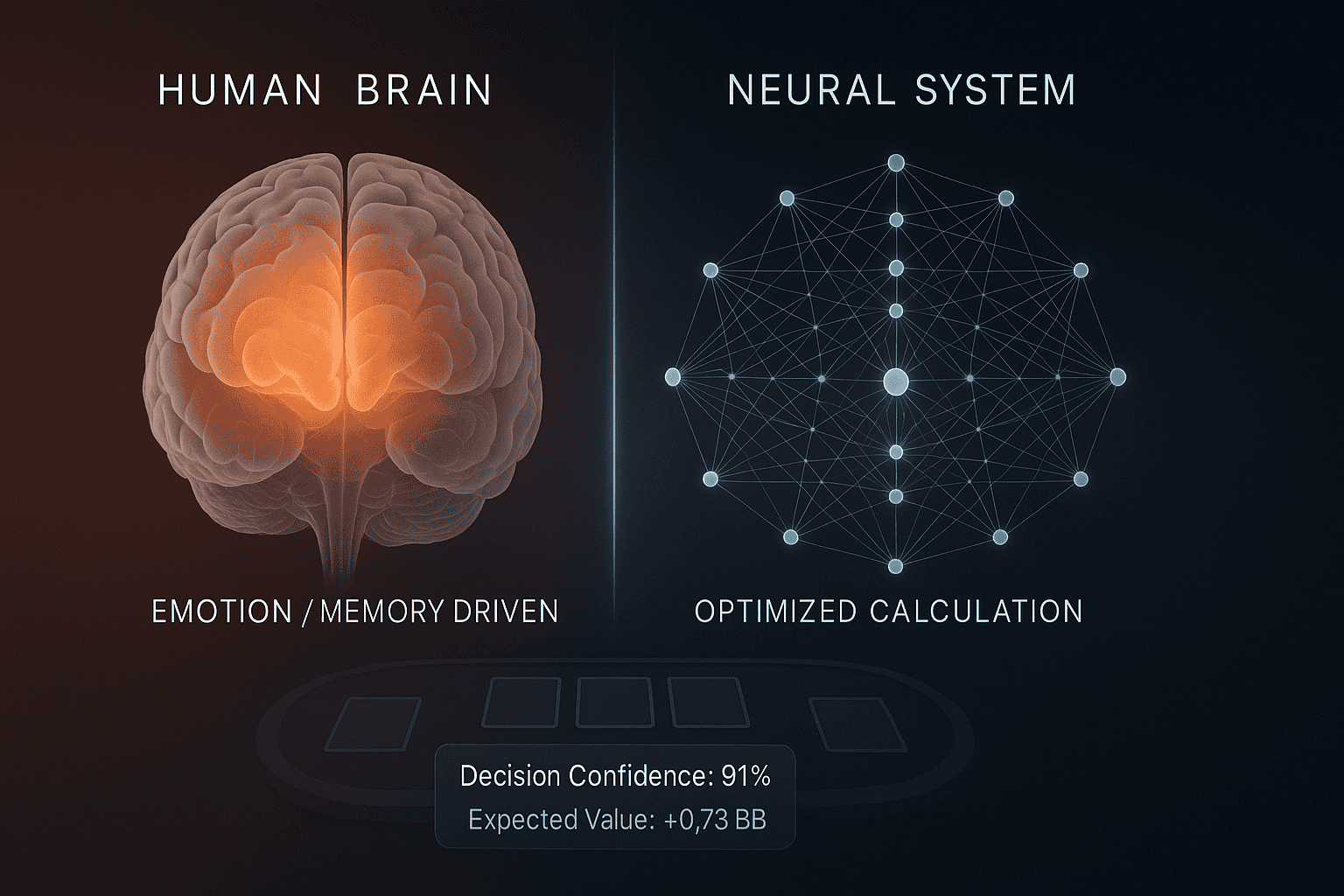
Poker isn’t just about cards or reads. It’s about how your brain handles uncertainty.
This study proves that online poker changes our neuro patterns – even if we don’t go broke or go bust. It trains us to suppress emotion, streamline decision-making, and play with calm detachment.
That’s not always bad.
But remember: the goal isn’t to play like a machine.
It’s to play better because you’re human – and you know what’s happening inside your head.