
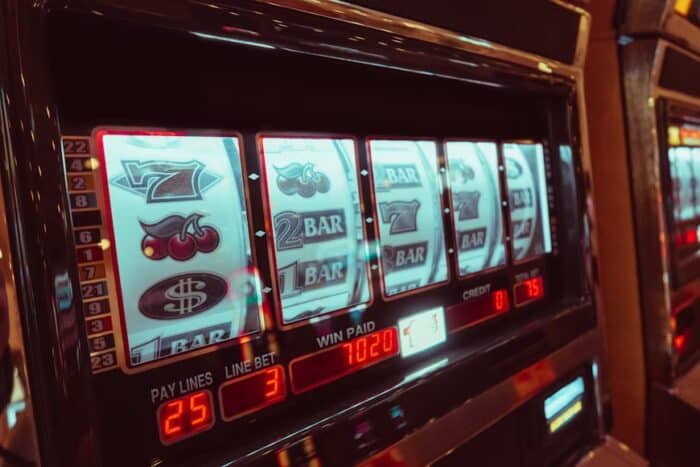
There’s something oddly thrilling about seeing a tiny chance for something huge. Just a small number, a fractional whisper, and yet the heart speeds up as if it knows a secret the mind refuses to admit. Is it greed, thrill, or an illusion of control? I’ve asked myself that question countless times, and it finally made sense when I stumbled across a study showing that people, time and time again, picked… not the “reasonable” choice.
They picked the skewed one. And not metaphorically skewed — mathematically skewed. In the experiment, participants faced options with equal expected values, the same math on paper, but different moods in the numbers. One was safe and predictable. The other was asymmetric, a distribution where a tiny sliver of probability promised a massive payoff. You can guess which way the votes went: toward the jackpot-shaped mirage.

We Crave Imbalance More Than Stability
No exaggeration here. The preference for positive skewness is hardwired, deeply ingrained in the way we weigh risk and reward. Behavioral economics has been whispering about this for years, but watching the numbers play out hits differently. People overestimate small probabilities and romanticize rare outcomes, whether it’s a lottery ticket, a speculative trade, or a sterile lab experiment with meaningless payoffs.
And it makes me wonder: is that why mobile games keep dangling loot boxes and why e-commerce spins their lucky wheels? Because we respond. Not just respond — we crave it.
Sure, they taught us about rationality, expected values, utility functions. But when it’s decision time, something else takes over — a module in the brain that runs on hope, not spreadsheets. It remembers that one miraculous “yes” louder than a thousand predictable “meh” outcomes.
From Games to Big Life Moves: Same Rules Apply
Here’s the twist: this isn’t just about slot machines or gacha mechanics. Skewness lives in investments, career bets, even education. We’re willing to pour years into chasing a rare breakthrough instead of stacking small, guaranteed gains. And sometimes, that gamble creates revolutions, startups, and inventions. But other times? It’s a trap dressed up as destiny.
Positive skewness isn’t a free lunch — every rare shot at glory comes with a mountain of empty attempts. And here’s where cognitive biases perform their magic trick: we conveniently ignore the pile of failures to daydream about the one dazzling win.
Reading that study made me pause: where’s the line between inspiring risk and plain delusion? Can we feel that line? Or do we need technology that counts without the pink filter of optimism? In finance, algorithms already do that. In gaming, recommender systems adjust drop rates. And in education, AI-driven systems are building structured growth paths, replacing patchwork luck with gradual mastery. Less poetic, sure, but brutally effective.
And yet — here’s the fun part — education designers are also sneaking in lottery elements. Random badges, bonus points, surprise rewards. Why? Because our psychology thrives on rare delights, even in classrooms.
A Personal Confession: The Day I Lost and Still Smiled
A couple of years back, I got hooked on a mobile game. Dead simple, barely any mechanics. But there was this chest — one in a thousand odds. I did the math, I knew the numbers, I laughed at the absurdity… and then I kept playing. And the night it finally dropped? The loot inside was worthless. But the rush? That electric jolt of “it happened”? It branded itself into memory.
And that’s the point: this isn’t stupidity. This is structural. We’re wired to chase the rare flicker in a gray world of averages.
Take It Higher: Why This Actually Matters
So why talk about this beyond cocktail trivia? Because these skewed temptations shape everything from product design to economic policy. Marketers already know it and use it shamelessly. But here’s the kicker: AI designers know it too, and they’re starting to build systems that simulate human skewness bias to forecast behavior. Sounds futuristic? It’s happening.

I recently chatted with a team building AI tools for strategic simulations — they literally model our obsession with rare payoffs to predict how traders, gamers, even voters behave under uncertainty. A little scary, but also fascinating.
And it’s not just high-stakes finance. Everyday apps use the same principle. Recommendation engines toss in a “rare find” to keep you hooked. Learning apps sprinkle “surprise challenges” so you don’t fall asleep halfway through a module. Feels like fun, but it’s design at its sharpest.
So Where’s the Balance?
Honestly? I don’t know. Maybe there isn’t one. Maybe life without asymmetry would feel too bland, like a perfectly even road that never bends. Skewness is the spice — unnecessary, irrational, but oh so tempting.
And perhaps that’s the whole point. We’re not probability calculators; we’re curious players, addicted to risk for the thrill it brings. So maybe the answer isn’t to rip out that craving but to live with it — to manage it — without mortgaging everything for a single shot at glory.