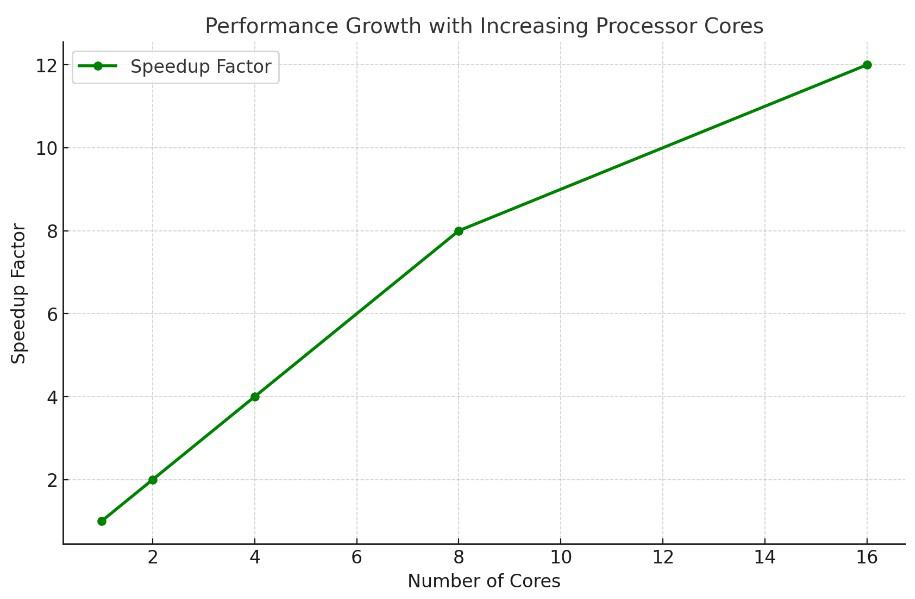

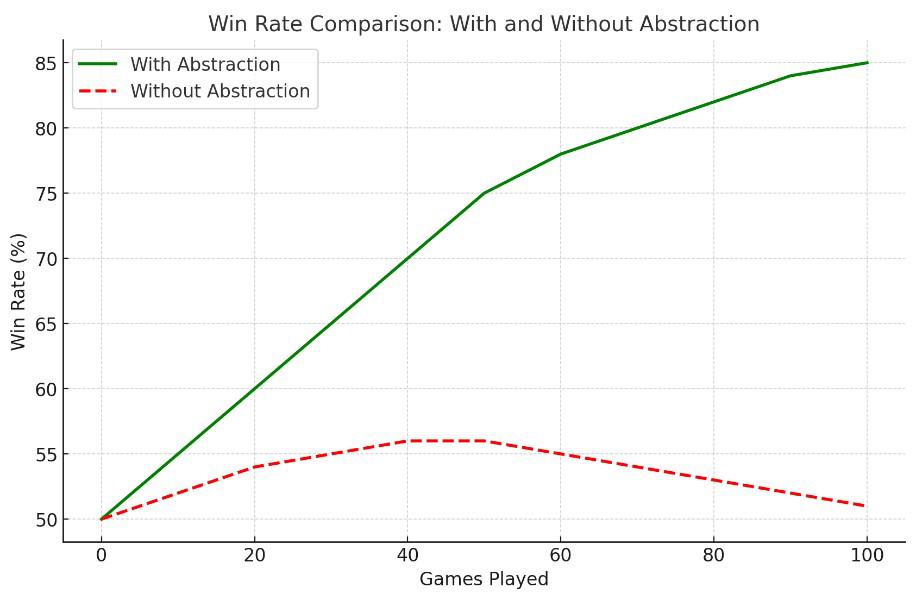
Artificial Intelligence continues to rewrite the terms under which complex decision-making games are played. Hierarchical abstraction, distributed equilibrium computation, and post-processing-powered Poker AI, known as Tartanian7, dominated the Annual Computer Poker Competition back in 2014. Not only was this significant, but it also marked an important milestone in demonstrating AI’s ability to outperform humans; yet another successful leap into Distributed Artificial Intelligence.
These are essentially the fundamentals that poker bot developers and artificial intelligence poker researchers employ in handling large-scale games and games of imperfect knowledge. In stark opposition to low-level poker hacks and mechanical poker cheat sheet-style strategies, the software self-updates with each new stimulus in becoming invaluable at each turn in real-time competitive play.
Hierarchical Abstraction in Poker
Hierarchical abstraction loosely reduces overwhelming complexity into clusters of game states that share similar properties, allowing it to retain all crucial strategic information while significantly lowering computational costs.
Here the process goes as follows:
- Public Clustering: It clusters the public cards along with the flop cards by strategic similarity.
- Private clustering: A more finely grained construction of the hole cards by sub-clustering the public set of cards as private information.
- Distributed processing: It places different clusters in distinct processing nodes, and it supports massive parallelization.
The next abstraction framework offers the promise of handling billions of states in a game by making use of AI and highly scalable adaptation methods.
The Role of Distributed Equilibrium Computation
Distributed computation simply extends the definition of efficiency in the progression of the hierarchy of abstraction. Once the AI did everything in a single machine; now it does everything in several cores and severalbanks ofmemory. It is associated with the following two major concerns, i.e.:
- Memory bottlenecks: The complete tree for the full game can be split in disjoint segments without consuming the memory of distributed systems excessively and yet allowing them to handle larger abstractions.
- Latency issues: Advanced algorithms facilitate smooth communication between nodes, thereby reducing the effects of latency.
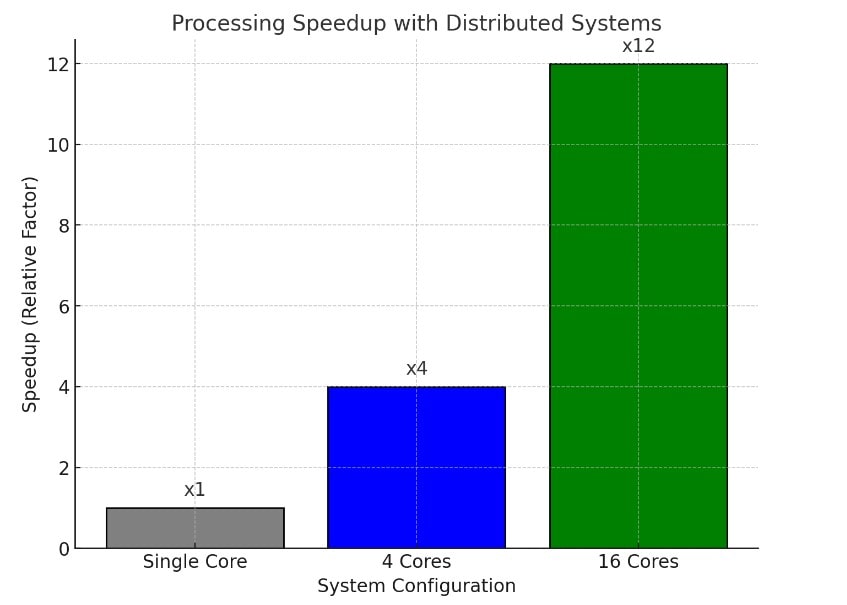
For instance, Tartanian7 employed MCCFR in ascertaining the equilibrium strategy in supercomputers which can process more than 1.5 quadrillion nodes in a tree of the game – a figure beyond human imagination even today.
Refining AI Strategies: POST
Whereas the abstraction and balance computation give the foundation, post-processing allows for application in the real world. The post-processing uses the approach adopted by the AI and adjusts it according to:
- Overfitting: Reduce overfitting of models towards specialized abstracted states.
- Variance reduction: Wagering merely the safest bets in terms of loss.
- Opponent mapping: Mapping opponents’ unconventional behaviors in the abstracted framework of the AI.
For example, purification by itself – bound to eliminate from the strategies the blends – managed in the Tartanian7 case to achieve very good outcomes versus human and artificial-intelligence opponents.
Applications of these techniques
- Real-Time strategy optimization: Since the systems are distributed, the AI ought to be able to calculate optimal strategies in the real-time games operations. The same also applies to poker bots and AI poker bots.
- Player training: Hierarchical Abstraction completes the cycle with training software using realistic opponents for players to practice against.
- Multi-Agent systems: The uses of such methodologies clearly go beyond poker and any discipline in which strategic decision making involves many agents, as in economics or in computer security.
Challenges and ethical considerations
There are a few very important ethical concerns about these procedures:
- Fair play in poker online: Sophisticated poker machine hack tools would give unfair advantage. To deter their use, AI detector tools have thereby been developed.
- Accessibility: Since the distributed systems’ sheer computational expense will make them accessible to mass-market organisations’ budgets in the short term and to very affluent organisations in the long term at best, the amateur player-AI developer barrier will even grow in the longer term.
This, in turn, would go a long way in instilling confidence in and maintaining the integrity of the poker dealer community.
Future Directions
The following are a few potential improvements for the future besides the success of Tartanian7:
- Real-Time adaptation: AI systems capable of dynamically adjusting strategies mid-game.
- Optimizing Multiplayer Scenarios: Combining Hierarchical.
- Integrating neural networks: Including these in deep learning for higher-order judgments.
But just as much for developers, the software at their disposal – download poker bot applications, download bot software platforms – increasingly exceed the boundaries of the conceivable.
Conclusion

Macroscopic equilibrium computation and post-processing through hierarchical abstraction thus open a new frontier for poker AI. The advent of distributed systems made possible the breakdown of more complex states of the game at a lesser level of abstraction such that a previously deemed intractable game like No-Limit Texas Hold’em could be solved.
Whether for the developer aiming at crafting the ultimate poker bot or simply for the player wondering what is in store for Poker AI, such enhancements imply an entire new frontier in terms of strategic choices. With due respect, the very game did change and at the very center of the equation is AI.