
If you’re grinding online poker in 2025, you’re playing against more than just human opponents. Whether you like it or not, bots are here, blending machine-like precision with human-level disguise. Some bots work as harmless training tools, others as ruthless cheats that drain the lifeblood of the games we love.
That’s why understanding where bots stand — legally and ethically — is more important than ever. Before you even consider building, buying, or fighting one, you need to know how the laws, poker platforms, and community norms line up. Let’s break it down, one real-world piece at a time.
Defining a Bot: Not All Code Is Evil
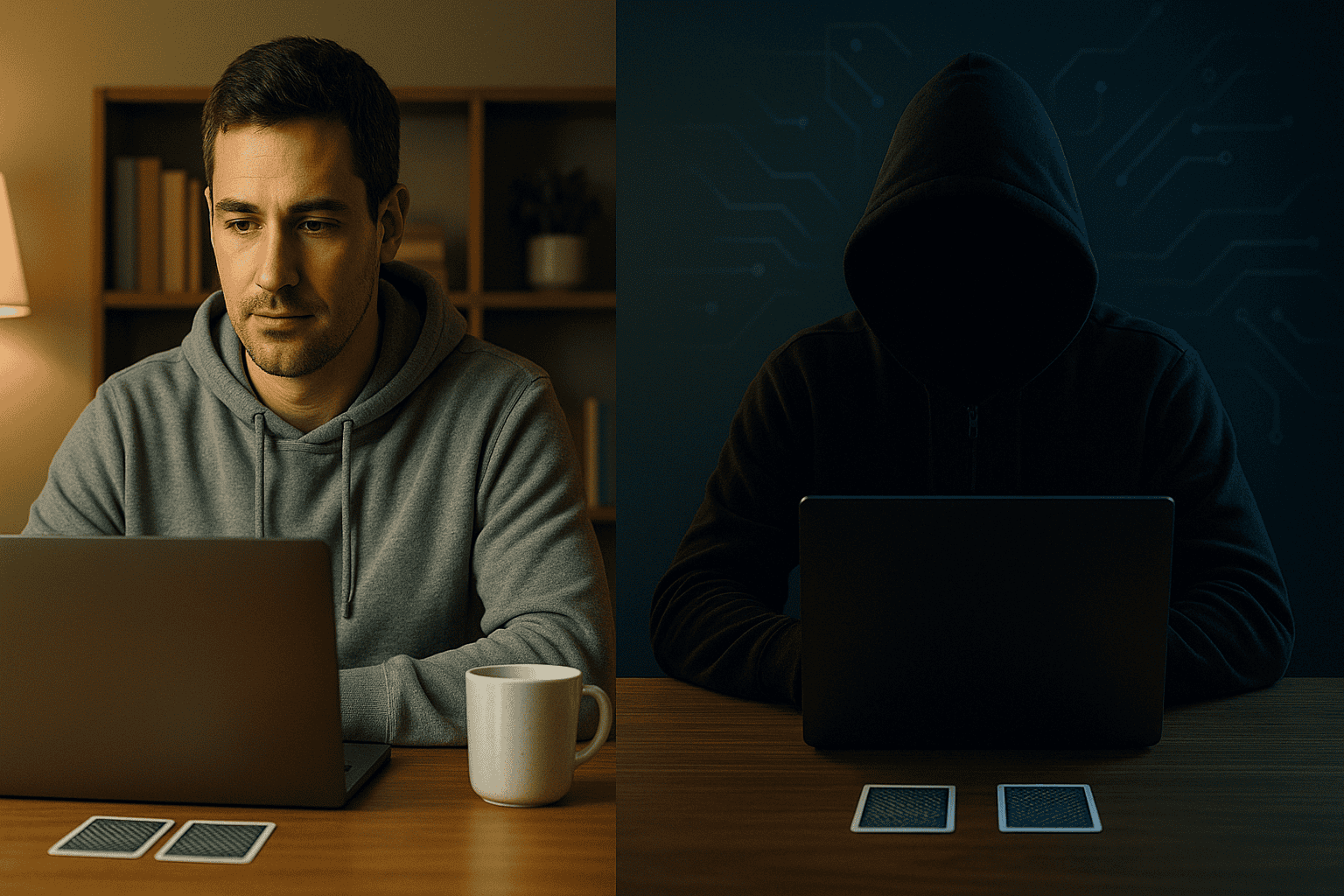
First, what exactly is a poker bot? Technically, a “bot” is just code that automates poker decisions. But its intent and use-case change everything.
- Solver apps: Tools like PioSOLVER or GTO+ help players study ranges and spots after sessions. These are generally considered legal and even ethical.
- Poker bots: These actually play hands against live opponents in real time without human intervention. Most platforms strictly forbid them, and they are broadly seen as cheating.
The problem is that the line can blur. Some players use HUDs or data overlays for a small edge — but at what point does “assistance” become “automation”? That gray area is where many ethical and legal debates happen today.
Global Legal Landscape: Where Bots Stand
Poker law is notoriously patchy worldwide, and bots slip into that confusion. Let’s look at three key regions:
United States
There is no explicit federal ban on poker bots, but virtually every regulated site’s terms of service (TOS) bans them. State-level regulators, like those in Nevada and New Jersey, back up these TOS with potential license suspensions if platforms fail to enforce anti-bot measures. Practically speaking, if you run a bot on a licensed site, you risk permanent bans and loss of funds — not to mention potential civil suits for contract violations.
Europe
European gambling regulators typically view bots as a threat to “fair play.” For example, the UK Gambling Commission requires licensed poker sites to actively monitor and block automated players. Germany’s regulations even explicitly name bots as forbidden. Fines, license penalties, and platform bans are common if you get caught.
Asia
In Asia, where a patchwork of national rules meets huge unregulated markets, bots flourish. Many Asian offshore sites do not strictly police bot use, creating an arms race of bot vs. bot, harming the casual player ecosystem. China, which outright bans most gambling, still sees underground bot activity in online social apps, though technically it’s illegal.
In short, the law may vary, but the platforms almost universally ban bots under their TOS — meaning you risk losing your bankroll, even if there’s no criminal statute against you.
Terms of Service: The True Law of Online Poker
While governments struggle to define bots, poker platforms do not. The TOS is your real rulebook. Break it, and you are out.
Major poker rooms explicitly classify real-time decision automation as cheating. That includes:
- Pre-programmed scripts
- Fully autonomous decision engines
- Tools that read hole cards through screen scraping
- Anything that mimics a human’s real-time choices
In other words, if you push a button and an AI acts for you, you’re breaking most sites’ rules. And platforms have stepped up detection in 2025, including:
- Mouse-movement tracking
- Response-time randomness checks
- Behavioral pattern detection
- Even honeypot tables to lure and catch bots
Violating TOS usually means confiscation of funds, lifetime bans, and public shaming in site transparency reports. Unlike courts, the sites don’t have to give you due process — they can act immediately. That’s the harsh reality.
Solvers, Trainers, and “Fair” AI Tools
Let’s be fair: Not every piece of poker code is a cheating device. There’s a whole category of software that supports player development without crossing lines.
For example:
- Solvers: These help you study GTO strategies after your session ends.
- Equity calculators: Used to learn how your hand fares against ranges.
- Scenario trainers: Let you practice decision trees in a sandbox environment.
- Hand trackers: Log your results to measure leaks and review hands.
As long as you only use them outside of live hands, you’re respecting the platform rules and the spirit of the game. In fact, most of the modern top pros rely on these tools religiously. It’s part of growth.
The key difference is that these programs do not take real-time decisions out of your hands. They help you practice — but they don’t play for you.
Ethical Lines in the Sand
Poker has always balanced on a tightrope between maximizing your edge and respecting the competition.
Some argue, “If bots exist, why shouldn’t I fight fire with fire?” That’s understandable — but it ignores the long-term damage bots do.
- Recreational players leave when they realize they’re up against bots.
- Traffic drops, making games less profitable for everyone.
- Trust in the ecosystem erodes.
The poker economy depends on human players believing they have a fair shot. Bots crush that confidence. Worse, they drain the liquidity of the games and push weaker players away.
That’s why the ethics of bots is so emotional: they attack the very heart of what makes poker a test of skill, guts, and psychology.
The Cat-and-Mouse Arms Race
If you think bots will fade away, think again. Bot developers keep improving:
- Better human-like timing
- Mimicking mistakes
- Hiding patterns behind randomized actions
Meanwhile, poker sites keep innovating detection:
- ML-based pattern recognition
- Statistical outlier models
- Behavioral biometrics
This back-and-forth resembles an arms race. In 2025, advanced detection and advanced bots evolve almost monthly. As a regular player, the best you can do is report suspicious behavior and trust the platforms to do their part.
Practical Advice for Ethical Players
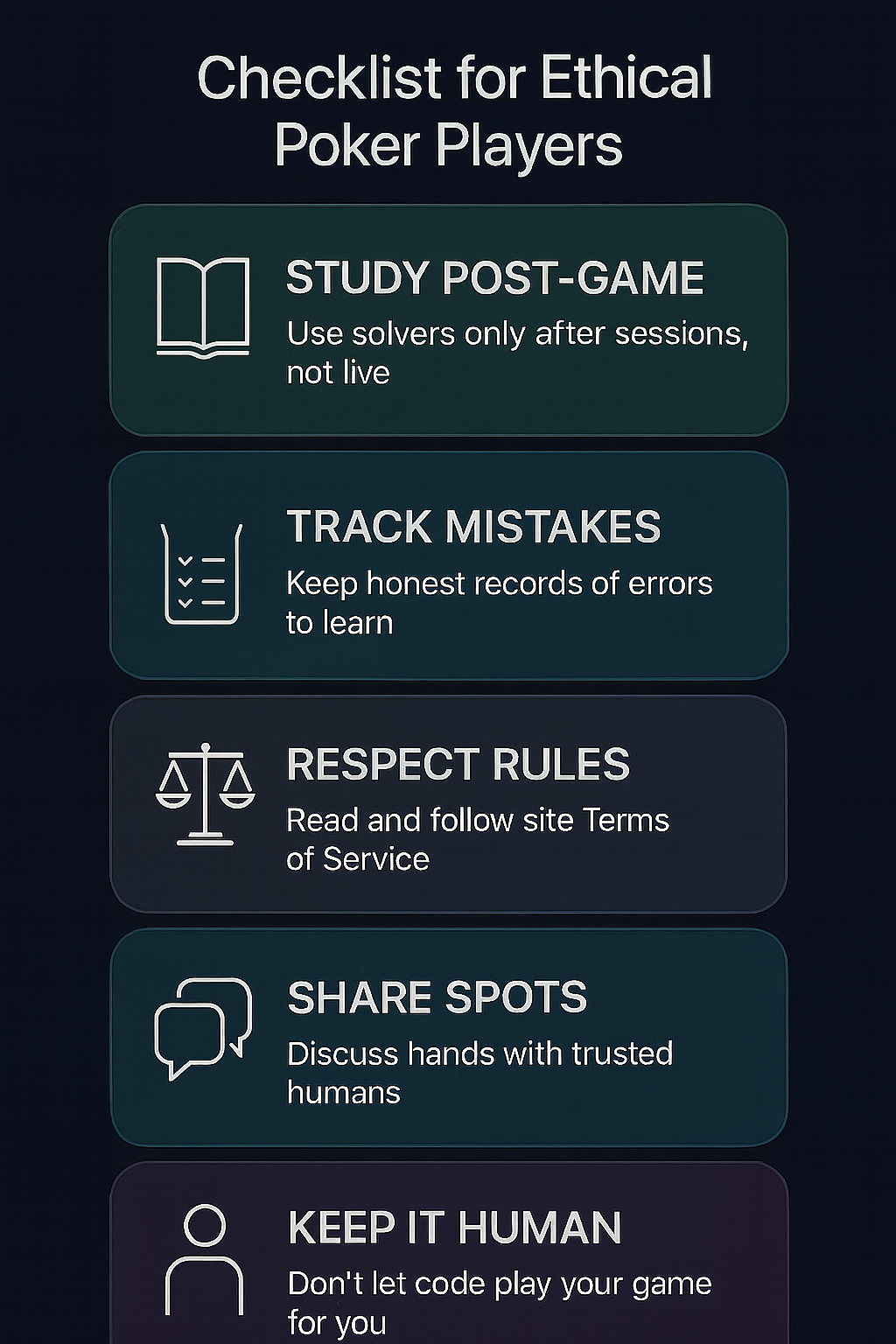
If you want to maximize your study game while staying square with the rules, here’s what works:
- Use solvers to study after your sessions
- Train decision trees offline, then apply them live
- Analyze your mistakes with trackers
- Discuss spots with other humans
- Embrace your mistakes — they teach you what a bot never can
Your edge comes from building a flexible, human mind. Bots might crunch numbers faster, but they don’t have intuition, table presence, or the creativity that makes poker a game of wits rather than code.
Could Regulation Catch Up?
In the long term, it’s possible governments will start regulating poker bots explicitly. They could, for example:
- Mandate registered AI player labeling
- Require licensed AI review tools
- Force platforms to publish regular audit logs
Some regulators in Europe have already hinted at a framework for “AI in gambling,” inspired by broader artificial intelligence legislation. Whether this will become global law is unclear — but the trend is moving toward transparency.
Until then, TOS will remain the strongest practical weapon to police bots. If you build one or use one, you must respect that contract — or risk your entire bankroll.
Final Thought: Keep Poker Human

Poker is one of the last bastions of imperfect information, emotion, and skill. That’s why bots, while fascinating from a tech point of view, are so dangerous to its spirit.
A solver might teach you how to 3-bet the right combos, but only you can feel the fear in an opponent’s eyes, sense a heartbeat in a live game, or talk your way through a final-table bluff.
Respect the human challenge. Build your study tools, push your edge, analyze spots — but when the cards hit the felt, let them play out the way poker was meant to be played: one decision, one heartbeat, at a time.