
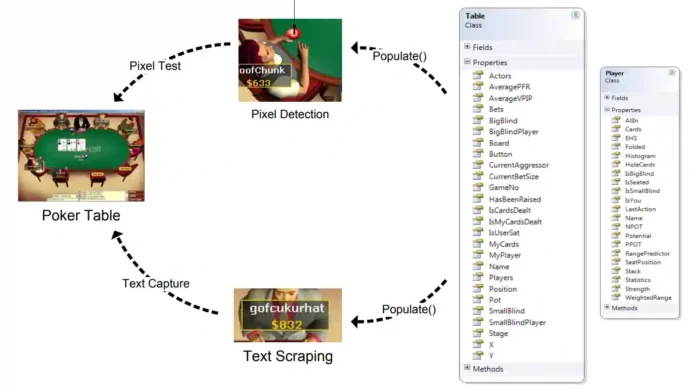
I’ve looked over some of the past work on poker AI, but after a long day of work and a few beers, I might be a little slow this evening. Nevertheless, I have had some time to read this paper on AI for Texas Hold’em, and I started to think about how we could make machines learn to bluff better than the average person.
To start, poker is more than a card game. Poker is an enigmatic fusion of statistics, psychology, and a dash of magic. Have you ever tried to guess if the guy sitting opposite of you is going to raise or fold? That is comparable to guess what my cat wants for dinner: impossible. So after the dust of chaos has settled, you look to artificial intelligence to help manage the storm.
Building a poker AI is like trying to teach chess to an infant, but with fewer snacks and slightly less chaos (most of the time). You will start with the basics: you first want to teach it to identify strong hands. Of course, there is a charm to poker because it has an element of randomness — you do not get to see the hands of your opponents. You want the AI to have to deal with partial information, to learn to make intelligent predictions, and to not think too poorly of itself when someone puts the hammer down.
For example, you are dealt the hand A♣ Q♥. The flop shows 3♦ 4♠ J♥. So, your AI has to determine, “What are the odds that this hand is any good?” It’s a bit like deciding if the leftover pizza you have in the fridge is still safe to eat a week later. Spoiler: it probably isn’t and your AI has a ~58.5% chance of getting it right. However, the more players involved, the odds decrease like your WiFi does during a critical Zoom call. Your shiny A-Q does not win only ~6.9% of the time against 5 opponents. Ouch.
Then we come to “potential” – as in, your hand is not great, but if you get lucky, could potentially give you a royal flush. It’s like gambling on your startup’s future success with 0% chance of prevailing. Take for example holding 6♦ 7♦ with a flop of 5♦ A♠ 8♦. Not looking good? If you hit the perfect turn and river, you may get a straight flush instead. So now your AI must go from “I’m screwed” to “maybe there’s a chance I will win!”
Before we move on, let’s talk about your opponents, because this is not solitaire! Your AI also has to model opponents in order to infer whether they are tight or loose, aggressive or passive. It’s like trying to figure out if your neighbor will give you your lawnmower back on time. Your AI uses neural networks, Bayes, possibly even something called particle filtering (whatever that is). I guess it’s like waving a magic wand over your opponent to try to guess their next move.
To increase the awe factor even more, your AI creates game trees for every possible outcome.It’s sort of like trying to think through, simultaneously, every possible conversation with your employer – it is helpful but tedious. And these trees help your AI reflect on the best course of action based on that value of every action. Raise, fold, call – all plotted out.
And now the goal is for AI to get smarter and better. Over millions of hands, it learns and becomes a poker master. Isn’t it somewhat similar to your child suddenly improving their score at a video game after 6 hours of virtual practice? Or like, your cat finally perfected the skill of knocking things off the table.
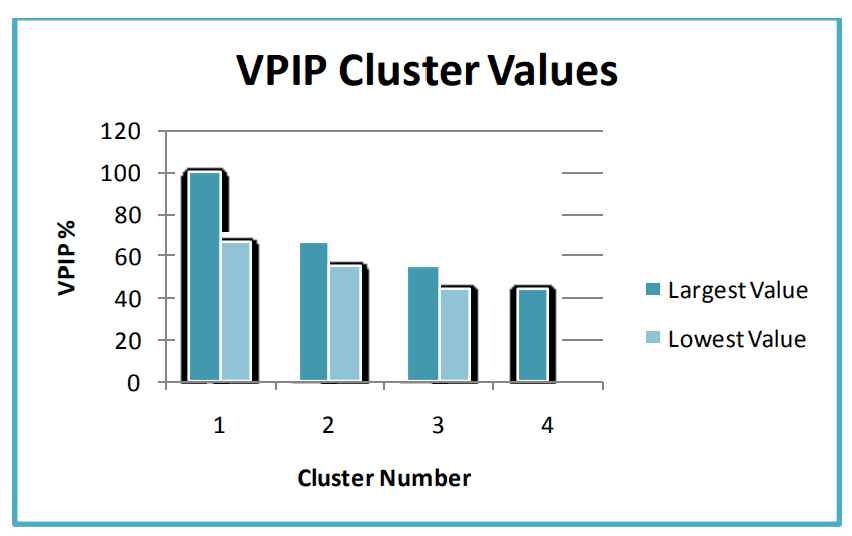
Look at this figure. The chart shows VPIP (Voluntarily Put Money In Pot) values for each player cluster. It is a clever way of saying, “Who’s the sucker who always bets?” It turns out – the lower the stakes, the more players want to see a flop – as if every cat has a dream of hitting that miracle river card.
In sum, developing a poker bot is not an easy task. You might think of it more like running a marathon, with some fresh math problem you’re handed at each mile. But that’s just so cool to see it outsmart humans or execute those clever moves? Priceless… Just make sure you provide your AI with decent data (we have billions of these hm2 files), somewhat like you would a cat – don’t give it too much at once, and don’t give it anything dangerous it can lash back at you!
And just a quick reminder, I’m open to collaborations and interesting projects. You can reach out to me on Linkedin, preferably starting right from the point. I have been involved in many projects, judging a poker AI competition, and developing the architecture of one of the best commercial poker AIs (my humble opinion) for my clients and some private projects. Ciao!